Kakarla Meghana, Ausaja Gambo Musa, Yousri Salama Mustafa, Haidar Ismail Nathalie, Tavalla Pardis, Uppal Pulkita, Mohammed Shaza A, Rajashekar Shriya, Giri Ravindran Suganya, Hamid Pousette
Internal Medicine, California Institute of Behavioral Neurosciences & Psychology, Fairfield, USA.
Pediatrics and Child Health, California Institute of Behavioral Neurosciences & Psychology, Fairfield, USA.
Cureus. 2022 Jun 22;14(6):e26209. doi: 10.7759/cureus.26209. eCollection 2022 Jun.
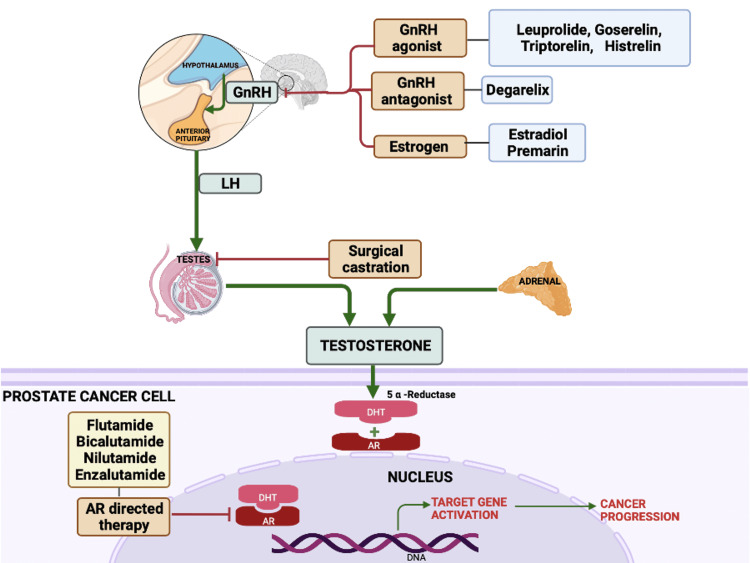
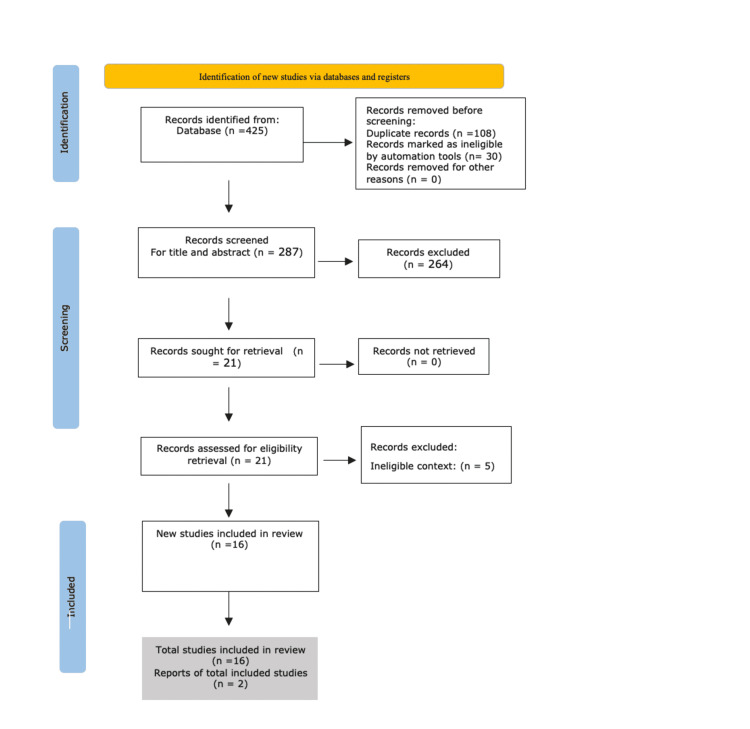
The purpose of this study was to investigate the relationship between androgen deprivation therapy (ADT) and cardiovascular events in men with prostate cancer. Cardiovascular disease (CVD) is a primary cause of noncancer mortality in men with prostate cancer. Surveillance, Epidemiology, and End Results (SEER) Medicare-linked data revealed that CVD was responsible for about a quarter of deaths among men with prostate cancer, with a focus on the role of ADT as a contributing cause. We performed a literature search in November 2021 utilizing search engines such as PubMed, Scopus, Science Direct, and Google Scholar. Original publications with data published between 2006 and 2020 were used in the investigation of men with prostate cancer undergoing ADT treatment with a CVD outcome. Two reviewers independently examined the content of the studies and extracted data from the final papers after they had been validated for quality using quality assessment tools. A total of 14 observational studies and two randomized controlled trials are included in this systematic review. Sample sizes in the examined publications varied from 79 to 201,797 individuals. ADT was the intervention in all of the investigations. Seven of the included studies did not identify the type of ADT utilized; instead, they compared the outcomes of individuals who got ADT against those who did not. The specific type of ADT used is mentioned in the remaining nine studies included in the systematic review. Patients who got ADT, such as gonadotropin-releasing hormone (GnRH) agonists, combination androgen blockade, surgical castration, and oral anti-androgen, are compared to those who did not receive ADT to discover who had a better prognosis. In conclusion, even though ADT has several negative metabolic side effects that increase the risk of cardiovascular toxicity, published research utilizing a variety of designs has demonstrated inconsistency in the impact of ADT on cardiovascular outcomes. While the risk of CVD should be considered when prescribing ADT, the findings suggest that it should not be considered a contraindication if the expected benefit is substantial.
本研究的目的是调查雄激素剥夺治疗(ADT)与前列腺癌男性心血管事件之间的关系。心血管疾病(CVD)是前列腺癌男性非癌症死亡的主要原因。监测、流行病学和最终结果(SEER)与医疗保险相关的数据显示,CVD约占前列腺癌男性死亡人数的四分之一,重点关注ADT作为一个促成因素的作用。我们于2021年11月利用PubMed、Scopus、Science Direct和谷歌学术等搜索引擎进行了文献检索。2006年至2020年间发表的数据的原始出版物用于调查接受ADT治疗且有CVD结局的前列腺癌男性。两名评审员独立检查研究内容,并在使用质量评估工具对最终论文进行质量验证后从其中提取数据。本系统评价共纳入14项观察性研究和2项随机对照试验。所审查出版物中的样本量从79人到201797人不等。ADT是所有调查中的干预措施。纳入的研究中有7项未确定所使用的ADT类型;相反,他们比较了接受ADT的个体与未接受ADT的个体的结局。系统评价中纳入的其余9项研究提到了所使用的ADT的具体类型。将接受ADT的患者,如促性腺激素释放激素(GnRH)激动剂、联合雄激素阻断、手术去势和口服抗雄激素药物,与未接受ADT的患者进行比较,以发现谁的预后更好。总之,尽管ADT有多种负面代谢副作用,会增加心血管毒性风险,但使用各种设计的已发表研究表明,ADT对心血管结局的影响并不一致。虽然在开ADT处方时应考虑CVD风险,但研究结果表明,如果预期益处很大,不应将其视为禁忌证。