Németh Irén A Kopcsóné, Nádor Csaba, Szilágyi László, Lehotsky Ákos, Haidegger Tamás
BCE Doctoral School of Business and Management, Corvinus University of Budapest, 1093 Budapest, Hungary.
Medical Centre, Hungarian Defense Forces, 1134 Budapest, Hungary.
J Clin Med. 2022 Jul 22;11(15):4276. doi: 10.3390/jcm11154276.
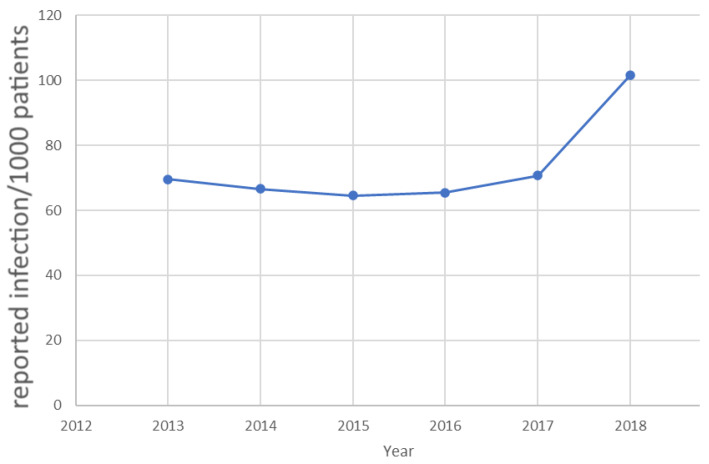
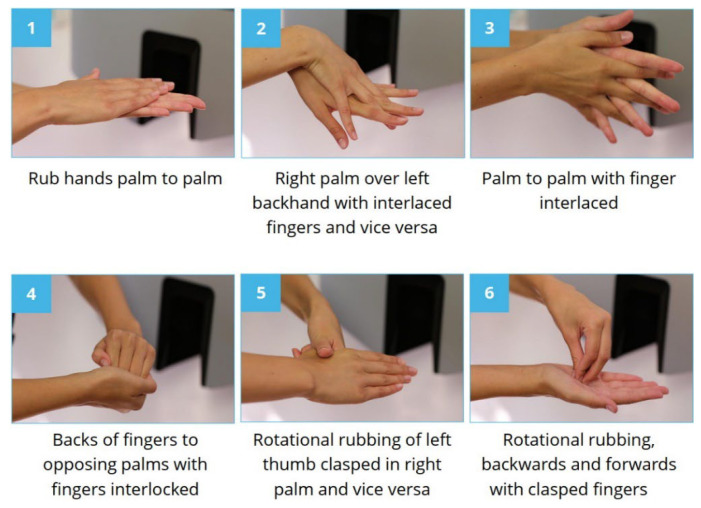
The ability of healthcare workers to learn proper hand hygiene has been an understudied area of research. Generally, hand hygiene skills are regarded as a key contributor to reduce critical infections and healthcare-associated infections. In a clinical setup, at a Neonatal Intensive Care Unit (NICU), the outcome of a multi-modal training initiative was recorded, where objective feedback was provided to the staff. It was hypothesized that staff at the NICU are more sensitive towards applying increased patient safety measures. Outcomes were recorded as the ability to cover all hand surfaces with Alcohol-Based Handrub (ABHR), modelled as a time-series of measurements. The learning ability to rub in with 1.5 mL and with 3 mL was also assessed. As a secondary outcome, handrub consumption and infection numbers were recorded. It has been observed that some staff members were able to quickly learn the proper hand hygiene, even with the limited 1.5 mL, while others were not capable of acquiring the technique even with 3 mL. When analyzing the 1.5 mL group, it was deemed an insufficient ABHR amount, while with 3 mL, the critical necessity of skill training to achieve complete coverage was documented. Identifying these individuals helps the infection control staff to better focus their training efforts. The training led to a 157% increase in handrub consumption. The setting of the study did not allow to show a measurable reduction in the number of hospital infections. It has been concluded that the training method chosen by the staff greatly affects the quality of the outcomes.
医护人员学习正确手部卫生的能力一直是一个研究不足的领域。一般来说,手部卫生技能被视为减少严重感染和医疗相关感染的关键因素。在临床环境中,在新生儿重症监护病房(NICU)记录了一项多模式培训计划的结果,该计划向工作人员提供了客观反馈。据推测,NICU的工作人员对采取更多患者安全措施更为敏感。结果记录为使用酒精擦手液(ABHR)覆盖所有手部表面的能力,以测量的时间序列为模型。还评估了使用1.5毫升和3毫升擦手液揉搓的学习能力。作为次要结果,记录了擦手液消耗量和感染数量。据观察,一些工作人员即使使用有限的1.5毫升擦手液也能很快学会正确的手部卫生,而另一些人即使使用3毫升擦手液也无法掌握该技术。在分析1.5毫升组时,认为ABHR量不足,而使用3毫升擦手液时,记录了技能培训以实现完全覆盖的关键必要性。识别这些人有助于感染控制人员更好地集中他们的培训精力。培训使擦手液消耗量增加了157%。研究环境不允许显示医院感染数量有可测量的减少。得出的结论是,工作人员选择的培训方法对结果质量有很大影响。