McLean Kenneth A, Mountain Katie E, Shaw Catherine A, Drake Thomas M, Pius Riinu, Knight Stephen R, Fairfield Cameron J, Sgrò Alessandro, Bouamrane Matt, Cambridge William A, Lyons Mathew, Riad Aya, Skipworth Richard J E, Wigmore Stephen J, Potter Mark A, Harrison Ewen M
Department of Clinical Surgery, University of Edinburgh, 51 Little France Crescent, Edinburgh, UK.
Centre for Medical Informatics (CMI), Usher Institute, University of Edinburgh, 9 Little France Rd, Edinburgh, UK.
NPJ Digit Med. 2021 Nov 18;4(1):160. doi: 10.1038/s41746-021-00526-0.
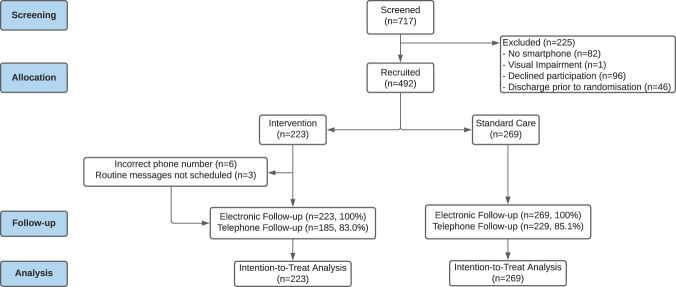
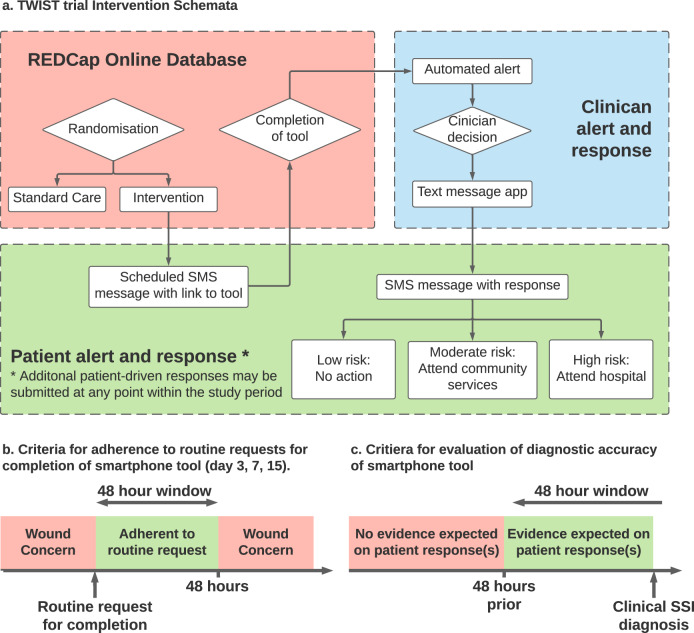
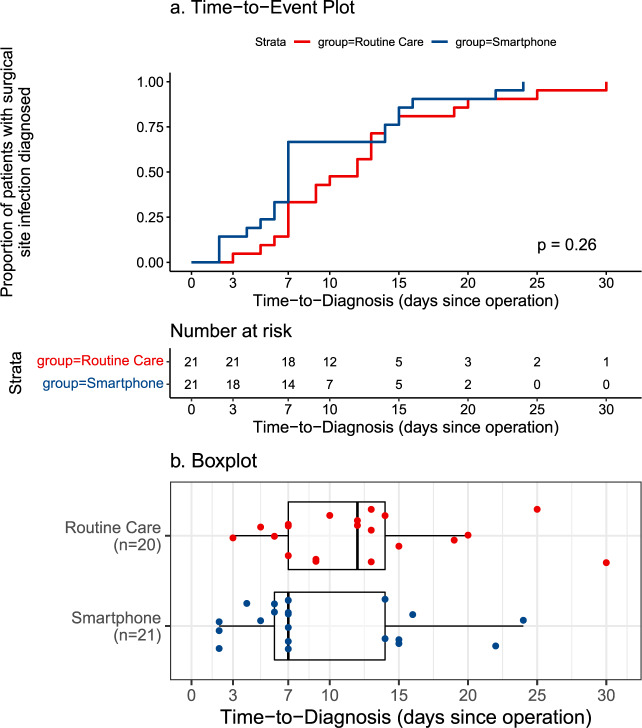
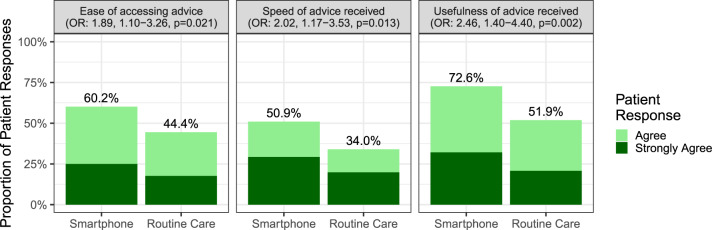
Surgical site infections (SSI) cause substantial morbidity and pose a burden to acute healthcare services after surgery. We aimed to investigate whether a smartphone-delivered wound assessment tool can expedite diagnosis and treatment of SSI after emergency abdominal surgery. This single-blinded randomised control trial (NCT02704897) enroled adult emergency abdominal surgery patients in two tertiary care hospitals. Patients were randomised (1:1) to routine postoperative care or additional access to a smartphone-delivered wound assessment tool for 30-days postoperatively. Patient-reported SSI symptoms and wound photographs were requested on postoperative days 3, 7, and 15. The primary outcome was time-to-diagnosis of SSI (Centers for Disease Control definition). 492 patients were randomised (smartphone intervention: 223; routine care: 269). There was no significant difference in the 30-day SSI rate between trial arms: 21 (9.4%) in smartphone vs 20 (7.4%, p = 0.513) in routine care. Among the smartphone group, 32.3% (n = 72) did not utilise the tool. There was no significant difference in time-to-diagnosis of SSI for patients receiving the intervention (-2.5 days, 95% CI: -6.6-1.6, p = 0.225). However, patients in the smartphone group had 3.7-times higher odds of diagnosis within 7 postoperative days (95% CI: 1.02-13.51, p = 0.043). The smartphone group had significantly reduced community care attendance (OR: 0.57, 95% CI: 0.34-0.94, p = 0.030), similar hospital attendance (OR: 0.76, 95% CI: 0.28-1.96, p = 0.577), and significantly better experiences in accessing care (OR: 2.02, 95% CI: 1.17-3.53, p = 0.013). Smartphone-delivered wound follow-up is feasible following emergency abdominal surgery. This can facilitate triage to the appropriate level of assessment required, allowing earlier postoperative diagnosis of SSI.
手术部位感染(SSI)会导致严重的发病情况,并给术后的急性医疗服务带来负担。我们旨在研究一款通过智能手机提供的伤口评估工具能否加快急诊腹部手术后SSI的诊断和治疗。这项单盲随机对照试验(NCT02704897)在两家三级护理医院纳入了成年急诊腹部手术患者。患者被随机(1:1)分为接受常规术后护理组或术后30天额外使用一款通过智能手机提供的伤口评估工具的组。在术后第3天、第7天和第15天,要求患者报告SSI症状并上传伤口照片。主要结局是SSI的诊断时间(疾病控制中心的定义)。492名患者被随机分组(智能手机干预组:223名;常规护理组:269名)。试验组之间30天SSI发生率无显著差异:智能手机组为21例(9.4%),常规护理组为20例(7.4%,p = 0.513)。在智能手机组中,32.3%(n = 72)的患者未使用该工具。接受干预的患者在SSI诊断时间上无显著差异(-2.5天,95%置信区间:-6.6 - 1.6,p = 0.225)。然而,智能手机组患者在术后7天内被诊断出的几率高3.7倍(95%置信区间:1.02 - 13.51,p = 0.043)。智能手机组的社区护理就诊率显著降低(比值比:0.57,95%置信区间:0.34 - 0.94,p = 0.030),医院就诊情况相似(比值比:0.76,95%置信区间:0.28 - 1.96,p = 0.577),且在获得护理方面的体验显著更好(比值比:2.02,95%置信区间:1.17 - 3.53,p = 0.013)。急诊腹部手术后通过智能手机进行伤口随访是可行的。这有助于将患者分诊到所需的适当评估级别,从而实现术后SSI的早期诊断。