El-Beltagi Hossam S, Ismail Shadia A, Ibrahim Nadia M, Shehata Wael F, Alkhateeb Abdulmalik A, Ghazzawy Hesham S, El-Mogy Mohamed M, Sayed Eman G
Agricultural Biotechnology Department, College of Agriculture and Food Sciences, King Faisal University, Al-Ahsa 31982, Saudi Arabia.
Biochemistry Department, Faculty of Agriculture, Cairo University, Giza 12613, Egypt.
Plants (Basel). 2022 Jul 24;11(15):1913. doi: 10.3390/plants11151913.
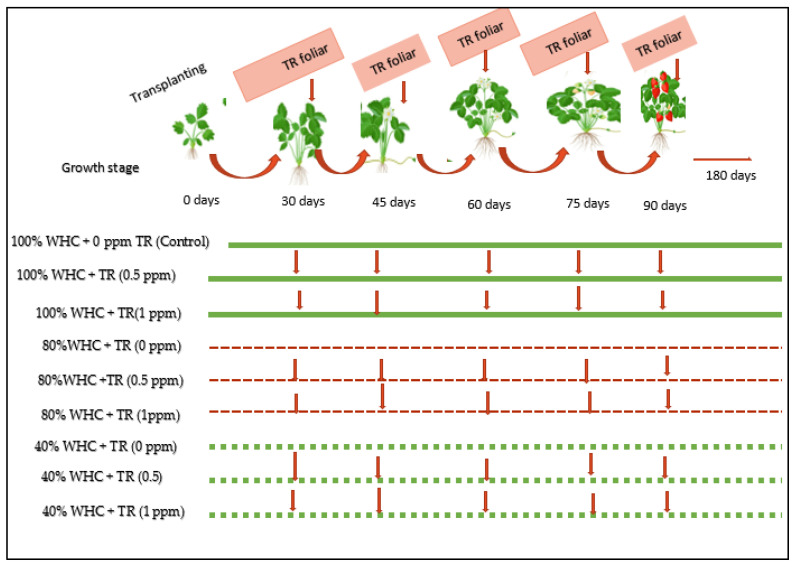
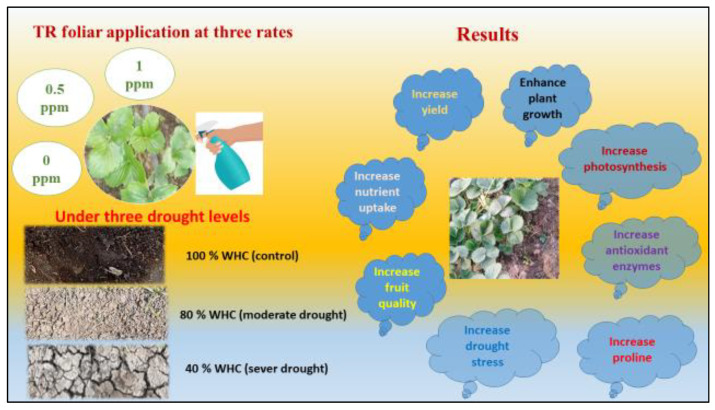
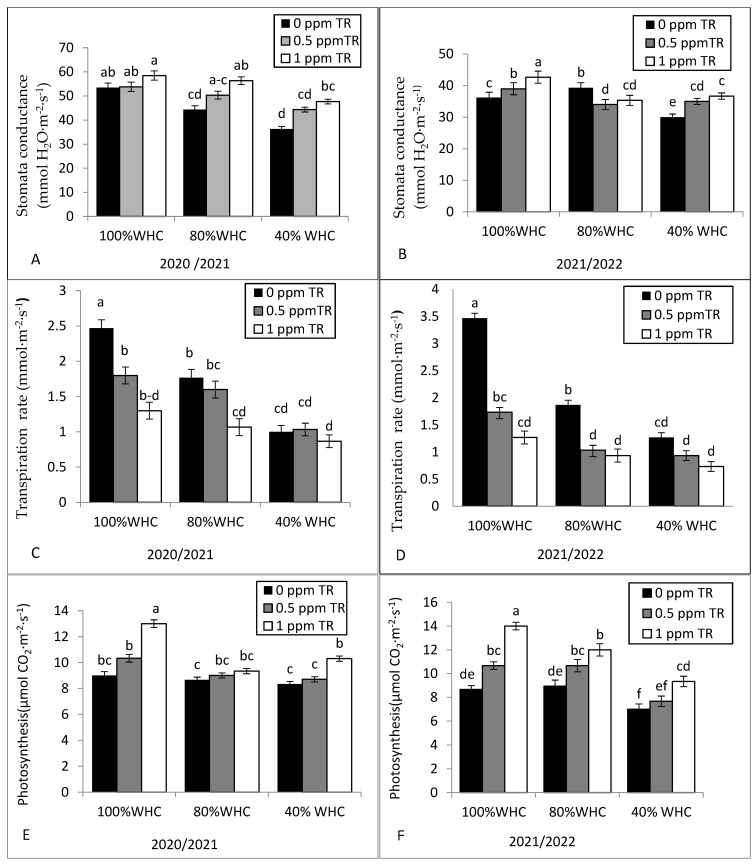
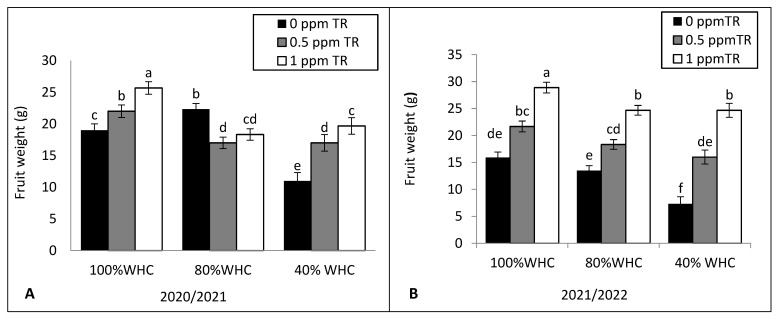
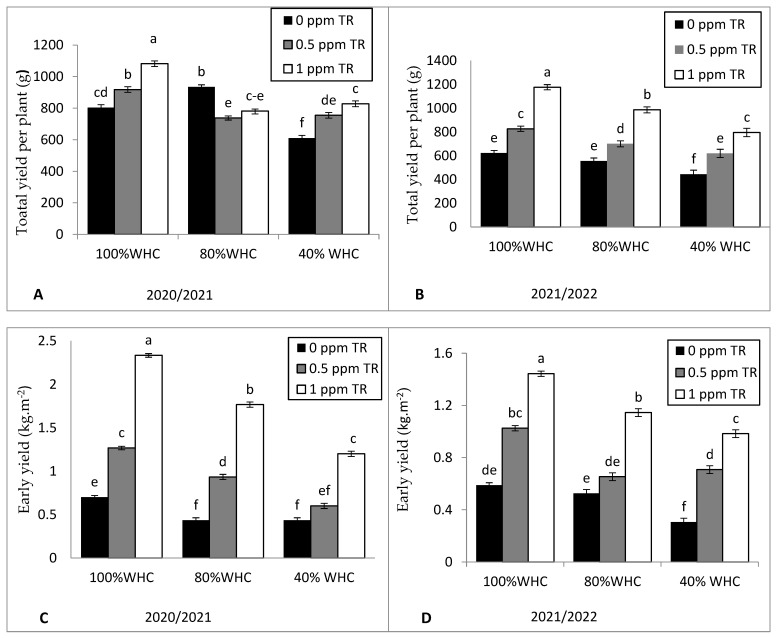
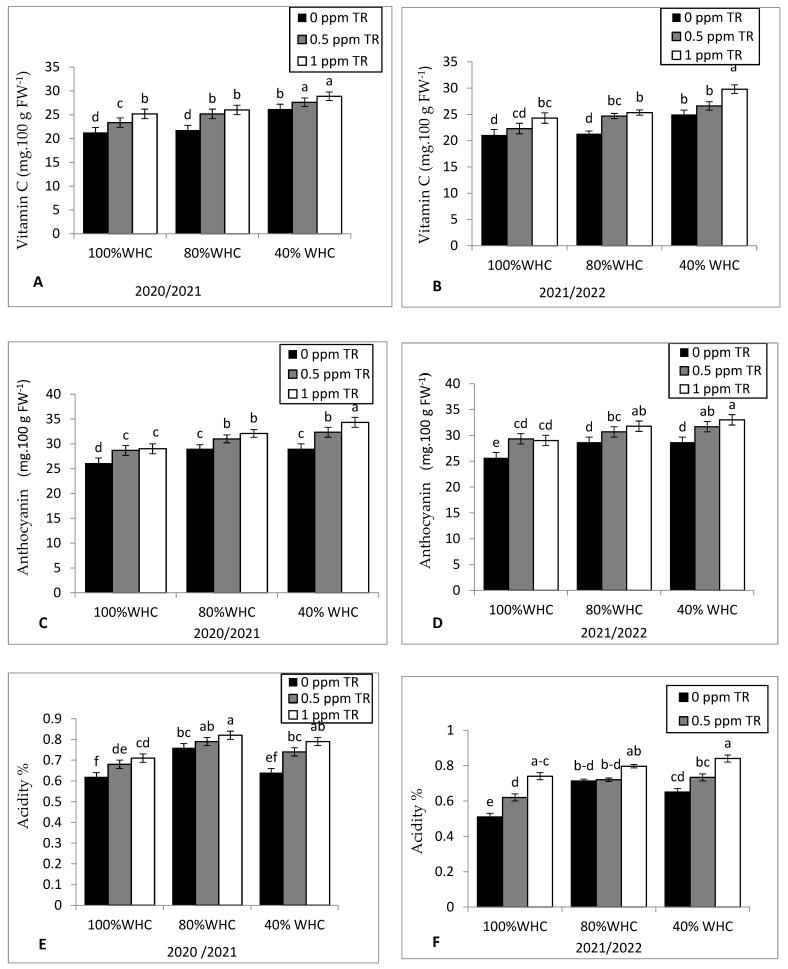
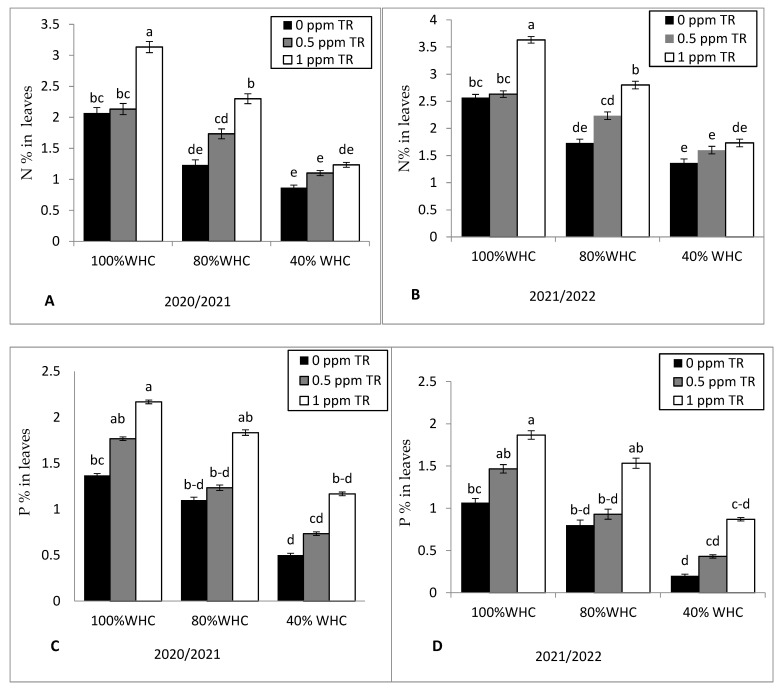
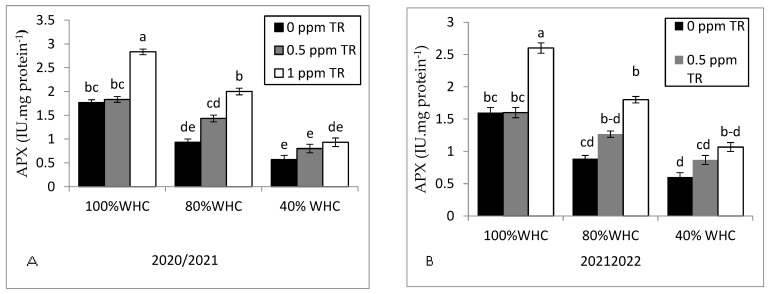
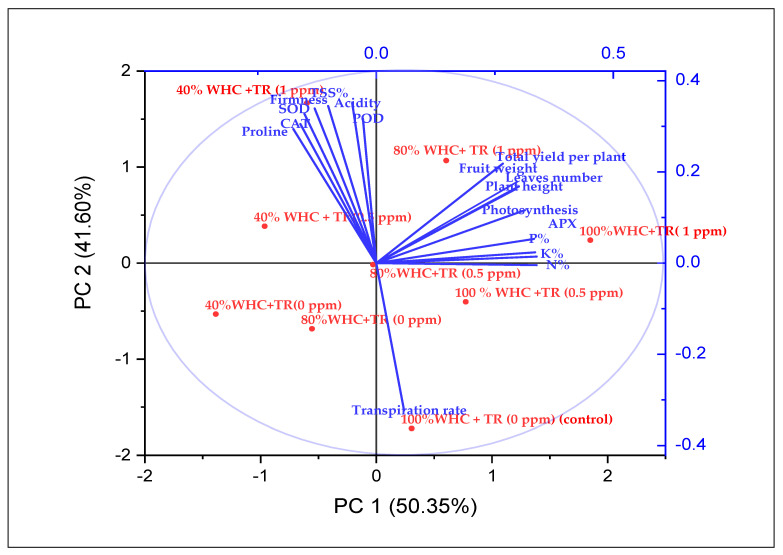
To explore the effects of triacontanol (TR) on drought tolerance of strawberry plants (cv Fertona), two field experiments were carried out to study the effects of three supplementary foliar TR rates (0, 0.5, and 1 ppm) under the following three levels of water irrigation: 11 m/hectare (40% of water holding capacity (WHC) severe as a drought treatment, 22 m/hectare (80% of WHC) as moderate drought stress, and normal irrigation with 27 m/hectare (100% of WHC) server as a control treatment. TR treatments were applied five times after 30 days from transplanting and with 15-day intervals. The results showed that drought stress (40% and 80%) markedly decreased the growth, fruit yield, and chlorophyll reading, as well as the gas exchange parameters (net photosynthetic rate, stomatal conductance, and transpiration rate). Meanwhile, drought stress at a high rate obviously increased antioxidant enzyme activities such as superoxide dismutase (SOD), peroxidase (POX), and catalase (CAT) contents in the leaves of the strawberry plants. The moderate and high drought stress rates enhanced some strawberry fruit quality parameters such as total soluble solids (TSS), vitamin C, and anthocyanin content compared to the control. Additionally, TR increased the activities of SOD, POX, and CAT. TR treatment significantly increased the chlorophyll contents, gas exchange parameters (photosynthetic rate and stomatal conductance), and water use efficiency (WUE). Plant height, fruit weight, and total biomass were increased also via TR application. Total yield per plant was increased 12.7% using 1 ppm of TR compared with the control. In conclusion, our results suggested that TR application could relieve the adverse effects of drought stress on the growth of strawberry plants by enhancing the antioxidant enzymes, photosynthesis rate, and WUE of the leaves.
为探究三十烷醇(TR)对草莓品种费尔托纳(cv Fertona)耐旱性的影响,进行了两项田间试验,研究在以下三种水分灌溉水平下,三种叶面喷施TR补充剂量(0、0.5和1 ppm)的效果:11立方米/公顷(田间持水量(WHC)的40%,重度干旱处理)、22立方米/公顷(WHC的80%,中度干旱胁迫)以及27立方米/公顷(WHC的100%)的正常灌溉作为对照处理。移栽30天后每隔15天进行5次TR处理。结果表明,干旱胁迫(40%和80%)显著降低了草莓植株的生长、果实产量、叶绿素读数以及气体交换参数(净光合速率、气孔导度和蒸腾速率)。同时,高程度的干旱胁迫明显增加了草莓植株叶片中抗氧化酶活性,如超氧化物歧化酶(SOD)、过氧化物酶(POX)和过氧化氢酶(CAT)的含量。与对照相比,中度和高度干旱胁迫程度提高了一些草莓果实品质参数,如总可溶性固形物(TSS)、维生素C和花青素含量。此外,TR提高了SOD、POX和CAT的活性。TR处理显著增加了叶绿素含量、气体交换参数(光合速率和气孔导度)以及水分利用效率(WUE)。通过施用TR,株高、果实重量和总生物量也有所增加。与对照相比,使用1 ppm的TR使单株总产量提高了12.7%。总之,我们的结果表明,施用TR可通过增强叶片的抗氧化酶、光合速率和WUE来缓解干旱胁迫对草莓植株生长的不利影响。