Department of Physiology and Pathophysiology, Rady Faculty of Health Sciences, University of Manitoba, Winnipeg, Manitoba, Canada.
J Neurophysiol. 2022 Sep 1;128(3):649-670. doi: 10.1152/jn.00205.2022. Epub 2022 Jul 27.
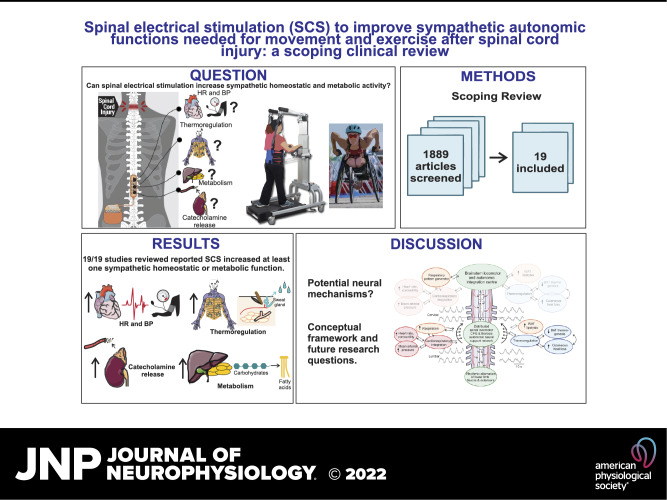
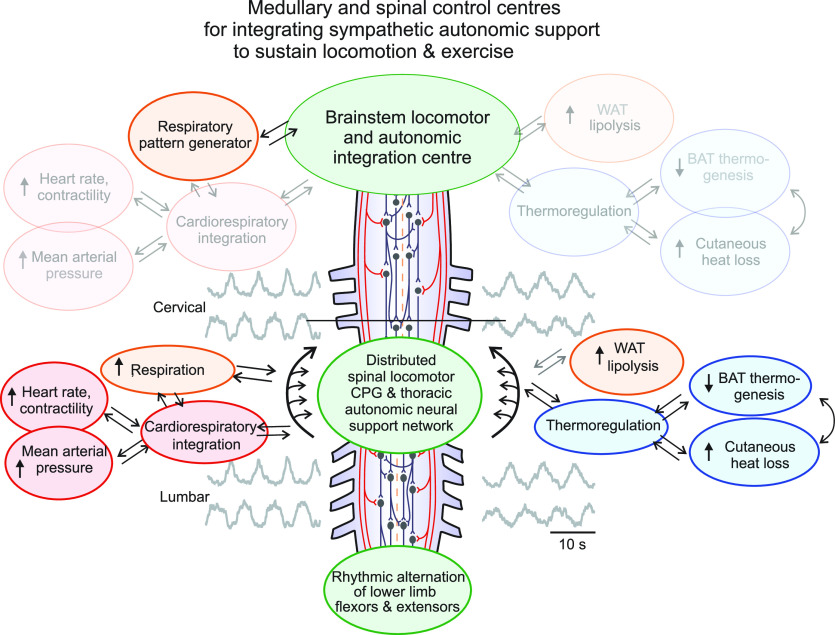
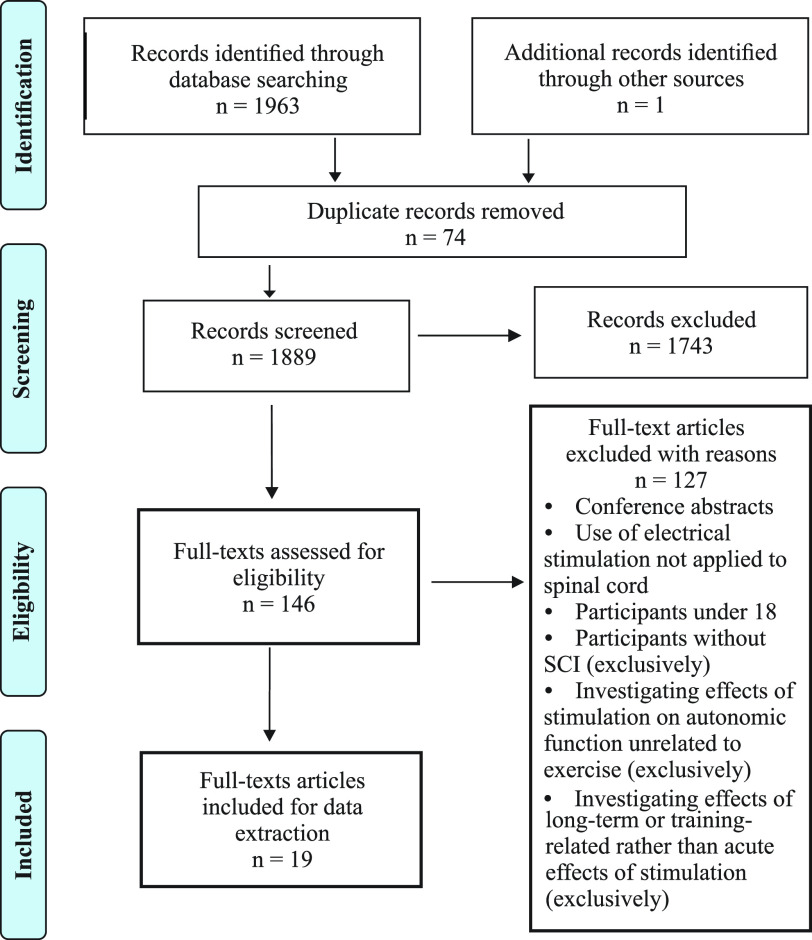
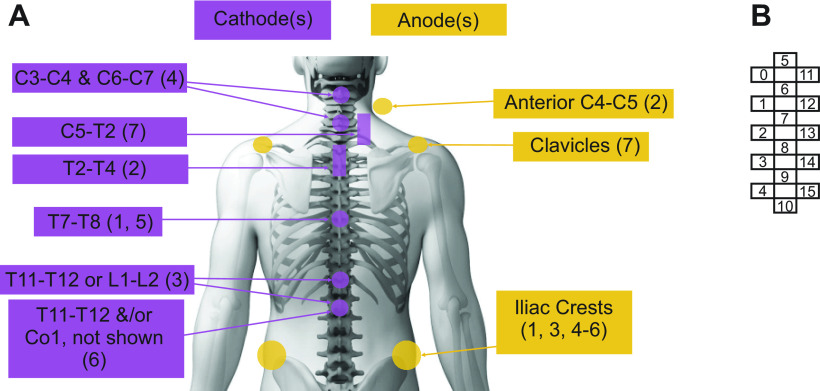
Spinal cord injury (SCI) results in sensory, motor, and autonomic dysfunction. Obesity, cardiovascular disease, and metabolic disease are highly prevalent after SCI. Although inadequate voluntary activation of skeletal muscle contributes, it is absent or inadequate activation of thoracic spinal sympathetic neural circuitry and suboptimal activation of homeostatic (cardiovascular and temperature) and metabolic support systems that truly limits exercise capacity, particularly for those with cervical SCI. Thus, when electrical spinal cord stimulation (SCS) studies aimed at improving motor functions began mentioning effects on exercise-related autonomic functions, a potential new area of clinical application appeared. To survey this new area of potential benefit, we performed a systematic scoping review of clinical SCS studies involving these spinally mediated autonomic functions. Nineteen studies were included, 8 used transcutaneous and 11 used epidural SCS. Improvements in blood pressure regulation at rest or in response to orthostatic challenge were investigated most systematically, whereas reports of improved temperature regulation, whole body metabolism, and peak exercise performance were mainly anecdotal. Effective stimulation locations and parameters varied between studies, suggesting multiple stimulation parameters and rostrocaudal spinal locations may influence the same sympathetic function. Brainstem and spinal neural mechanisms providing excitatory drive to sympathetic neurons that activate homeostatic and metabolic tissues that provide support for movement and exercise and their integration with locomotor neural circuitry are discussed. A unifying conceptual framework for the integrated neural control of locomotor and sympathetic function is presented which may inform future research needed to take full advantage of SCS for improving these spinally mediated autonomic functions.
脊髓损伤 (SCI) 会导致感觉、运动和自主功能障碍。肥胖、心血管疾病和代谢疾病在 SCI 后非常普遍。尽管骨骼肌的自愿激活不足是造成这种情况的原因之一,但胸段脊髓交感神经回路的激活不足或不充分,以及对心血管和体温等稳态和代谢支持系统的激活不足,才是真正限制运动能力的原因,尤其是对于颈段 SCI 患者。因此,当旨在改善运动功能的脊髓电刺激 (SCS) 研究开始提到对与运动相关的自主功能的影响时,一个潜在的新的临床应用领域出现了。为了调查这一潜在益处的新领域,我们对涉及这些脊髓介导的自主功能的临床 SCS 研究进行了系统的范围界定综述。共纳入了 19 项研究,其中 8 项使用经皮刺激,11 项使用硬膜外刺激。血压调节在休息时或对直立挑战的反应的改善被系统地研究得最多,而关于体温调节、全身代谢和峰值运动表现改善的报道主要是轶事性的。有效的刺激位置和参数在研究之间有所不同,这表明多个刺激参数和头尾向脊髓位置可能会影响相同的交感功能。讨论了为激活支持运动和运动的自主和代谢组织的交感神经元提供兴奋性驱动的脑干和脊髓神经机制,以及它们与运动神经回路的整合。提出了一个用于运动和交感功能综合神经控制的统一概念框架,这可能为充分利用 SCS 来改善这些脊髓介导的自主功能提供未来所需的研究。