Bloom Ona, Wecht Jill M, Legg Ditterline Bonnie E, Wang Siqi, Ovechkin Alexander V, Angeli Claudia A, Arcese Anthony A, Harkema Susan J
VA RR&D National Center for the Medical Consequences of Spinal Cord Injury, James J. Peters VA Medical Center, Bronx, NY, United States.
Institute of Molecular Medicine, The Feinstein Institutes for Medical Research, Manhasset, NY, United States.
Front Syst Neurosci. 2020 Oct 15;14:571011. doi: 10.3389/fnsys.2020.571011. eCollection 2020.
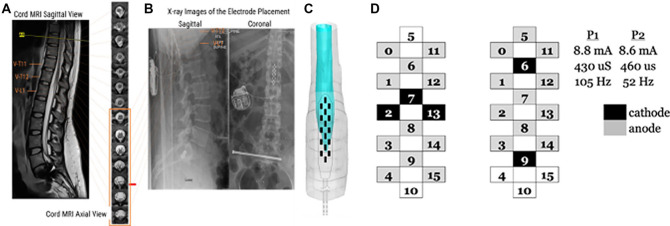
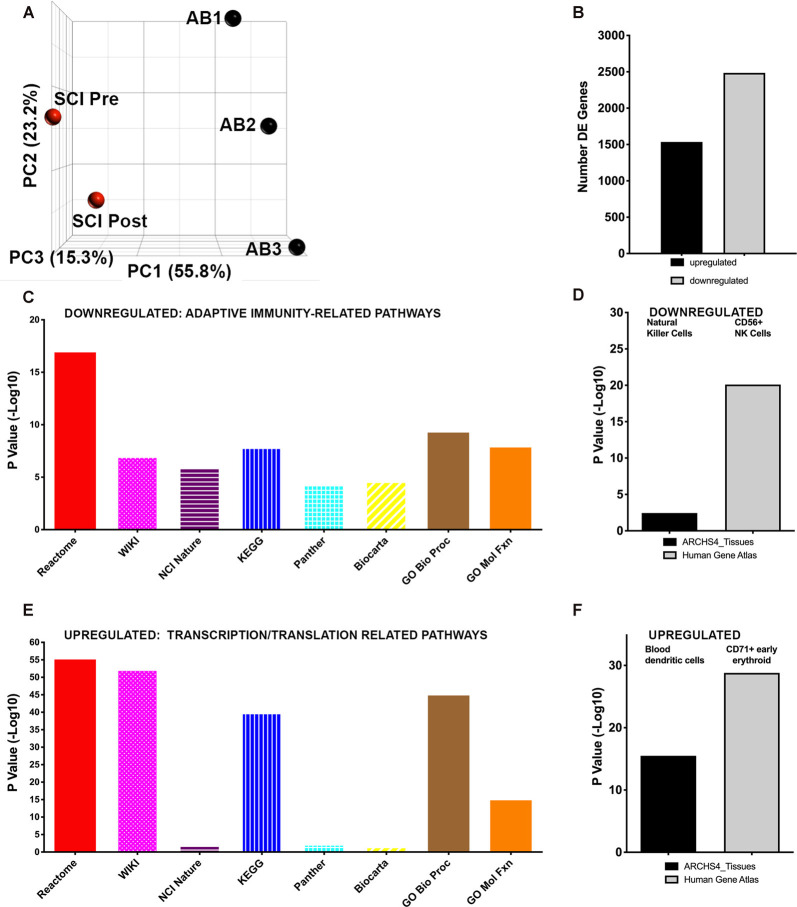
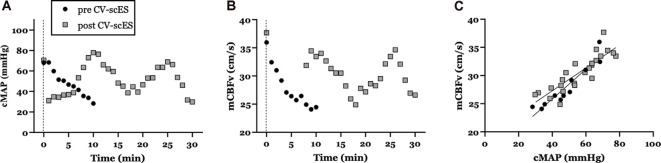
In individuals with severe spinal cord injury (SCI), the autonomic nervous system (ANS) is affected leading to cardiovascular deficits, which include significant blood pressure instability, with the prevalence of systemic hypotension and orthostatic intolerance resulting in an increased risk of stroke. Additionally, persons with SCI rostral to thoracic vertebral level 5 (T5), where sympathetic nervous system fibers exit the spinal cord and innervate the immune system, have clinically significant systemic inflammation and increased infection risk. Our recent studies show that lumbosacral spinal cord epidural stimulation (scES), applied at the lumbosacral level using targeted configurations that promote cardiovascular stability (CV-scES), can safely and effectively normalize blood pressure in persons with chronic SCI. Herein we present a case report in a female (age 27 years) with chronic clinically motor complete cervical SCI demonstrating that 97-sessions of CV-scES, which increased systemic blood pressure, improved orthostatic tolerance in association with increased cerebral blood flow velocity in the middle cerebral artery, also promoted positive immunological changes in whole-blood gene expression. Specifically, there was evidence of the down-regulation of inflammatory pathways and the up-regulation of adaptative immune pathways. The findings of this case report suggest that the autonomic effects of epidural stimulation, targeted to promote cardiovascular homeostasis, also improves immune system function, which has a significant benefit to long-term cardiovascular and immunologic health in individuals with long-standing SCI. www.ClinicalTrials.gov, identifier NCT02307565.
在严重脊髓损伤(SCI)患者中,自主神经系统(ANS)会受到影响,导致心血管功能缺陷,其中包括明显的血压不稳定,全身性低血压和体位性不耐受的发生率增加,从而导致中风风险升高。此外,脊髓损伤发生在胸椎体5(T5)水平以上的患者,交感神经系统纤维从脊髓发出并支配免疫系统,会出现具有临床意义的全身性炎症,感染风险增加。我们最近的研究表明,在腰骶部水平应用促进心血管稳定性的靶向配置进行腰骶部脊髓硬膜外刺激(scES)(CV-scES),可以安全有效地使慢性SCI患者的血压恢复正常。在此,我们报告一例27岁女性慢性临床运动完全性颈髓损伤患者的病例,该患者接受97次CV-scES治疗后,全身血压升高,体位性耐受性改善,同时大脑中动脉血流速度增加,全血基因表达也出现了积极的免疫变化。具体而言,有证据表明炎症途径下调,适应性免疫途径上调。该病例报告的结果表明,旨在促进心血管稳态的硬膜外刺激的自主效应,也改善了免疫系统功能,这对长期患有SCI的个体的长期心血管和免疫健康具有显著益处。 临床试验注册号:NCT02307565。 网址:www.ClinicalTrials.gov