Department of Neuroscience, The Ohio State University, Columbus, Ohio 43210.
Department of Psychiatry and Neuroscience, CERVO Brain Research Centre, University Laval, Québec City, QC G1J 2G3, Canada.
eNeuro. 2022 Aug 24;9(4). doi: 10.1523/ENEURO.0138-22.2022. Print 2022 Jul-Aug.
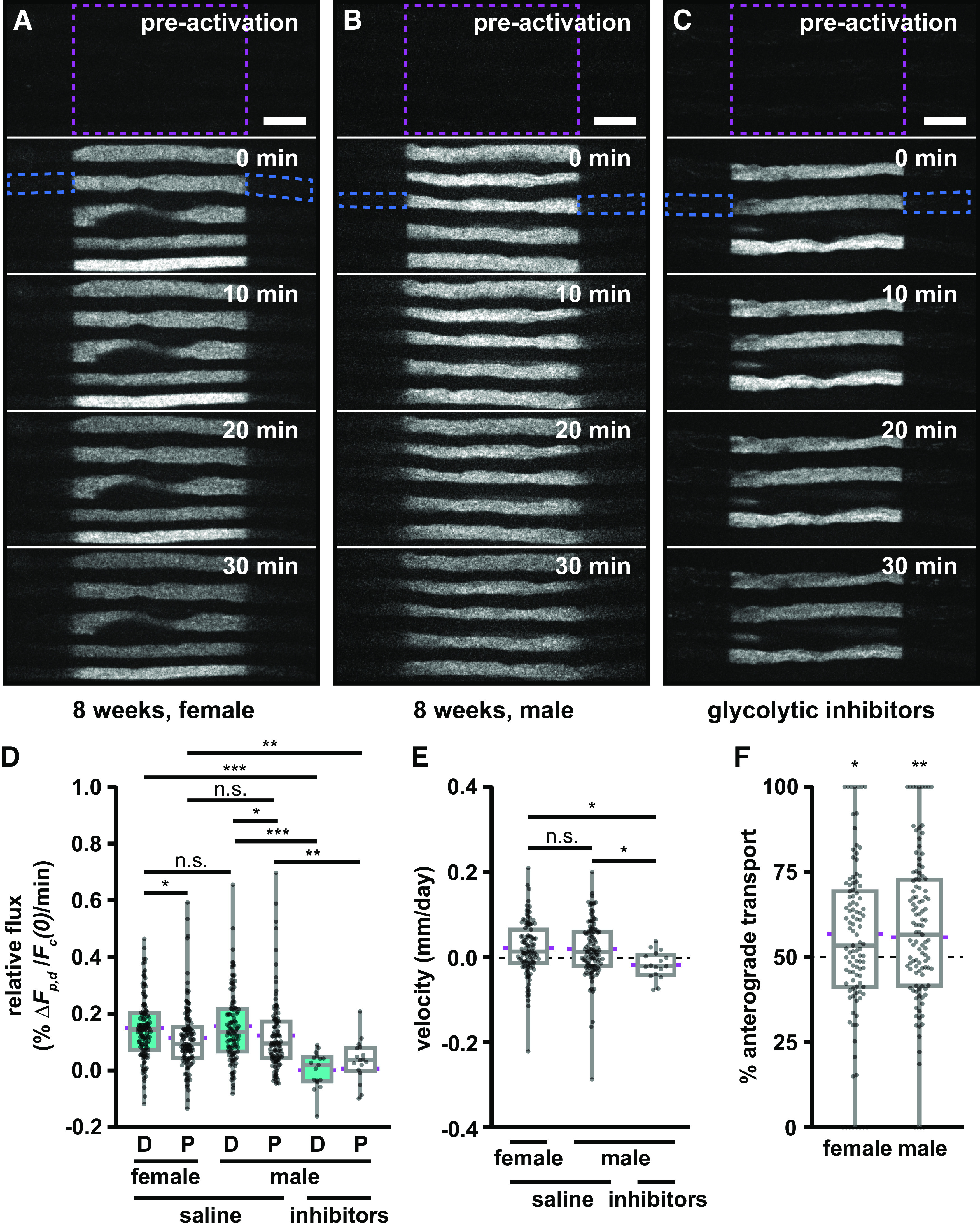
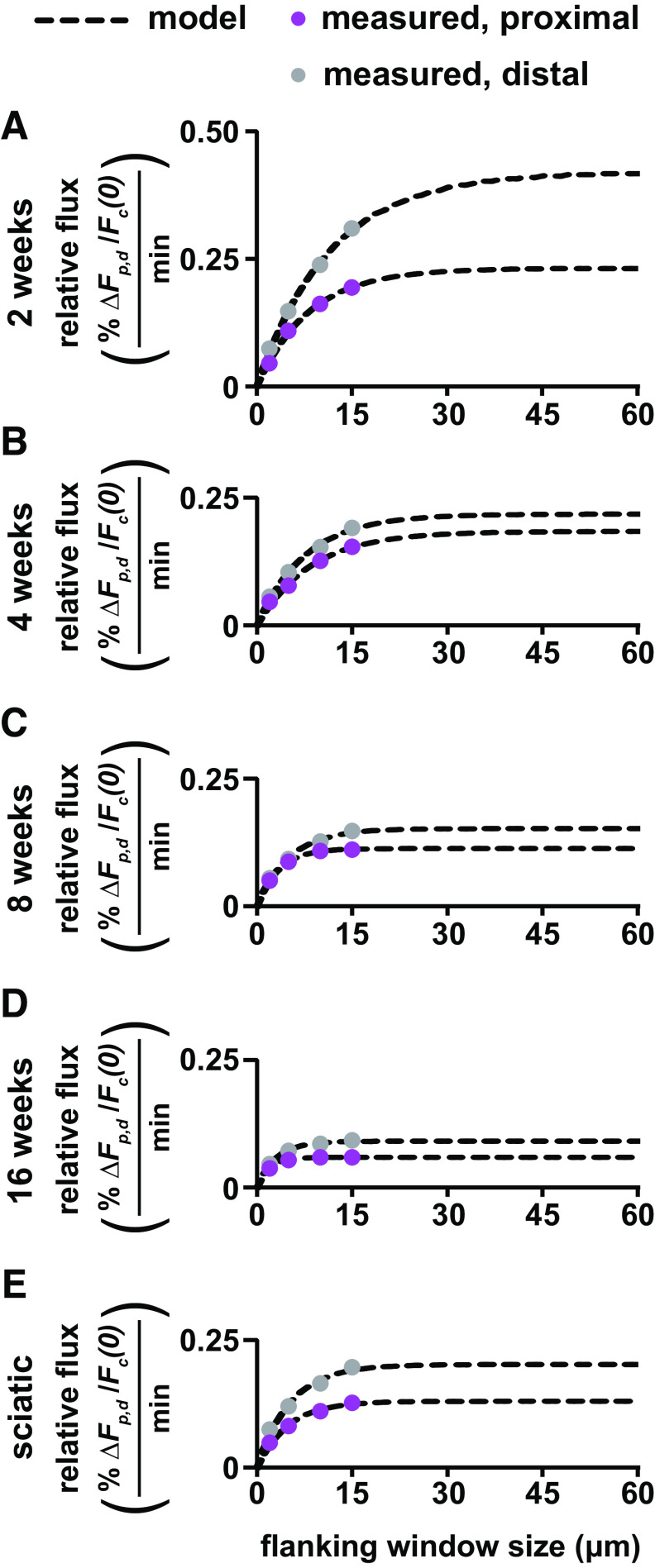
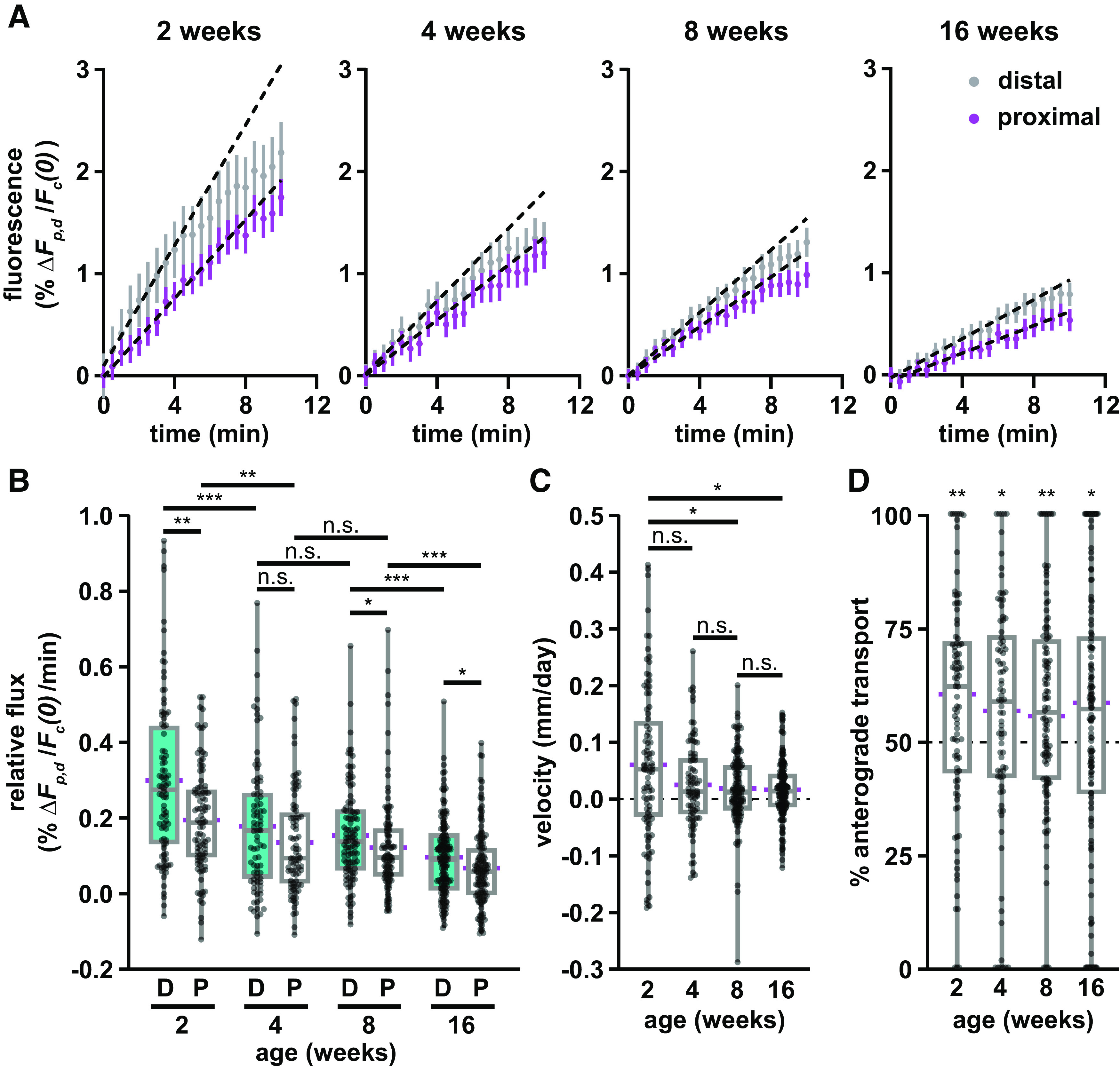
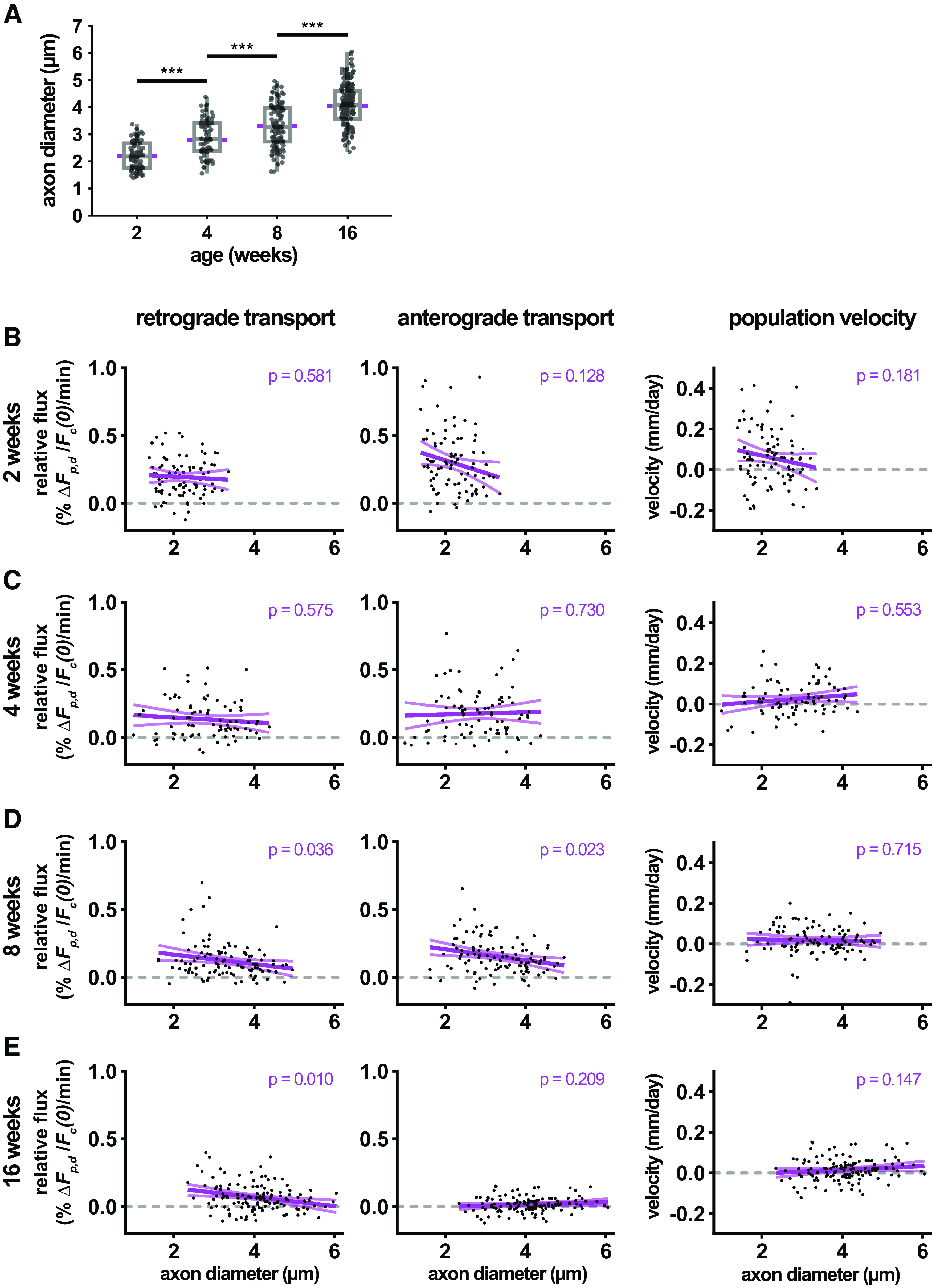
Neurofilaments are abundant space-filling cytoskeletal polymers that are transported into and along axons. During postnatal development, these polymers accumulate in myelinated axons causing an expansion of axon caliber, which is necessary for rapid electrical transmission. Studies on cultured nerve cells have shown that axonal neurofilaments move rapidly and intermittently along microtubule tracks in both anterograde and retrograde directions. However, it is unclear whether neurofilament transport is also bidirectional Here, we describe a pulse-spread fluorescence photoactivation method to address this in peripheral nerves dissected from transgenic mice, which express a photoactivatable fluorescent neurofilament protein. Neurofilaments were photoactivated in short segments of myelinated axons in tibial nerves at 2, 4, 8, and 16 weeks of age. The proximal and distal spread of the fluorescence due to the movement of the fluorescent neurofilaments was measured over time. We show that the directional bias and velocity of neurofilament transport can be calculated from these measurements. The directional bias was ∼60% anterograde and 40% retrograde and did not change significantly with age or distance along the nerve. The net velocity decreased with age and distance along the nerve, which is consistent with previous studies using radioisotopic pulse labeling. This decrease in velocity was caused by a decrease in both anterograde and retrograde movement. Thus, neurofilament transport is bidirectional , with a significant fraction of the filaments moving retrogradely in both juvenile and adult mice.
神经丝是丰富的填充空间的细胞骨架聚合物,被运输到轴突中并沿着轴突运输。在出生后发育过程中,这些聚合物在有髓轴突中积累,导致轴突口径扩张,这对于快速电传输是必要的。对培养的神经细胞的研究表明,神经丝在顺行和逆行方向上沿着微管轨道快速且间歇性地移动。然而,神经丝运输是否也是双向的尚不清楚。在这里,我们描述了一种脉冲传播荧光光激活方法,以解决这个问题,该方法使用从表达光激活荧光神经丝蛋白的转基因小鼠中分离的周围神经进行研究。在 2、4、8 和 16 周龄的胫骨神经中,在有髓轴突的短段中对神经丝进行光激活。随着时间的推移,测量由于荧光神经丝的运动而导致的荧光近端和远端的传播。我们表明,可以从这些测量中计算出神经丝运输的方向偏差和速度。方向偏差约为 60%顺行和 40%逆行,并且随着年龄或沿神经的距离的变化没有显著变化。净速度随年龄和沿神经的距离而降低,这与使用放射性同位素脉冲标记的先前研究一致。这种速度的降低是由于顺行和逆行运动的减少。因此,神经丝运输是双向的,在幼年和成年小鼠中都有相当一部分纤维逆行运动。