Grasaas Erik, Helseth Sølvi, Fegran Liv, Stinson Jennifer, Småstuen Milada, Lalloo Chitra, Haraldstad Kristin
Department of Health and Nursing Science, Faculty of Health and Sport Sciences, University of Agder, Kristiansand, Norway.
Department of Nursing and Health Promotion, Faculty of Health Sciences, Oslo Metropolitan University, Oslo, Norway.
Pilot Feasibility Stud. 2022 Jul 27;8(1):158. doi: 10.1186/s40814-022-01113-0.
Persistent pain in adolescence adversely affects everyday life and is an important public health problem. The primary aim was to determine the feasibility of an 8-week app-based self-management intervention to reduce pain and improve health-related quality of life in a community-based population of adolescents with persistent pain. A secondary aim was to explore differences in health outcomes between the intervention and control groups.
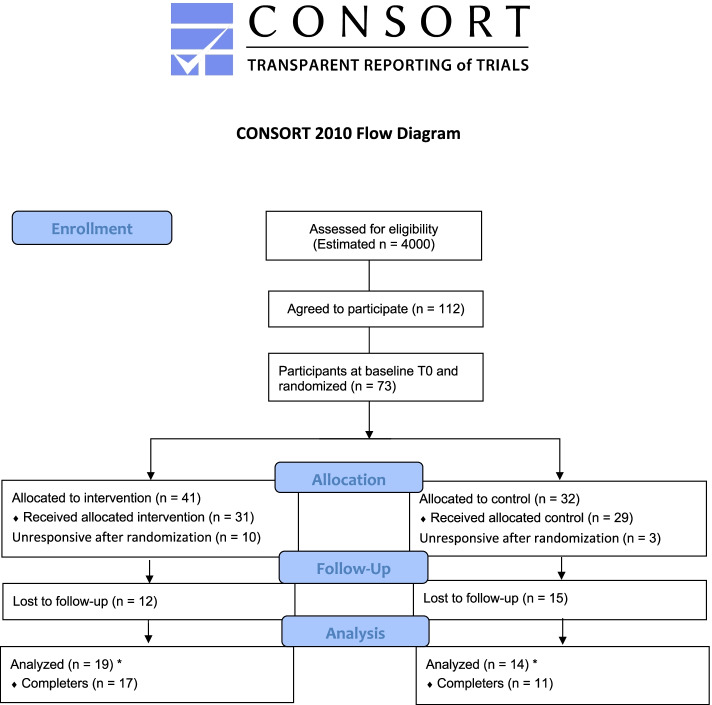
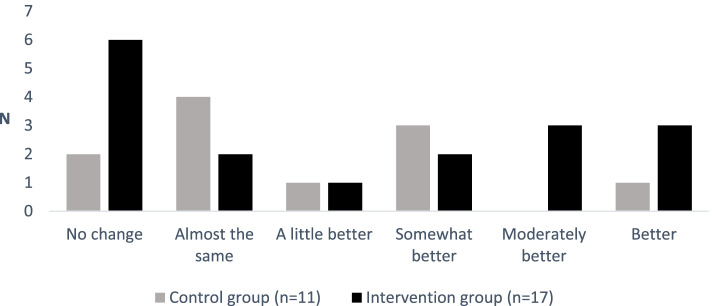
A sample of 73 adolescents aged 16-19 years with persistent pain from a community-based population were randomized into 2 groups. The intervention group received the Norwegian culturally adapted version of the iCanCope with Pain app, which includes symptom tracking, goal setting, self-management strategies, and social support. The attention control group received a symptom tracking app. Feasibility was assessed as attrition rates and level of engagement (interactions with the app). The secondary outcomes included pain intensity, health-related quality of life, self-efficacy, pain self-efficacy, perceived social support from friends, anxiety and depression, and patient global impression. Statistical analyses were conducted using SPSS.
Demographic and baseline outcome variables did not differ between the 2 groups. No differences were found between the participants completing the study and those who withdrew. Twenty-eight adolescents completed the intervention as planned (62% attrition). Both groups had a low level of app engagement. Intention-to-treat analysis (n = 19 + 14) showed no significant differences in outcomes between groups. However, the large effect size (Cohen's d = .9) for depression suggested a lower depression score in the intervention group.
High treatment attrition and low engagement indicate the need for changes in trial design in a full-scale randomized controlled trial to improve participant retention.
The iCanCope with Pain Norway trial was retrospectively registered in Clinical Trials.gov (ID: NCT03551977 ). Registered 6 June 2018.
青少年的持续性疼痛对日常生活产生不利影响,是一个重要的公共卫生问题。主要目的是确定一项基于应用程序的为期8周的自我管理干预措施在以社区为基础的持续性疼痛青少年人群中减轻疼痛并改善健康相关生活质量的可行性。次要目的是探讨干预组和对照组在健康结局方面的差异。
从以社区为基础的人群中选取73名年龄在16至19岁之间患有持续性疼痛的青少年作为样本,随机分为两组。干预组使用挪威文化适应性版本的“我能应对疼痛”应用程序,该应用程序包括症状跟踪、目标设定、自我管理策略和社会支持。注意力控制组使用症状跟踪应用程序。可行性通过损耗率和参与程度(与应用程序的交互)进行评估。次要结局包括疼痛强度、健康相关生活质量、自我效能、疼痛自我效能、来自朋友的感知社会支持、焦虑和抑郁以及患者总体印象。使用SPSS进行统计分析。
两组之间的人口统计学和基线结局变量没有差异。完成研究的参与者与退出者之间未发现差异。28名青少年按计划完成了干预(损耗率62%)。两组的应用程序参与程度都较低。意向性分析(n = 19 + 14)显示两组在结局方面没有显著差异。然而,抑郁的大效应量(科恩d值 = 0.9)表明干预组的抑郁得分较低。
高治疗损耗率和低参与度表明,在全面的随机对照试验中需要改变试验设计,以提高参与者的留存率。
“我能应对疼痛挪威试验”在ClinicalTrials.gov上进行了回顾性注册(ID:NCT03551977)。2018年6月6日注册。