Department of Sports Science, R.O.C. Military Academy, Kaohsiung 830208, Taiwan.
Department of Leisure Sport and Health Management, St. John's University, New Taipei 25135, Taiwan.
Int J Environ Res Public Health. 2022 Jul 22;19(15):8897. doi: 10.3390/ijerph19158897.
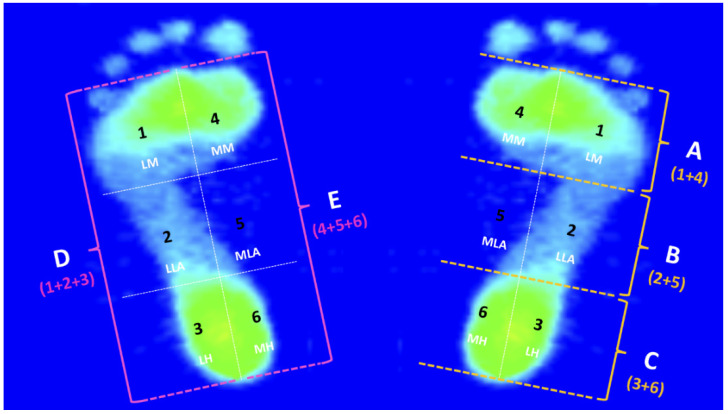
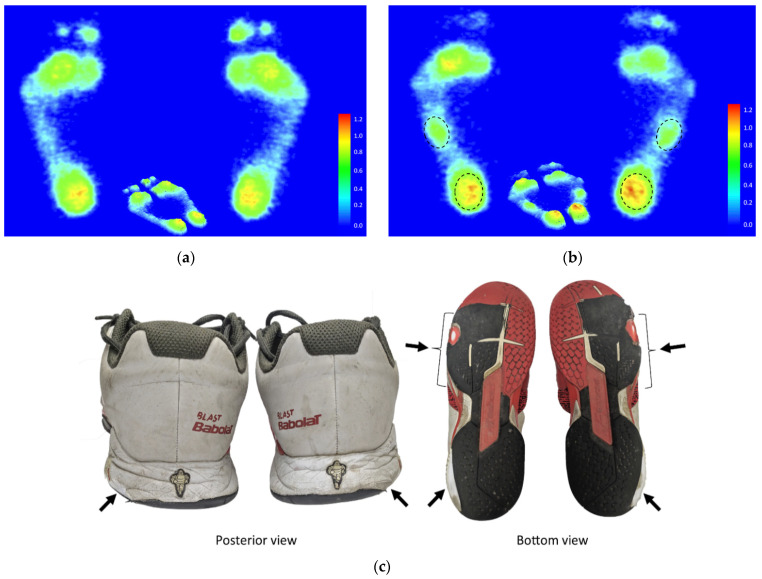
Many studies have focused on the plantar pressure characteristics of specific movements and footwork in tennis. However, little research has been conducted for exploring the foot characteristics among tennis professionals' daily habitual paces. This study aims to examine the pressure profiles associated with foot posture and balance abilities of elite tennis players during normal gait to understand how foot loading patterns result from habitual paces that may be derived from intensive tennis training and competition. A cross-sectional comparative study is conducted on 95 male college elite tennis players (mean age: 20.2 ± 1.2 years) and 100 male recreational tennis players (mean age: 19.8 ± 0.9 years). Bipedal plantar pressure distributions (PPDs) associated with arch index (AI) and centers of gravity balance are explored through the plantar pressure device. The foot posture is estimated to determine the rearfoot postural alignment. During the midstance phase of walking with a normal gait, the bipedal AI values of the elite group are significantly lower, indicating that they have high-arched feet. Additionally, the elite group experienced higher PPDs at the lateral regions of their longitudinal arches and heels and relatively lower PPDs at the medial portions of both feet. Rearfoot postural alignment resonance analysis of the PPDs suggests that the elite group experienced foot supination associated with cuboid dropped. Moreover, the right foot bears heavier centers of gravity balance in the present study. The elite tennis players in the study are categorized as having high-arched supination with cuboids dropped when performing daily habitual paces. This finding warrants further investigation into the correlation between possible injuries and daily habitual paces that may result from tennis' intensive training and competition.
许多研究都集中在网球中特定动作和步法的足底压力特征上。然而,对于探索网球专业人士日常习惯性步伐中足部特征的研究却很少。本研究旨在探讨与精英网球运动员正常步态时足部姿势和平衡能力相关的压力分布情况,以了解足部负荷模式如何由可能源于密集网球训练和比赛的习惯性步伐产生。对 95 名男性大学生精英网球运动员(平均年龄:20.2 ± 1.2 岁)和 100 名男性娱乐性网球运动员(平均年龄:19.8 ± 0.9 岁)进行了一项横断面比较研究。通过足底压力设备探讨了与足弓指数(AI)和重心平衡相关的双足足底压力分布(PPD)。通过足底压力设备,估计足部姿势以确定后足姿势对线。在正常步态的中足支撑阶段,精英组的双足 AI 值明显较低,表明他们的足弓较高。此外,精英组在其纵向足弓的外侧区域和脚跟处经历了更高的 PPD,而在双脚的内侧部分则经历了相对较低的 PPD。PPD 的后足姿势对线共振分析表明,精英组经历了与骰骨下降相关的足旋后。此外,在本研究中,右脚的重心平衡更重。研究中的精英网球运动员在进行日常习惯性步伐时,被归类为具有高足弓旋后和骰骨下降。这一发现值得进一步研究可能的损伤与可能源于网球密集训练和比赛的日常习惯性步伐之间的相关性。