Department of Periodontology, Wroclaw Medical University, 50-367 Wroclaw, Poland.
Int J Environ Res Public Health. 2022 Jul 24;19(15):8999. doi: 10.3390/ijerph19158999.
BMS is a chronic pain syndrome affecting the oral mucosa. It consists of experiencing a burning or dysesthetic sensation. BMS prevalence varies, with up to 15% among women. An effective treatment is still unattainable.
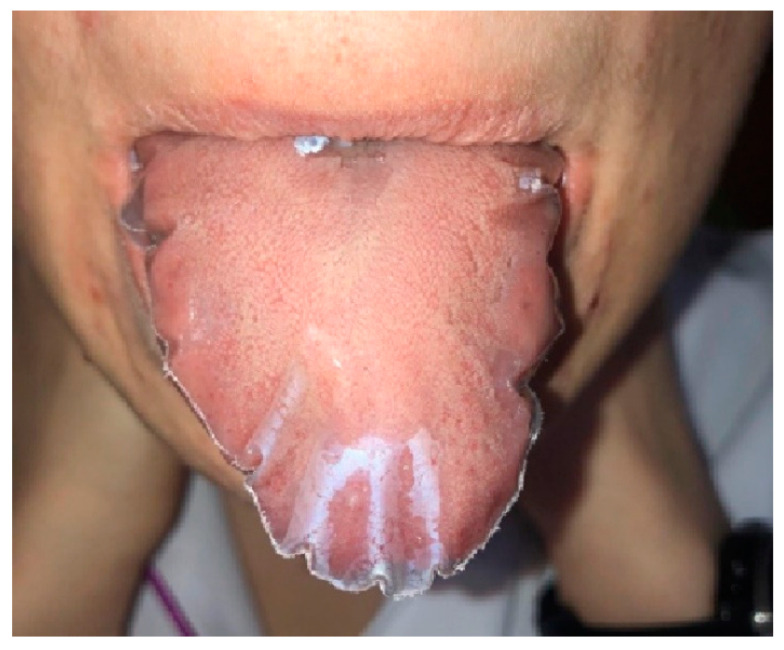
A total of 60 patients with BMS qualified for a randomised trial, divided in two groups: the clonazepam-treated and tongue protector group. Treatment was provided for 4 weeks in both groups. In the former, the oral dosage of clonazepam 0.5 mg; in the latter, a tongue protector was used. Clinical oral examination was performed, and the presence of taste disorder and pain intensity, on the visual analogues scale, were recorded. Psychological domains were explored with the Beck depression inventory (depression), Athens insomnia scale (insomnia), Eyesenck personality questionnaire-revised (personality traits), and WHO quality of life questionnaire (quality of life).
Complete recovery was observed in three patients after clonazepam and one patient after tongue guard treatment. A greater improvement in the VAS scores, from baseline to the control values, was demonstrated in the clonazepam group, and it was statistically significant. In women, the level of depression significantly correlated with all domains of quality of life.
BMS is an ongoing multi-specialist challenge. The development of new pathophysiological concepts of BMS offers hope for more effective treatment. Considering the influence of BMS on the quality of life and mental disorders in most patients, further research on the possibilities of therapy seems to be very important.
BMS 是一种影响口腔黏膜的慢性疼痛综合征,其特征为烧灼感或感觉异常。BMS 的患病率不一,女性患病率高达 15%。目前仍缺乏有效的治疗方法。
共有 60 名 BMS 患者符合随机试验条件,分为两组:氯硝西泮治疗组和舌保护器组。两组均接受 4 周的治疗。前者给予氯硝西泮口腔剂量 0.5 毫克;后者使用舌保护器。进行临床口腔检查,并记录味觉障碍和疼痛强度(视觉模拟量表)。使用贝克抑郁量表(抑郁)、雅典失眠量表(失眠)、艾森克人格问卷修订版(人格特征)和世界卫生组织生活质量问卷(生活质量)探索心理领域。
氯硝西泮治疗后有 3 例患者完全康复,舌保护器治疗后有 1 例患者完全康复。氯硝西泮组 VAS 评分从基线到对照值的改善更为显著,且具有统计学意义。在女性中,抑郁程度与生活质量的所有领域均显著相关。
BMS 是一个多学科持续面临的挑战。BMS 的新病理生理概念的发展为更有效的治疗提供了希望。鉴于 BMS 对大多数患者的生活质量和精神障碍的影响,进一步研究治疗的可能性似乎非常重要。