Stem Cell Research Centre, Department of Hematology, Sanjay Gandhi Post Graduate Institute of Medical Sciences, Lucknow 226014, UP, India.
Department of Biomedical Engineering, Shobhit Institute of Engineering & Technology (Deemed To-Be-University), Meerut 250110, UP, India.
Sensors (Basel). 2022 Jul 26;22(15):5589. doi: 10.3390/s22155589.
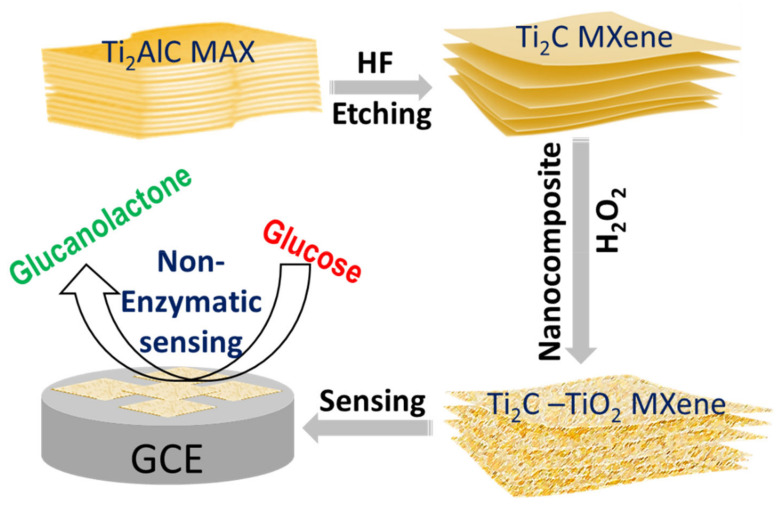
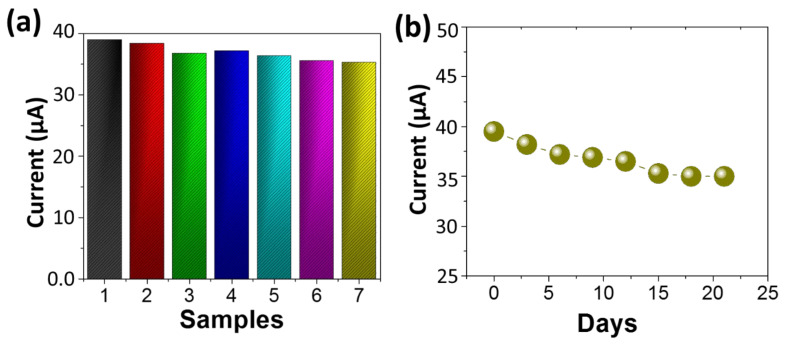
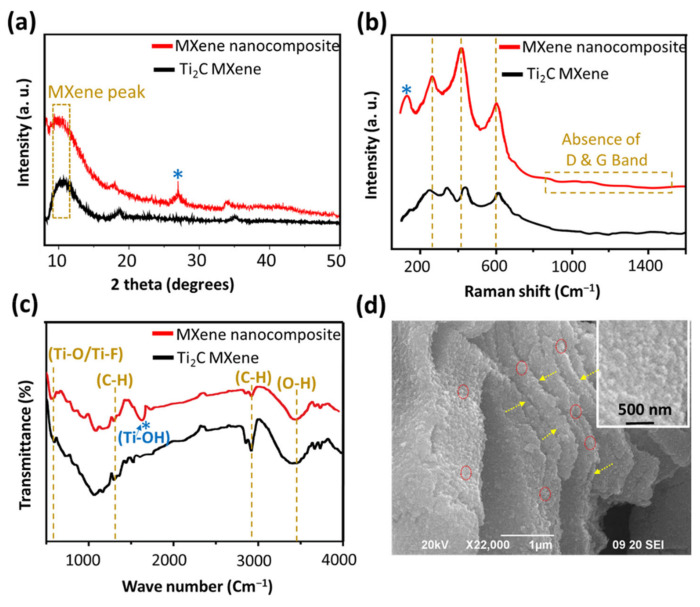
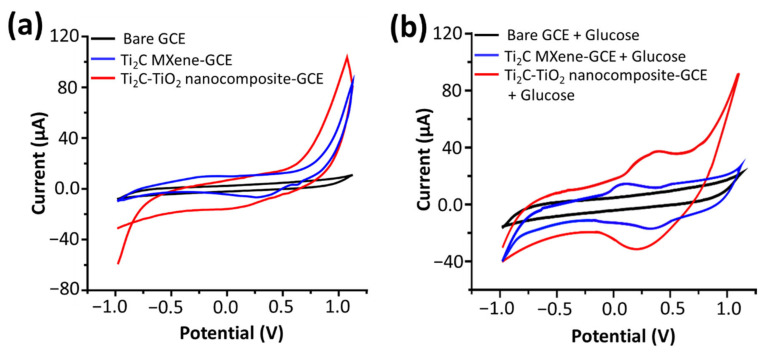
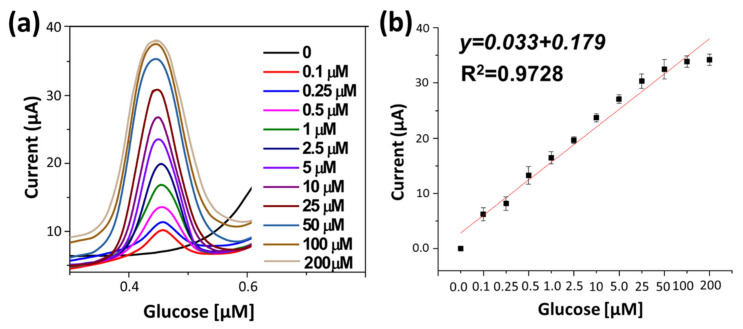
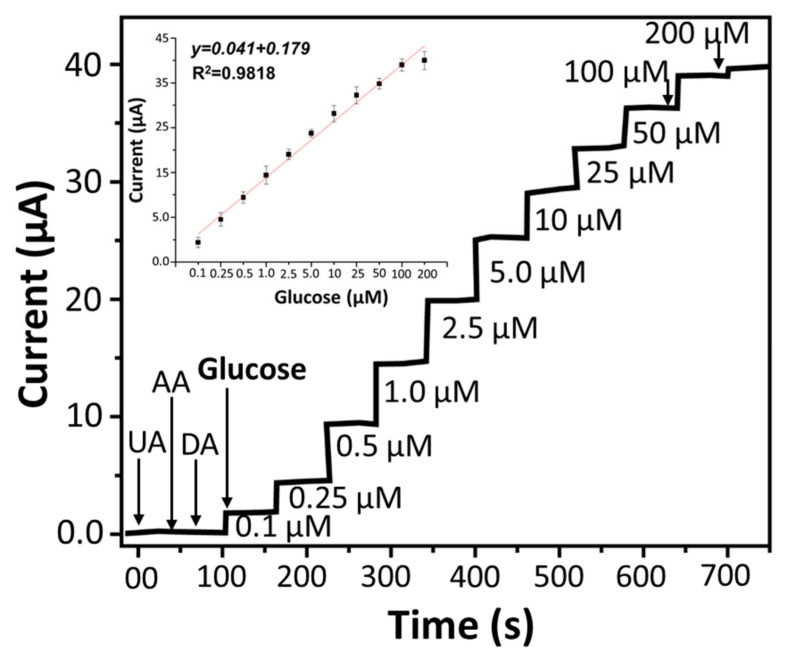
Diabetes is a major health challenge, and it is linked to a number of serious health issues, including cardiovascular disease (heart attack and stroke), diabetic nephropathy (kidney damage or failure), and birth defects. The detection of glucose has a direct and significant clinical importance in the management of diabetes. Herein, we demonstrate the application of synthesized TiC-TiO MXene nanocomposite for high throughput non-enzymatic electrochemical sensing of glucose. The nanocomposite was synthesized by controlled oxidation of TiC-MXene nanosheets using HO at room temperature The oxidation results in the opening up of TiC-MXene nanosheets and the formation of TiO nanocrystals on their surfaces as revealed in microscopic and spectroscopic analysis. Nanocomposite exhibited considerably high electrochemical response than parent TiC MXene, and hence utilized as a novel electrode material for enzyme-free sensitive and specific detection of glucose. Developed nanocomposite-based non-enzymatic glucose sensor (NEGS) displays a wide linearity range (0.1 µM-200 µM, R = 0.992), high sensitivity of 75.32 μA mM cm, a low limit of detection (0.12 μM) and a rapid response time (~3s). NEGS has further shown a high level of repeatability and selectivity for glucose in serum spiked samples. The unveiled excellent sensing performance of NEGS is credited to synergistically improved electrochemical response of TiC MXene and TiO nanoparticles. All of these attributes highlight the potential of MXene nanocomposite as a next-generation NEGS for on the spot mass screening of diabetic patients.
糖尿病是一个主要的健康挑战,它与许多严重的健康问题有关,包括心血管疾病(心脏病发作和中风)、糖尿病肾病(肾脏损伤或衰竭)和出生缺陷。葡萄糖的检测在糖尿病的管理中具有直接而重要的临床意义。在此,我们展示了合成的 TiC-TiO MXene 纳米复合材料在高通量非酶电化学葡萄糖传感中的应用。该纳米复合材料是通过室温下使用 HO 对 TiC-MXene 纳米片进行控制氧化合成的。氧化导致 TiC-MXene 纳米片的打开和 TiO 纳米晶在其表面的形成,这在微观和光谱分析中得到了揭示。纳米复合材料表现出比母体 TiC MXene 高得多的电化学响应,因此被用作新型无酶敏感和特异性检测葡萄糖的电极材料。开发的基于纳米复合材料的非酶葡萄糖传感器 (NEGS) 显示出宽的线性范围 (0.1 μM-200 μM,R = 0.992)、高灵敏度 75.32 μA mM cm、低检测限 (0.12 μM) 和快速响应时间 (~3s)。NEGS 还在添加血清的样品中显示出对葡萄糖的高度重复性和选择性。NEGS 出色的传感性能归因于 TiC MXene 和 TiO 纳米粒子协同改善的电化学响应。所有这些特性都突出了 MXene 纳米复合材料作为下一代 NEGS 的潜力,可用于现场大规模筛查糖尿病患者。