Centre for Endemic Disease Control, Chinese Centre for Disease Control and Prevention, Harbin Medical University, Harbin City, China.
College of Medical Laboratory Science and Technology, Harbin Medical University (Daqing), Daqing, China.
Front Endocrinol (Lausanne). 2022 Jul 8;13:911487. doi: 10.3389/fendo.2022.911487. eCollection 2022.
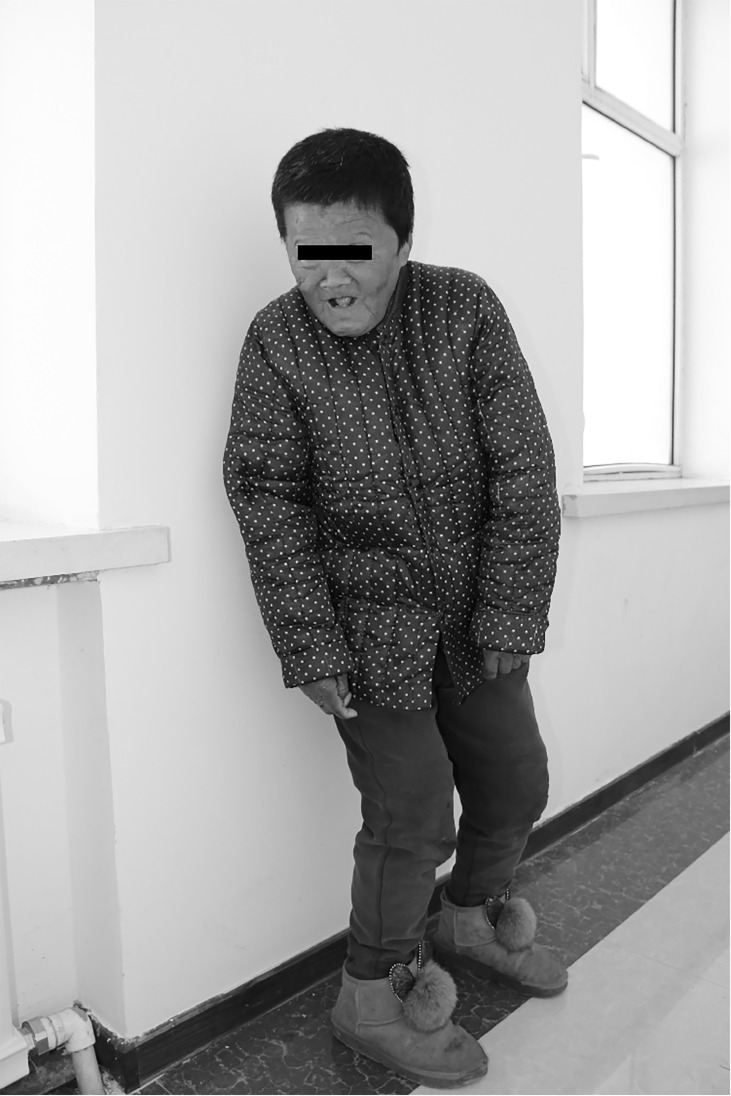
Endemic cretinism is the most severe manifestation among the iodine deficiency-related disorders. The clinical status of the cretins may be modified subsequently by the duration and severity of the disease. We aimed to reassess the clinical status and thyroid function of 31 surviving "neurological cretins" after 42 years of iodine supplementation in a historically severely iodine deficiency area of China.
It was a cross-sectional study in design and we investigated all 31 surviving neurological cretins and 85 controls. A detailed neurological examination was conducted on each patients. All the participants were given a questionnaire and underwent B-mode ultrasonography of the thyroid. The serum levels of thyroid hormones, thyroid antibodies, serum iodine concentration (SIC) and urine iodine concentration (UIC) were measured.
The neurological cretins had shorter stature than that of the control. Neurological damage is still present in patients with cretinism. The prevalence of subclinical hypothyroidism and thyroid nodule in the cretins was significantly higher (4.766, =0.029 and 17.077, <0.0001, respectively) compared with the control. After adjusting for confounding factors, endemic neurocretinism was found to be an independent risk factor for subclinical hypothyroidism (OR=4.412; 95% CI: 1.358-14.334; =0.014) and thyroid nodule (OR=6.433; 95% CI: 2.323-17.816; <0.0001).
Iodine supplementation after birth does not reverse the neurological damage that results from maternal/foetal hypothyroidism and is subsequently manifested as neurological cretinism. There is a cross-sectional association between endemic neurocretinism and subclinical hypothyroidism and thyroid nodule.
地方性克汀病是碘缺乏相关疾病中最严重的表现形式。克汀病患者的临床状况可能会随着疾病持续时间和严重程度的不同而发生改变。我们旨在评估在中国历史上严重碘缺乏地区经过 42 年碘补充后 31 名幸存的“神经型克汀病”患者的临床状况和甲状腺功能。
这是一项横断面研究,我们调查了所有 31 名幸存的神经型克汀病患者和 85 名对照者。对每位患者进行详细的神经系统检查。所有参与者都接受了问卷调查,并接受了甲状腺 B 型超声检查。测量了甲状腺激素、甲状腺抗体、血清碘浓度(SIC)和尿碘浓度(UIC)的水平。
神经型克汀病患者的身高低于对照组。克汀病患者仍存在神经损伤。亚临床甲状腺功能减退症和甲状腺结节在克汀病患者中的患病率明显高于对照组(分别为 4.766%,=0.029 和 17.077%,<0.0001)。在校正混杂因素后,地方性神经型克汀病被发现是亚临床甲状腺功能减退症(OR=4.412;95%CI:1.358-14.334;=0.014)和甲状腺结节(OR=6.433;95%CI:2.323-17.816;<0.0001)的独立危险因素。
出生后补充碘并不能逆转由母体/胎儿甲状腺功能减退引起的神经损伤,随后表现为神经型克汀病。地方性神经型克汀病与亚临床甲状腺功能减退症和甲状腺结节之间存在横断面关联。