Zúñiga Leandro, Cayo Angel, González Wendy, Vilos Cristian, Zúñiga Rafael
Laboratorio de Fisiología Molecular, Escuela de Medicina, Universidad de Talca, Talca, Chile.
Centro de Nanomedicina, Diagnóstico y Desarrollo de Fármacos (ND3), Escuela de Medicina, Universidad de Talca, Talca, Chile.
Onco Targets Ther. 2022 Jul 20;15:783-797. doi: 10.2147/OTT.S326614. eCollection 2022.
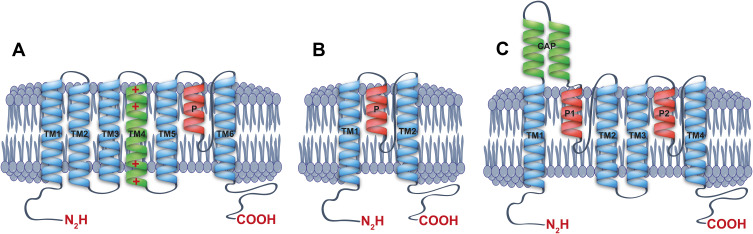
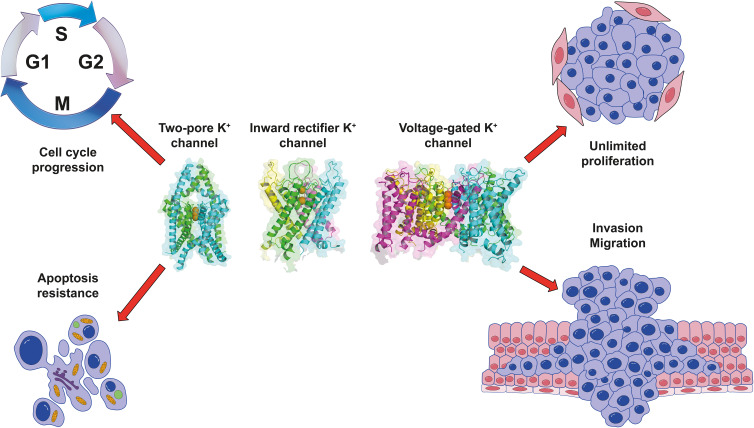
Potassium (K) channels are highly regulated membrane proteins that control the potassium ion flux and respond to different cellular stimuli. These ion channels are grouped into three major families, Kv (voltage-gated K channel), Kir (inwardly rectifying K channel) and K2P (two-pore K channels), according to the structure, to mediate the K currents. In cancer, alterations in K channel function can promote the acquisition of the so-called hallmarks of cancer - cell proliferation, resistance to apoptosis, metabolic changes, angiogenesis, and migratory capabilities - emerging as targets for the development of new therapeutic drugs. In this review, we focus our attention on the different K channels associated with the most relevant and prevalent cancer types. We summarize our knowledge about the potassium channels structure and function, their cancer dysregulated expression and discuss the K channels modulator and the strategies for designing new drugs.
钾(K)通道是高度受调控的膜蛋白,可控制钾离子通量并对不同的细胞刺激做出反应。根据结构,这些离子通道分为三个主要家族,即电压门控钾通道(Kv)、内向整流钾通道(Kir)和双孔钾通道(K2P),以介导钾电流。在癌症中,钾通道功能的改变可促进癌细胞获得所谓的癌症标志——细胞增殖、抗凋亡、代谢变化、血管生成和迁移能力——从而成为开发新型治疗药物的靶点。在本综述中,我们将注意力集中在与最相关和最常见癌症类型相关的不同钾通道上。我们总结了关于钾通道结构和功能、它们在癌症中的表达失调的知识,并讨论了钾通道调节剂以及设计新药的策略。