
癌变过程中离子调节的全身机制。
Systemic Mechanisms of Ionic Regulation in Carcinogenesis.
作者信息
Zamay Tatiana N, Zamay Sergey S, Zamay Galina S, Kolovskaya Olga S, Kichkailo Anna S, Berezovski Maxim V
机构信息
Federal Research Center "Krasnoyarsk Science Center" of the Siberian Branch of the Russian Academy of Sciences, Laboratory for Digital Controlled Drugs and Theranostics, Molecular Electronics Department, 660036 Krasnoyarsk, Russia.
Prof. V.F. Voino-Yasenetsky Krasnoyarsk State Medical University Laboratory for Biomolecular and Medical Technologies, 660022 Krasnoyarsk, Russia.
出版信息
Cancers (Basel). 2025 Jan 17;17(2):286. doi: 10.3390/cancers17020286.
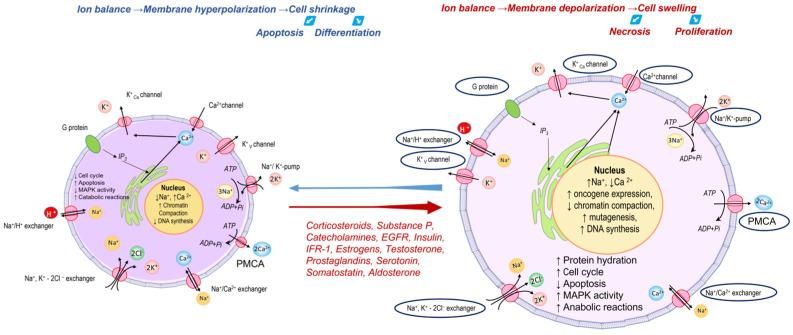
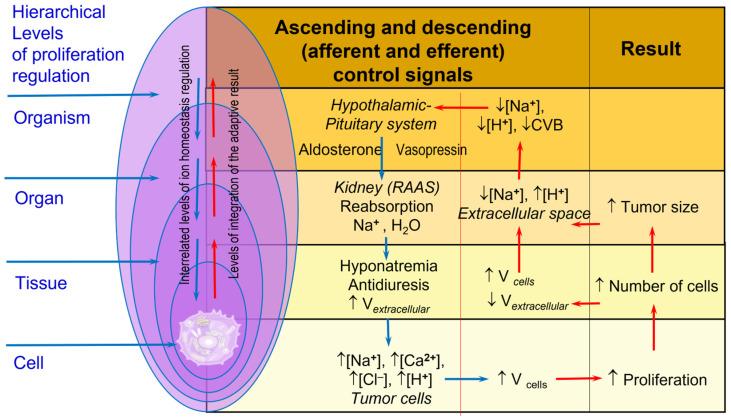
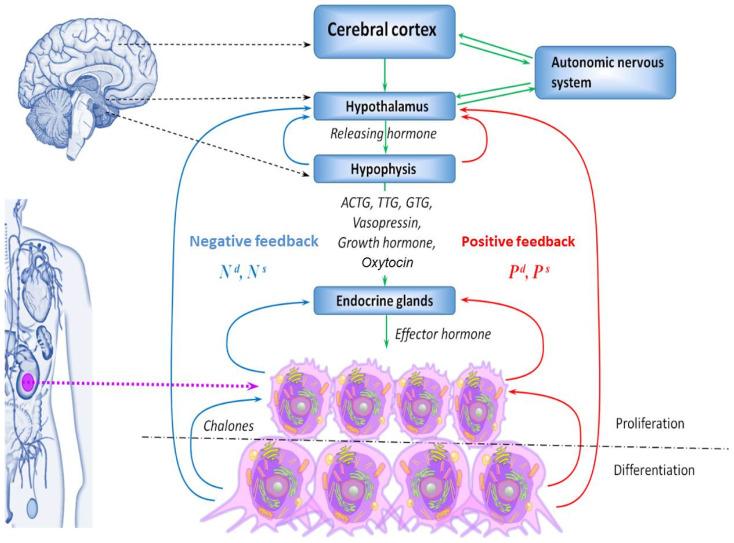
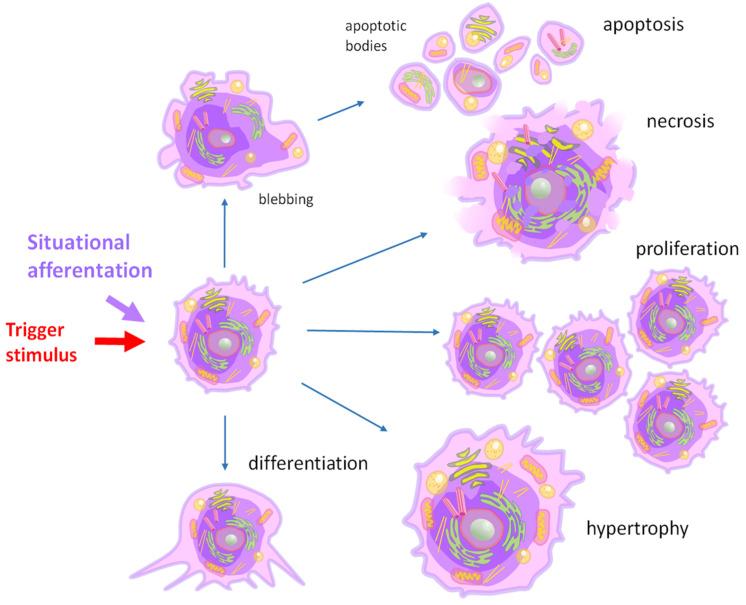
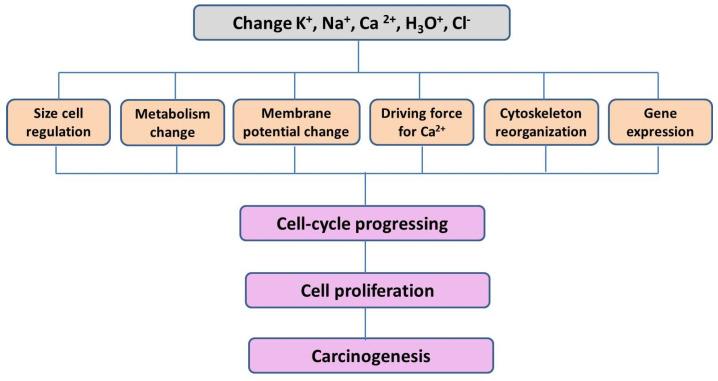
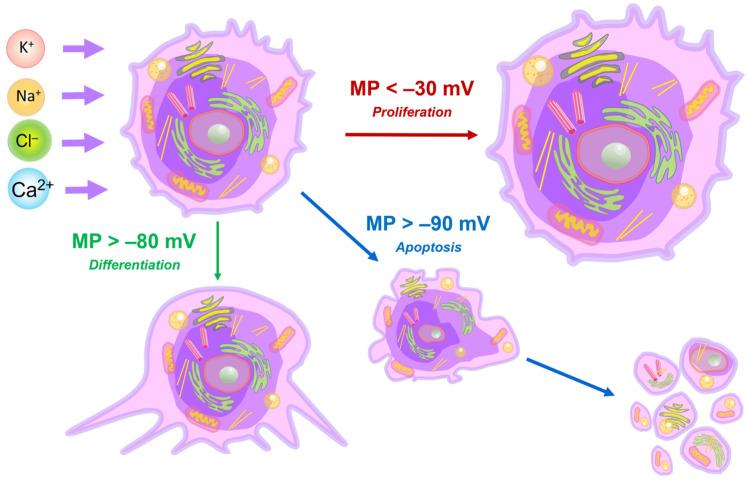
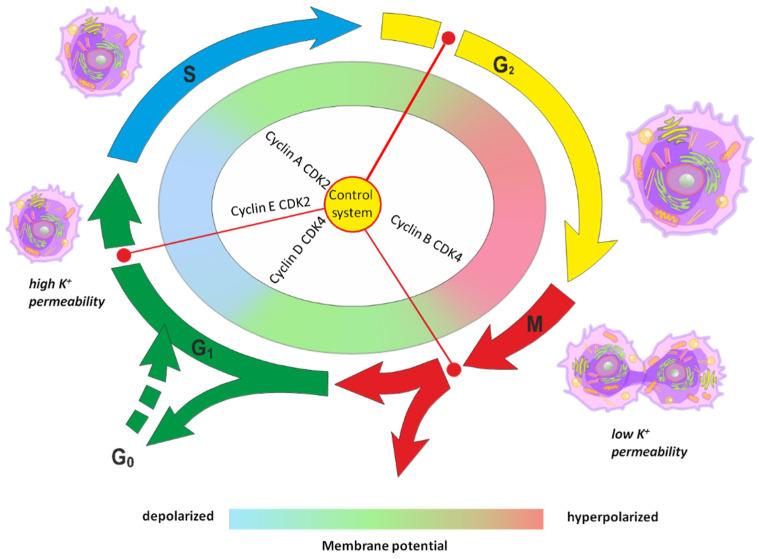
Cancer is a complex disease characterized by uncontrolled cell proliferation at various levels, leading to tumor growth and spread. This review focuses on the role of ion homeostasis in cancer progression. It describes a model of ion-mediated regulation in both normal and cancerous cell proliferation. The main function of this system is to maintain the optimal number of cells in the body by regulating intra- and extracellular ion content. The review discusses the key points of ion regulation and their impact on tumor growth and spread during cancer development. It explains that normal levels of sodium, potassium, calcium, chloride, and hydrogen ions are regulated at different levels. Damage to ion transport mechanisms during carcinogenesis can lead to an increase in sodium cations and water content in cells, disrupting the balance of calcium and hydrogen ions. This, in turn, can lead to chromatin compaction reduction, gene overexpression, and instability at the epigenetic and genomic levels, resulting in increased cell proliferation and mutagenesis. Restoring normal ion balance can reduce the proliferative potential of both normal and tumor cell populations. The proposed model of systemic ionic regulation of proliferation aims to reconcile diverse data related to cell mitotic activity in various physiological conditions and explain tumor growth. Understanding the mechanisms behind pathological cell proliferation is important for developing new approaches to control ion homeostasis in the body, potentially leading to more effective cancer treatment and prevention.
癌症是一种复杂的疾病,其特征是在各个层面上细胞不受控制地增殖,导致肿瘤生长和扩散。本综述聚焦于离子稳态在癌症进展中的作用。它描述了正常细胞和癌细胞增殖中离子介导调节的模型。该系统的主要功能是通过调节细胞内和细胞外离子含量来维持体内细胞的最佳数量。综述讨论了离子调节的关键点及其在癌症发展过程中对肿瘤生长和扩散的影响。它解释说,钠、钾、钙、氯和氢离子的正常水平在不同层面受到调节。致癌过程中离子转运机制的损伤会导致细胞内钠阳离子和水含量增加,破坏钙和氢离子的平衡。反过来,这可能导致染色质压缩减少、基因过度表达以及表观遗传和基因组水平的不稳定性,从而导致细胞增殖增加和诱变。恢复正常的离子平衡可以降低正常细胞和肿瘤细胞群体的增殖潜力。所提出的系统性离子增殖调节模型旨在协调各种生理条件下与细胞有丝分裂活性相关的不同数据,并解释肿瘤生长。了解病理性细胞增殖背后的机制对于开发控制体内离子稳态的新方法很重要,这可能会带来更有效的癌症治疗和预防。
 Zotero 插件