School of Public Health (Shenzhen), Shenzhen Campus of Sun Yat-sen University, Shenzhen, People's Republic of China.
Department of Respiratory and Critical Care Medicine, The 74(th) Group Army Hospital, Guangzhou, People's Republic of China.
Emerg Microbes Infect. 2022 Dec;11(1):2007-2020. doi: 10.1080/22221751.2022.2105261.
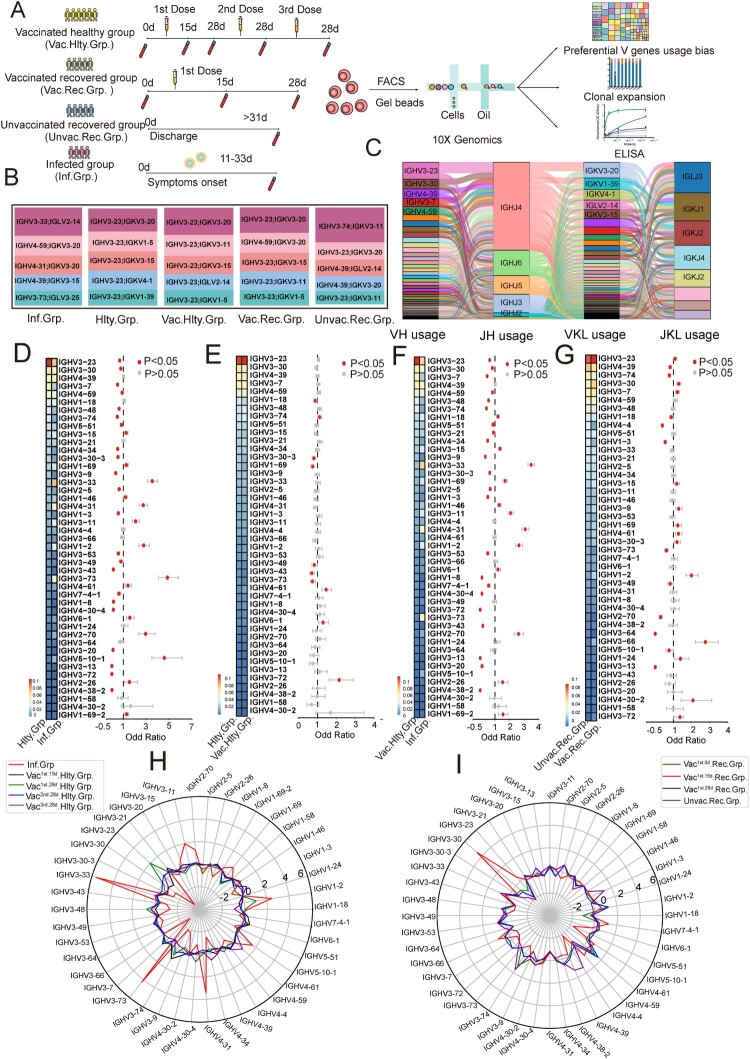
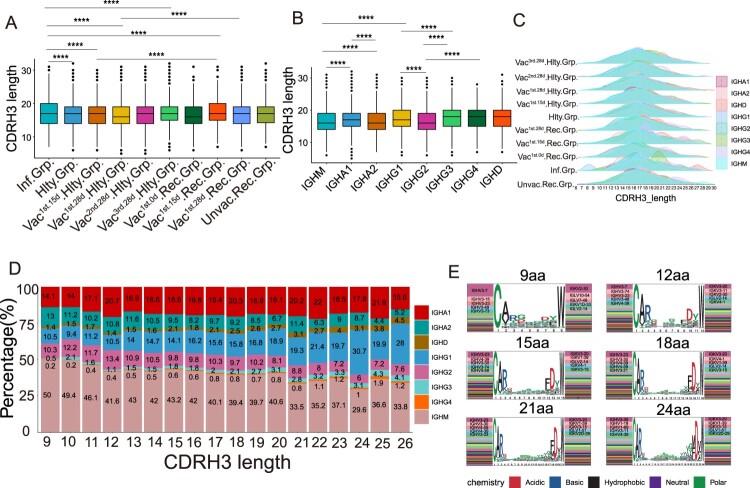
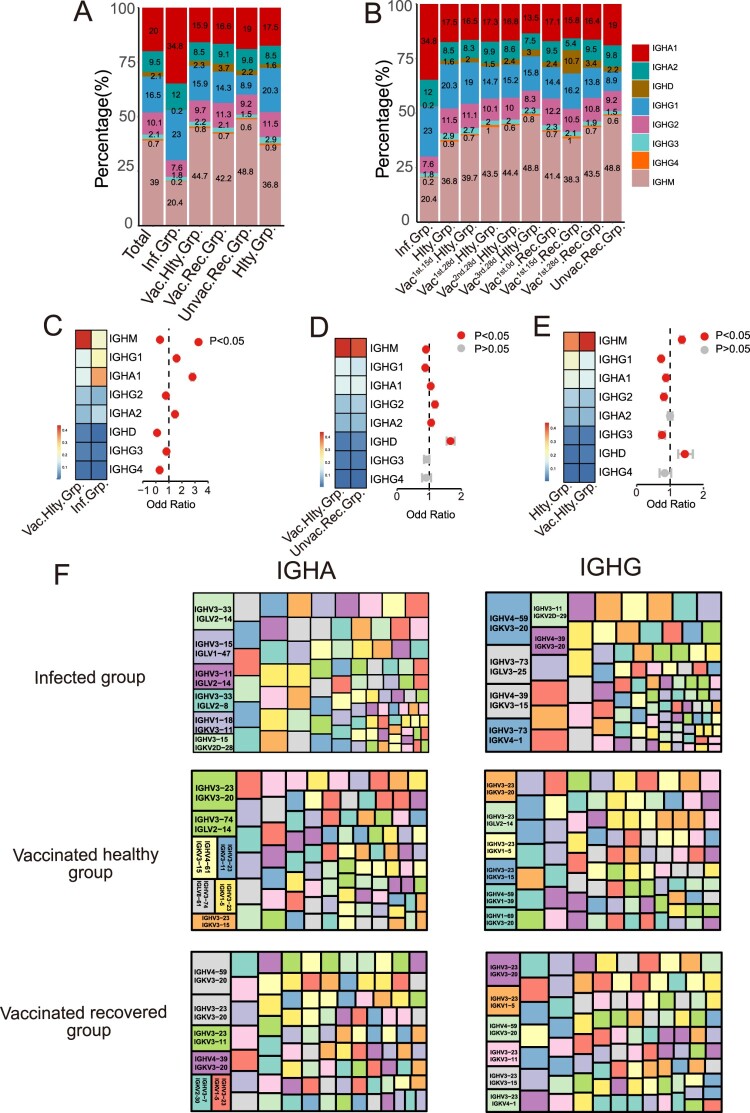
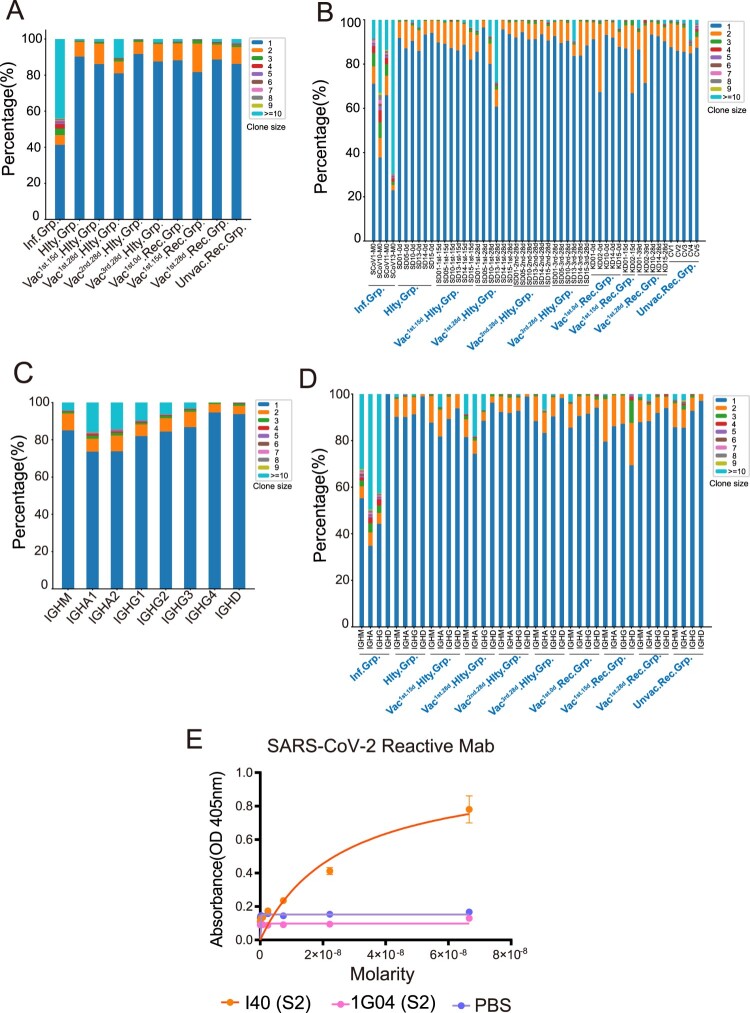
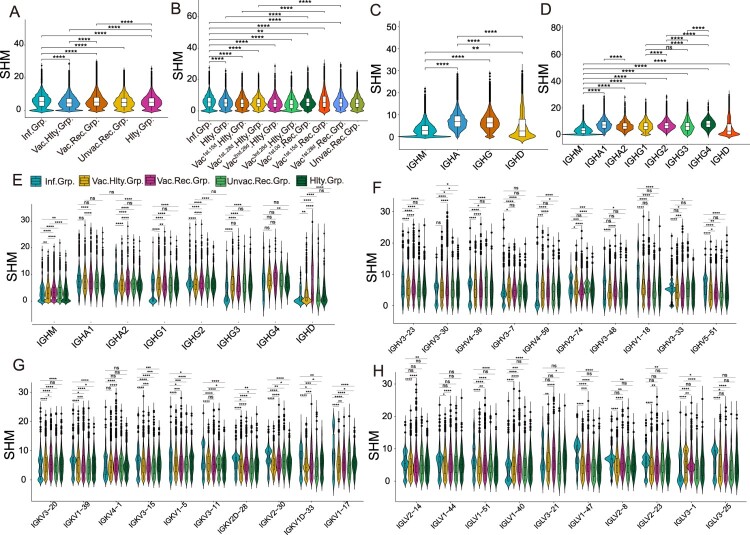
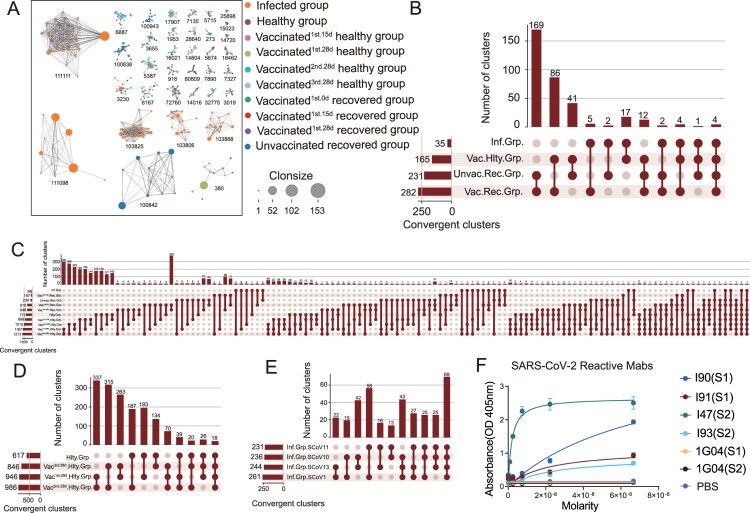
Dynamic changes of the paired heavy and light chain B cell receptor (BCR) repertoire provide an essential insight into understanding the humoral immune response post-SARS-CoV-2 infection and vaccination. However, differences between the endogenous paired BCR repertoire kinetics in SARS-CoV-2 infection and previously recovered/naïve subjects treated with the inactivated vaccine remain largely unknown. We performed single-cell V(D)J sequencing of B cells from six healthy donors with three shots of inactivated SARS-CoV-2 vaccine (BBIBP-CorV), five people who received the BBIBP-CorV vaccine after having recovered from COVID-19, five unvaccinated COVID-19 recovered patients and then integrated with public data of B cells from four SARS-CoV-2-infected subjects. We discovered that BCR variable (V) genes were more prominently used in the SARS-CoV-2 exposed groups (both in the group with active infection and in the group that had recovered) than in the vaccinated groups. The VH gene that expanded the most after SARS-CoV-2 infection was IGHV3-33, while IGHV3-23 in the vaccinated groups. SARS-CoV-2-infected group enhanced more BCR clonal expansion and somatic hypermutation than the vaccinated healthy group. A small proportion of public clonotypes were shared between the SARS-CoV-2 infected, vaccinated healthy, and recovered groups. Moreover, several public antibodies had been identified against SARS-CoV-2 spike protein. We comprehensively characterize the paired heavy and light chain BCR repertoire from SARS-CoV-2 infection to vaccination, providing further guidance for the development of the next-generation precision vaccine.
动态变化的配对重链和轻链 B 细胞受体 (BCR) 库为了解 SARS-CoV-2 感染和接种疫苗后的体液免疫反应提供了重要的见解。然而,SARS-CoV-2 感染和先前已康复/未接种过灭活疫苗的个体的内源性配对 BCR 库动力学之间的差异在很大程度上仍不清楚。我们对接受三剂灭活 SARS-CoV-2 疫苗(BBIBP-CorV)的六名健康供体的 B 细胞进行了单细胞 V(D)J 测序,五名从 COVID-19 中康复后接受 BBIBP-CorV 疫苗的人,五名未接种 COVID-19 康复患者,然后整合了来自四个 SARS-CoV-2 感染个体的 B 细胞的公共数据。我们发现,在 SARS-CoV-2 暴露组(无论是在有活性感染的组还是在已康复的组)中,BCR 可变(V)基因的使用更为突出,而在接种组中则不然。在 SARS-CoV-2 感染后扩增最多的 VH 基因是 IGHV3-33,而接种组中的 IGHV3-23。SARS-CoV-2 感染组比接种健康组增强了更多的 BCR 克隆扩增和体细胞超突变。一小部分公共克隆型在 SARS-CoV-2 感染、接种健康和康复组之间共享。此外,已经鉴定出针对 SARS-CoV-2 刺突蛋白的几种公共抗体。我们全面描述了 SARS-CoV-2 感染到接种疫苗期间的配对重链和轻链 BCR 库,为下一代精准疫苗的开发提供了进一步的指导。