Wang Su-Long, Liu Xi-Lin, Kang Zhi-Chen, Wang Yue-Shu
Department of Hand Surgery, China-Japan Union Hospital of Jilin University, Changchun, Jilin Province, China.
Department of Rehabilitation, The Second Hospital of Jilin University, Changchun, Jilin Province, China.
Neural Regen Res. 2023 Feb;18(2):375-381. doi: 10.4103/1673-5374.346461.
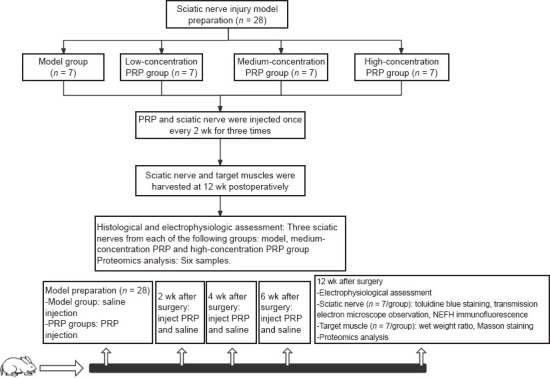
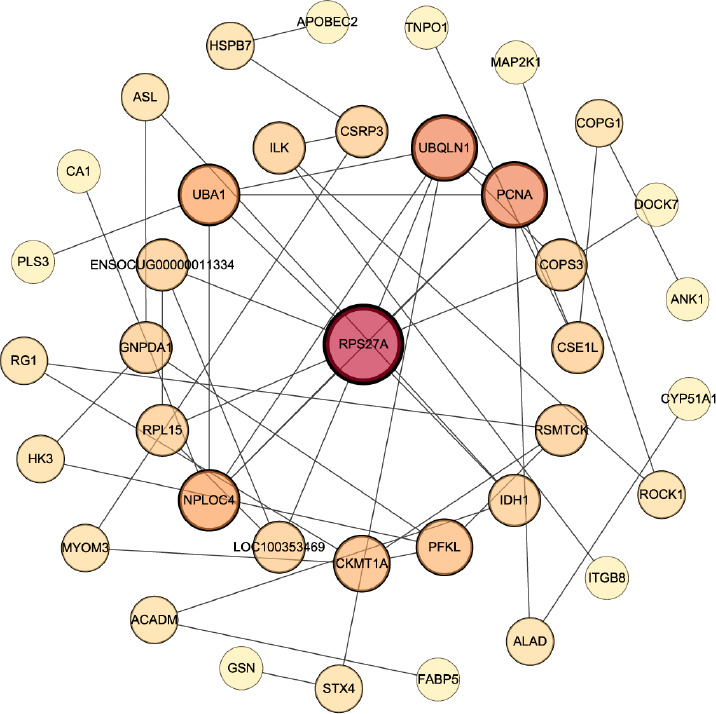
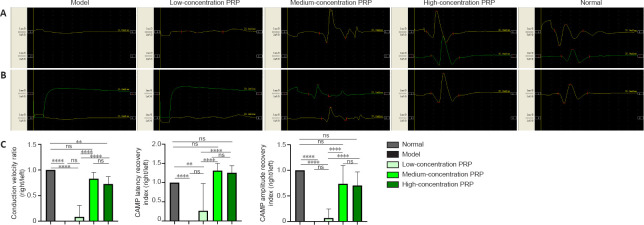
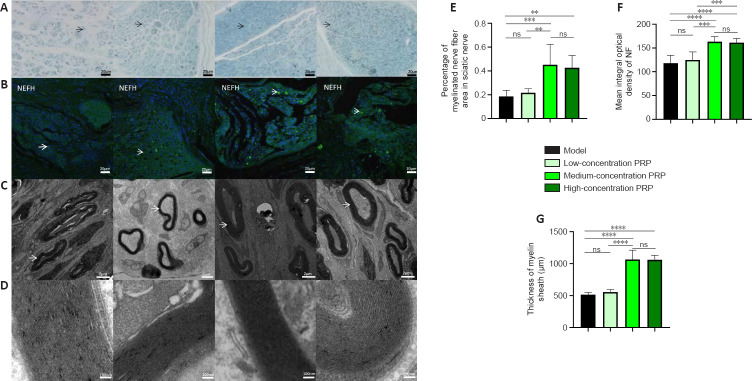
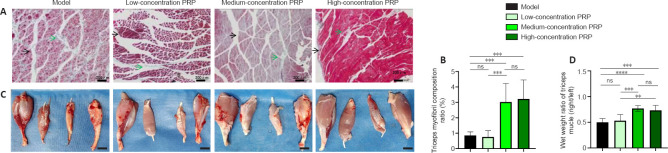
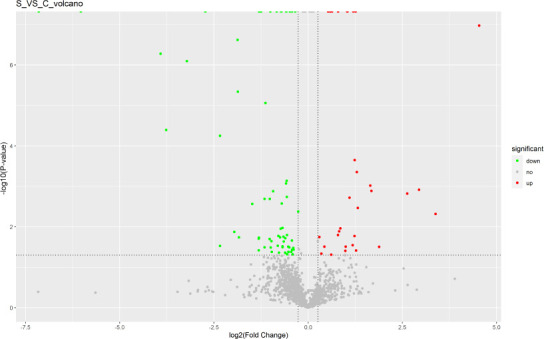
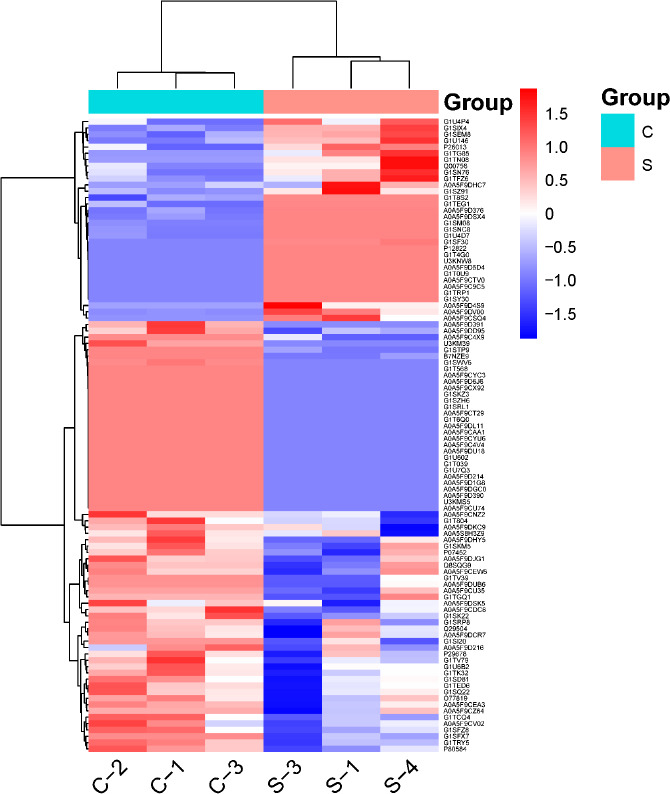
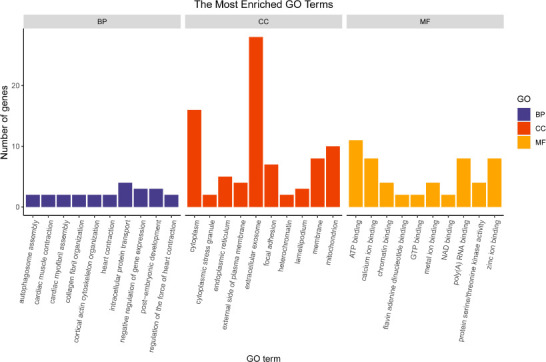
The effect of platelet-rich plasma on nerve regeneration remains controversial. In this study, we established a rabbit model of sciatic nerve small-gap defects with preserved epineurium and then filled the gaps with platelet-rich plasma. Twenty-eight rabbits were divided into the following groups (7 rabbits/group): model, low-concentration PRP (2.5-3.5-fold concentration of whole blood platelets), medium-concentration PRP (4.5-6.5-fold concentration of whole blood platelets), and high-concentration PRP (7.5-8.5-fold concentration of whole blood platelets). Electrophysiological and histomorphometrical assessments and proteomics analysis were used to evaluate regeneration of the sciatic nerve. Our results showed that platelet-rich plasma containing 4.5-6.5- and 7.5-8.5-fold concentrations of whole blood platelets promoted repair of sciatic nerve injury. Proteomics analysis was performed to investigate the possible mechanism by which platelet-rich plasma promoted nerve regeneration. Proteomics analysis showed that after sciatic nerve injury, platelet-rich plasma increased the expression of integrin subunit β-8 (ITGB8), which participates in angiogenesis, and differentially expressed proteins were mainly enriched in focal adhesion pathways. Additionally, two key proteins, ribosomal protein S27a (RSP27a) and ubiquilin 1 (UBQLN1), which were selected after protein-protein interaction analysis, are involved in the regulation of ubiquitin levels in vivo. These data suggest that platelet-rich plasma promotes peripheral nerve regeneration after sciatic nerve injury by affecting angiogenesis and intracellular ubiquitin levels.
富含血小板血浆对神经再生的影响仍存在争议。在本研究中,我们建立了一种保留神经外膜的兔坐骨神经小间隙缺损模型,然后用富含血小板血浆填充间隙。28只兔子被分为以下几组(每组7只兔子):模型组、低浓度PRP(全血血小板浓度的2.5 - 3.5倍)、中浓度PRP(全血血小板浓度的4.5 - 6.5倍)和高浓度PRP(全血血小板浓度的7.5 - 8.5倍)。采用电生理、组织形态计量学评估和蛋白质组学分析来评估坐骨神经的再生情况。我们的结果表明,含有全血血小板浓度4.5 - 6.5倍和7.5 - 8.5倍的富含血小板血浆促进了坐骨神经损伤的修复。进行蛋白质组学分析以研究富含血小板血浆促进神经再生的可能机制。蛋白质组学分析表明,坐骨神经损伤后,富含血小板血浆增加了参与血管生成的整合素亚基β - 8(ITGB8)的表达,差异表达的蛋白质主要富集在粘着斑通路中。此外,在蛋白质 - 蛋白质相互作用分析后选择的两个关键蛋白质,核糖体蛋白S27a(RSP27a)和泛素连接酶1(UBQLN1),参与体内泛素水平的调节。这些数据表明,富含血小板血浆通过影响血管生成和细胞内泛素水平促进坐骨神经损伤后的周围神经再生。