Department of Virus & Microbiological Special Diagnostics, Statens Serum Institut, Copenhagen, Denmark.
Department of Clinical Immunology, Copenhagen University Hospital, Copenhagen, Denmark.
PLoS One. 2022 Jul 28;17(7):e0272298. doi: 10.1371/journal.pone.0272298. eCollection 2022.
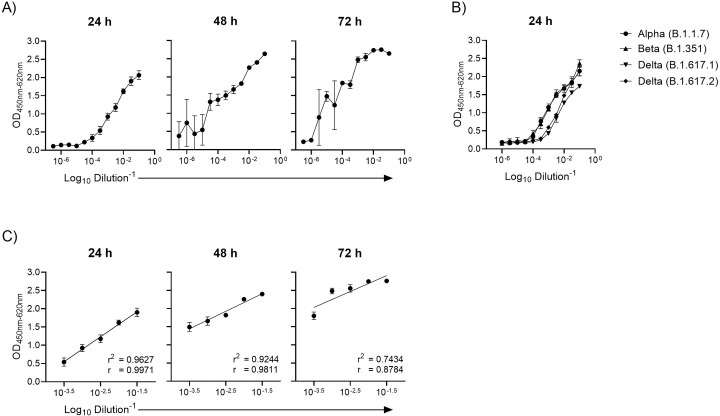
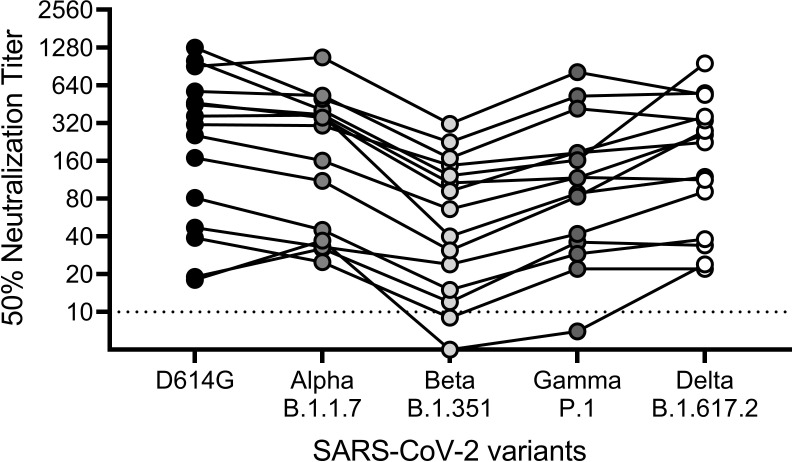
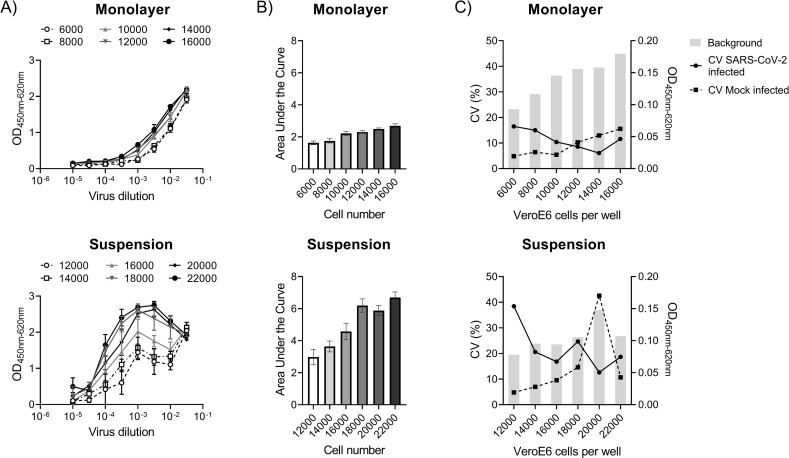
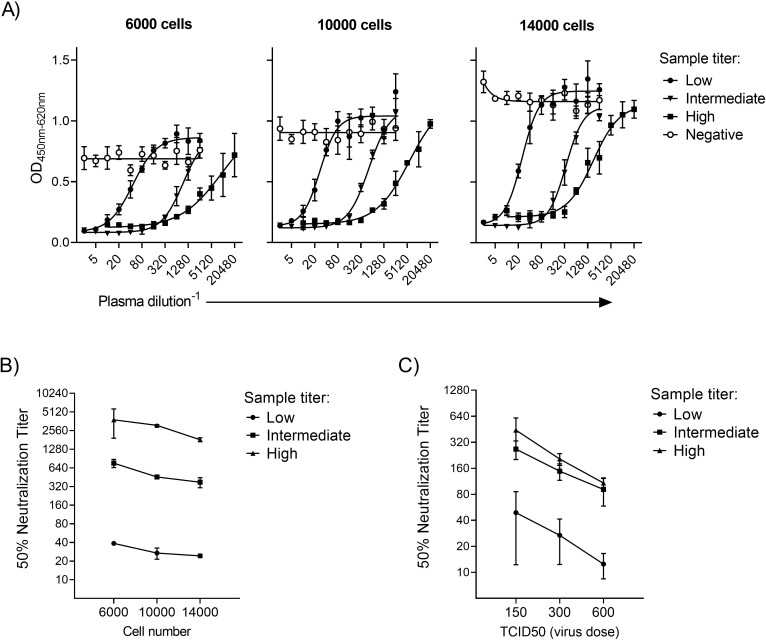
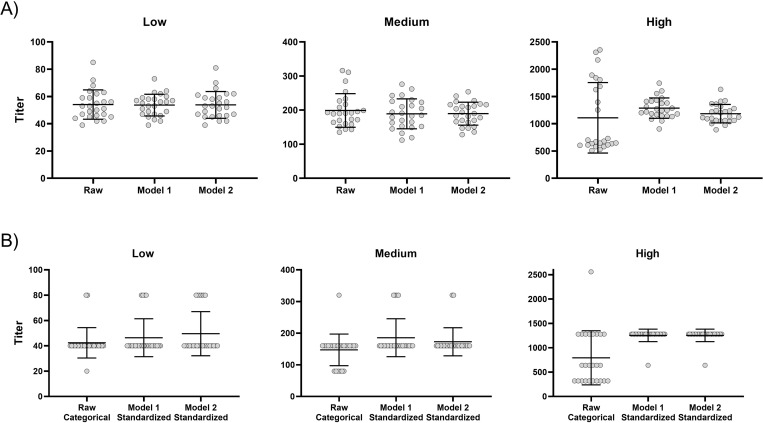
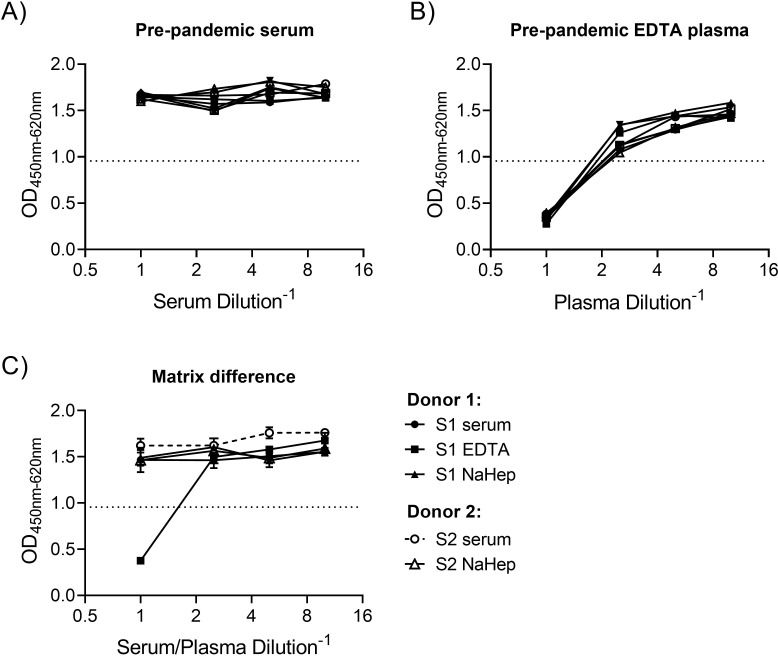
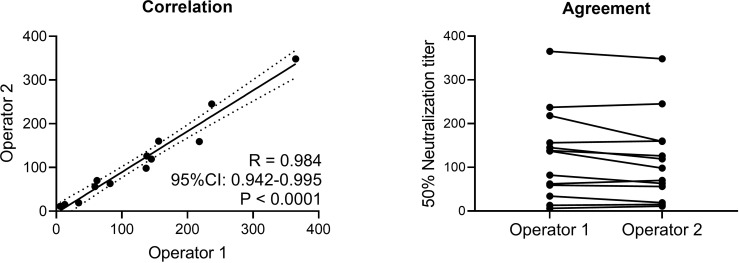
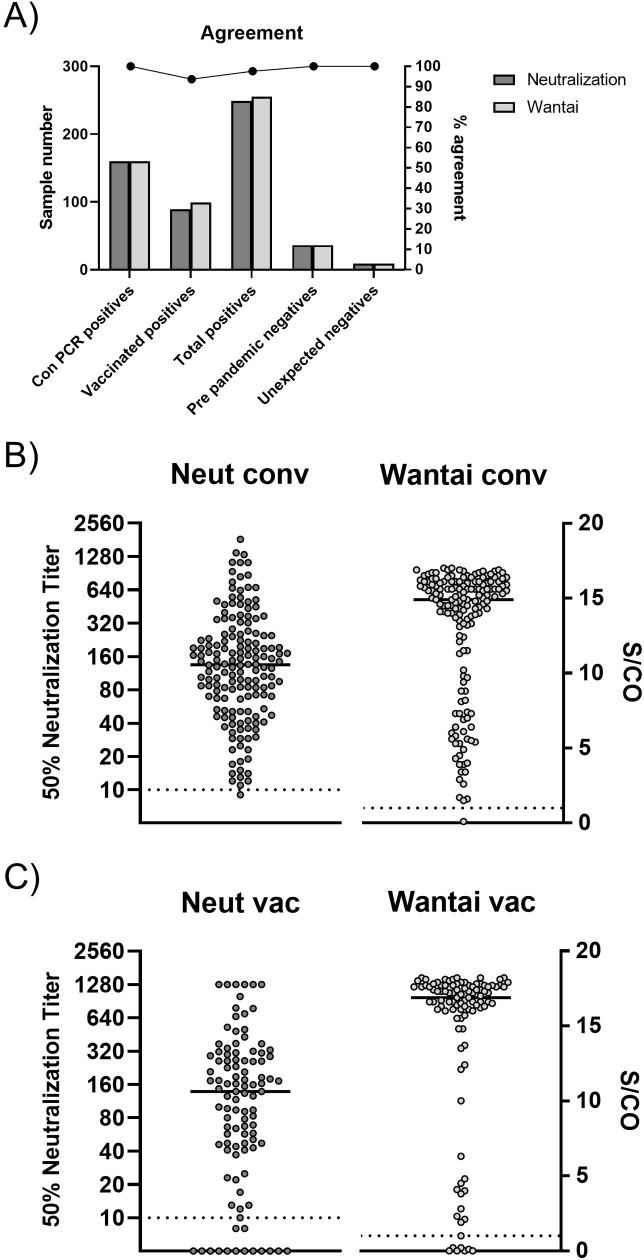
Virus neutralization assays provide a means to quantitate functional antibody responses that block virus infection. These assays are instrumental in defining vaccine and therapeutic antibody potency, immune evasion by viral variants, and post-infection immunity. Here we describe the development, optimization and evaluation of a live virus microneutralization assay specific for severe acute respiratory syndrome coronavirus 2 (SARS-CoV-2). In this assay, SARS-CoV-2 clinical isolates are pre-incubated with serial diluted antibody and added to Vero E6 cells. Replicating virus is quantitated by enzyme-linked immunosorbent assay (ELISA) targeting the SARS-CoV-2 nucleocapsid protein and the standardized 50% virus inhibition titer calculated. We evaluated critical test parameters that include virus titration, assay linearity, number of cells, viral dose, incubation period post-inoculation, and normalization methods. Virus titration at 96 hours was determined optimal to account for different growth kinetics of clinical isolates. Nucleocapsid protein levels directly correlated with virus inoculum, with the strongest correlation at 24 hours post-inoculation. Variance was minimized by infecting a cell monolayer, rather than a cell suspension. Neutralization titers modestly decreased with increasing numbers of Vero E6 cells and virus amount. Application of two different normalization models effectively reduced the intermediate precision coefficient of variance to <16.5%. The SARS-CoV-2 microneutralization assay described and evaluated here is based on the influenza virus microneutralization assay described by WHO, and are proposed as a standard assay for comparing neutralization investigations.
病毒中和测定提供了一种定量功能性抗体反应的方法,这种反应可以阻止病毒感染。这些测定在定义疫苗和治疗性抗体效力、病毒变异的免疫逃避以及感染后免疫方面发挥了重要作用。在此,我们描述了一种针对严重急性呼吸综合征冠状病毒 2 (SARS-CoV-2) 的活病毒微量中和测定的开发、优化和评估。在该测定中,SARS-CoV-2 临床分离株与系列稀释的抗体预孵育,然后加入 Vero E6 细胞。通过酶联免疫吸附试验(ELISA)检测 SARS-CoV-2 核衣壳蛋白来定量复制病毒,并计算标准化的 50%病毒抑制滴度。我们评估了关键的测试参数,包括病毒滴定、测定线性、细胞数量、病毒剂量、接种后孵育期和归一化方法。病毒滴定在 96 小时时是最佳的,以考虑到临床分离株不同的生长动力学。核衣壳蛋白水平与病毒接种物直接相关,在接种后 24 小时时相关性最强。通过感染单层细胞而不是细胞悬浮液,可以最大限度地减少方差。中和效价随着 Vero E6 细胞数量和病毒量的增加而略有下降。应用两种不同的归一化模型可有效将中间精度变异系数降低至<16.5%。此处描述和评估的 SARS-CoV-2 微量中和测定基于世界卫生组织(WHO)描述的流感病毒微量中和测定,建议将其作为比较中和研究的标准测定。