Ghost Lab, T Cell Memory and Tolerance Section, Laboratory of Cellular and Molecular Immunology, National Institutes of Allergy and Infectious Diseases, National Institutes of Health, Bethesda, MD 20892, USA.
Cancer Res Commun. 2022 May;2(5):316-329. doi: 10.1158/2767-9764.crc-22-0052. Epub 2022 May 9.
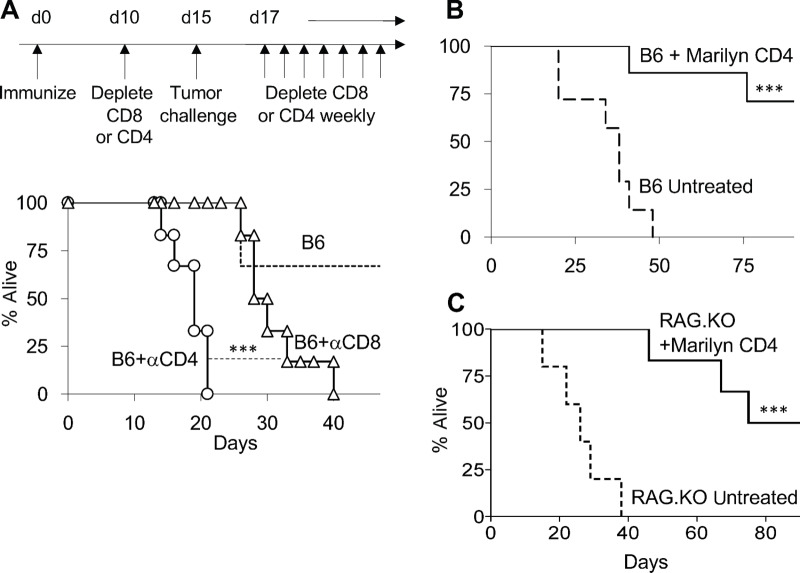
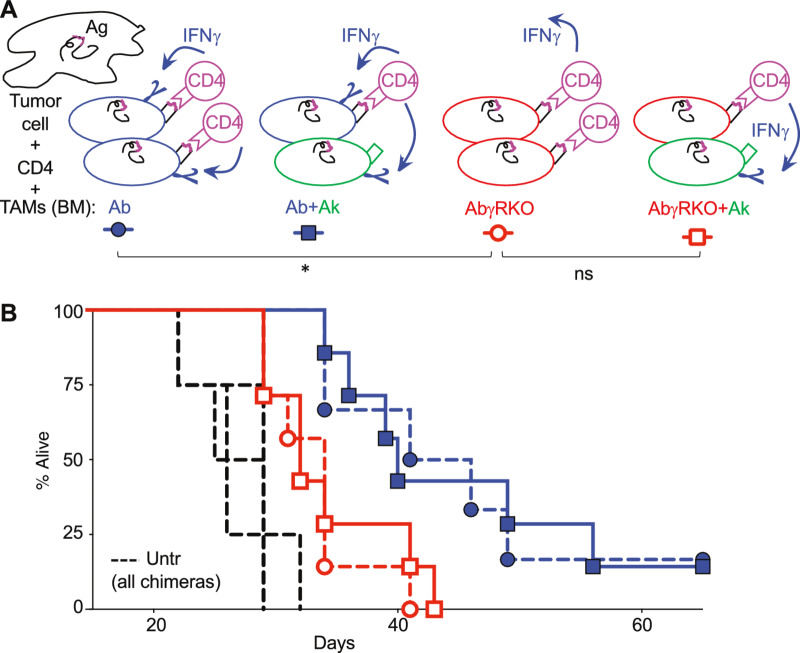
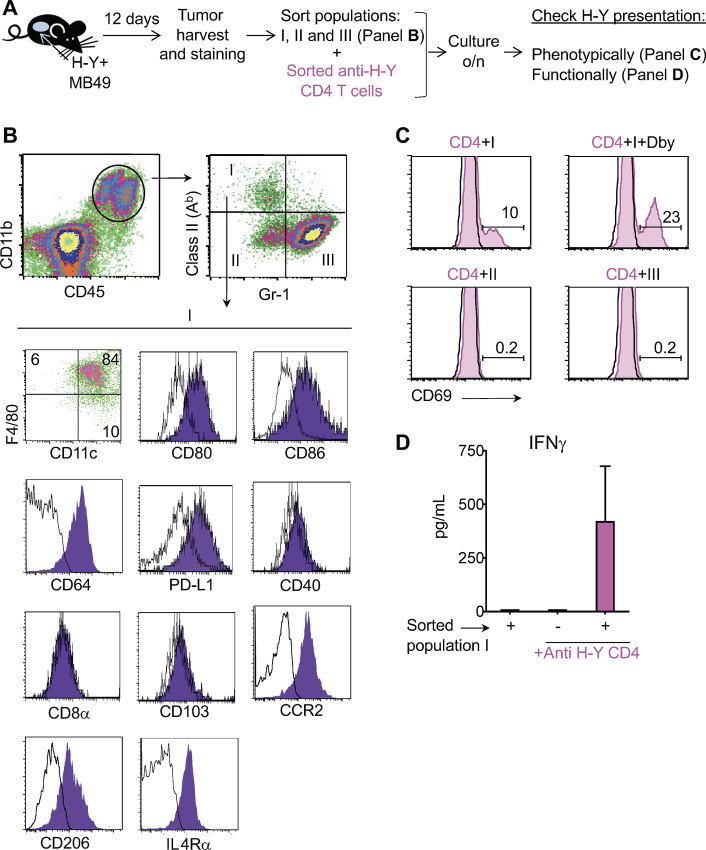
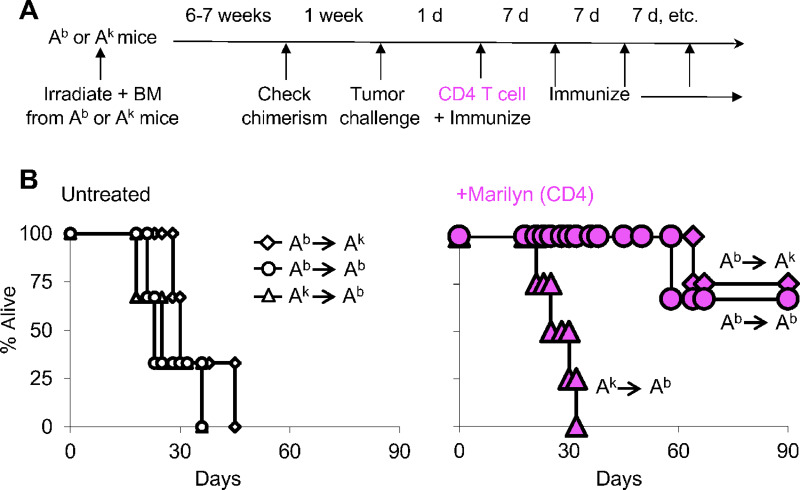
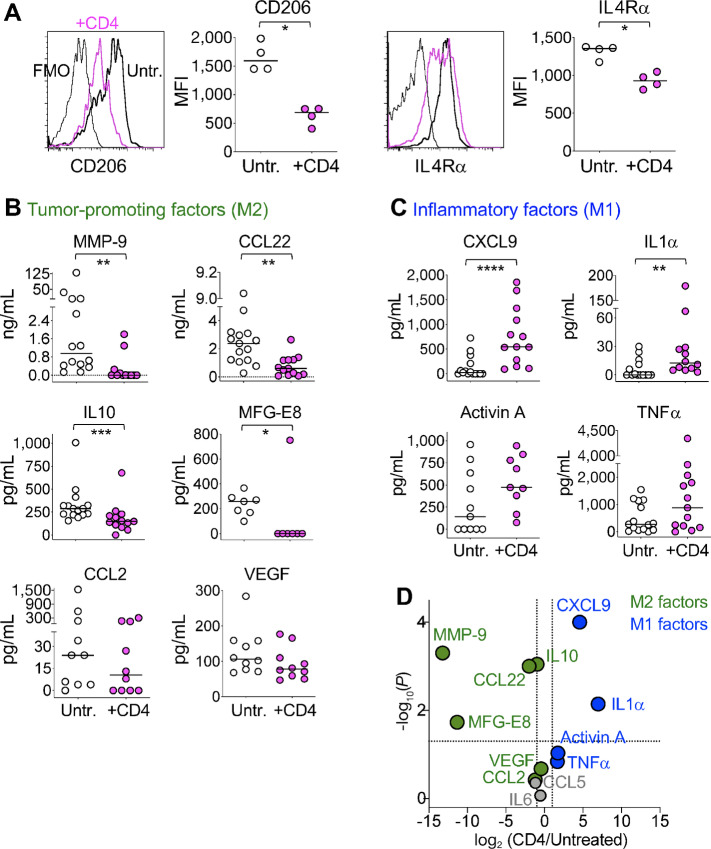
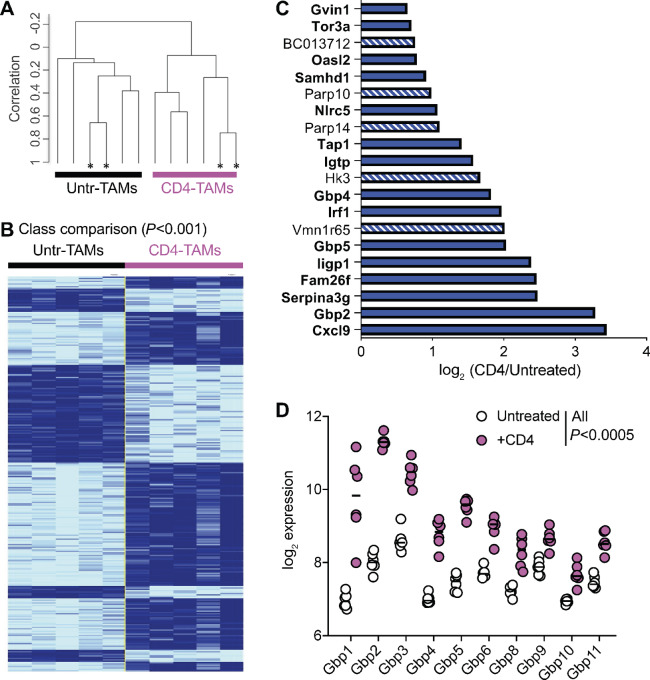
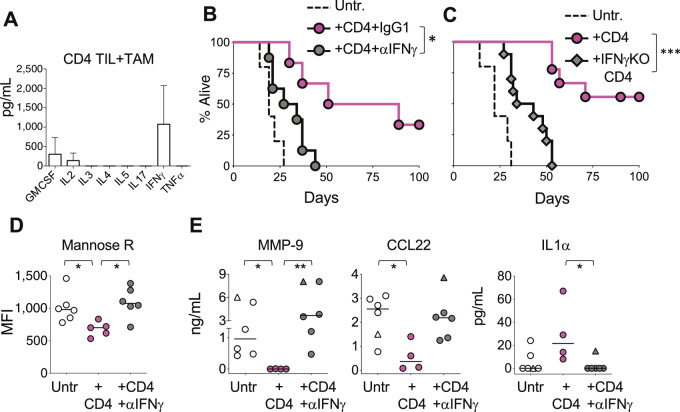
Tumor Associated Macrophages (TAMs) promote tumor survival, angiogenesis and metastases. Although they express MHC Class II molecules, little is known about their ability to present tumor antigens to tumor infiltrating CD4 T cells, nor what are the consequences of such presentation. To answer these questions, we used a C57/BL10 mouse tumor model where we subcutaneously implant a bladder carcinoma cell line naturally expressing the H-Y male antigen into female mice, making the H-Y antigen a de facto neoantigen. We found that TAMs indeed present tumor antigens to effector CD4 T cells and that such presentation is necessary for tumor rejection. As consequence of this interaction TAMs are re-educated to produce lower amounts of tumor promoting proteins and greater amounts of inflammatory proteins. The re-education process of the TAMs is transcriptionally characterized by an IFN-γ signature, including genes of known anti-viral and anti-bacterial functions. CD4 production of IFN-γ, and not TNF-α or CD40L, is required for the re-education process and tumor rejection. Furthermore, IFN-γ signaling on antigen presenting TAMs and not on bystander TAMs, is necessary for the anti-tumor effect. These data identify critical mechanisms of tumor rejection by CD4 T cells and underscores the importance of effector CD4 T cell-tissue macrophage interactions not only at the tumors site but potentially in other tissues.
肿瘤相关巨噬细胞(TAMs)促进肿瘤的存活、血管生成和转移。尽管它们表达 MHC Ⅱ类分子,但对于它们向肿瘤浸润的 CD4 T 细胞呈递肿瘤抗原的能力,以及这种呈递的后果知之甚少。为了回答这些问题,我们使用了一种 C57/BL10 小鼠肿瘤模型,我们将一种天然表达 H-Y 男性抗原的膀胱癌细胞系皮下植入雌性小鼠体内,使 H-Y 抗原成为事实上的新抗原。我们发现 TAMs 确实向效应 CD4 T 细胞呈递肿瘤抗原,并且这种呈递对于肿瘤排斥是必要的。作为这种相互作用的结果,TAMs 被重新教育以产生较少的肿瘤促进蛋白和更多的炎症蛋白。TAMs 的重新教育过程在转录上表现出 IFN-γ 特征,包括已知抗病毒和抗细菌功能的基因。CD4 产生 IFN-γ,而不是 TNF-α 或 CD40L,是重新教育过程和肿瘤排斥所必需的。此外,抗原呈递 TAMs 上的 IFN-γ 信号,而不是旁观者 TAMs 上的 IFN-γ 信号,对于抗肿瘤作用是必要的。这些数据确定了 CD4 T 细胞介导的肿瘤排斥的关键机制,并强调了效应 CD4 T 细胞-组织巨噬细胞相互作用的重要性,不仅在肿瘤部位,而且在其他组织中。