Laboratory of Translational Cellular and Molecular Biomedicine, National Research Tomsk State University, Tomsk, Russia.
Cancer Research Institute, Tomsk National Research Medical Center, Russian Academy of Sciences, Tomsk, Russia.
Front Immunol. 2024 Sep 9;15:1414716. doi: 10.3389/fimmu.2024.1414716. eCollection 2024.
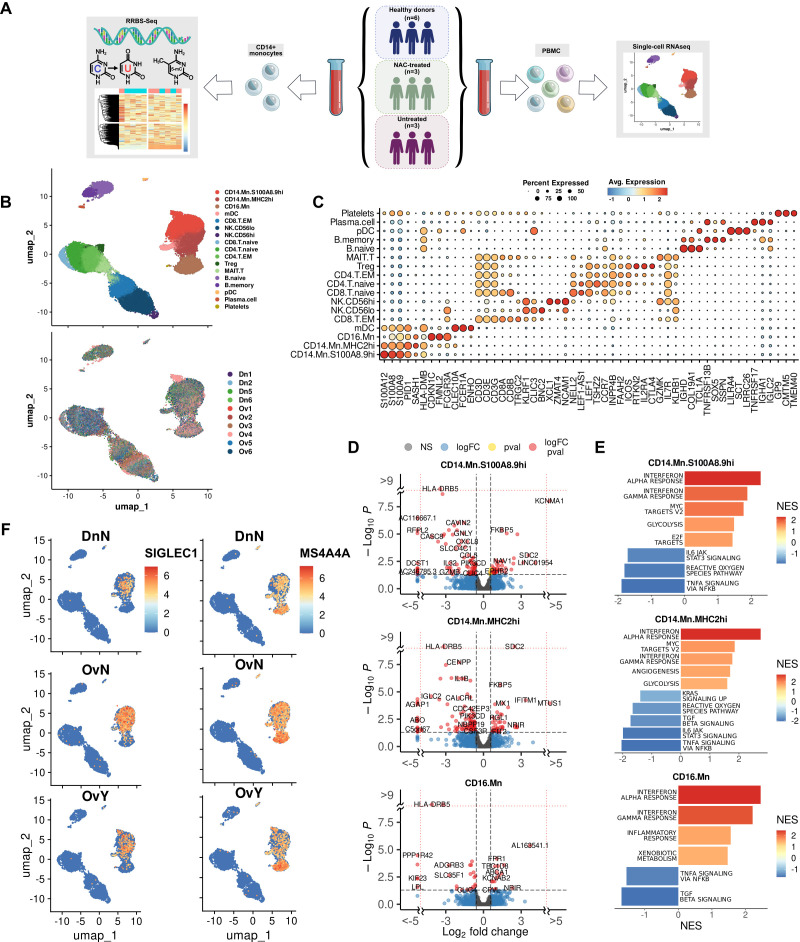
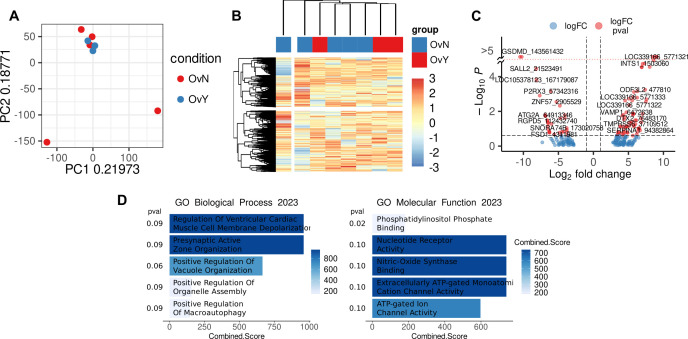
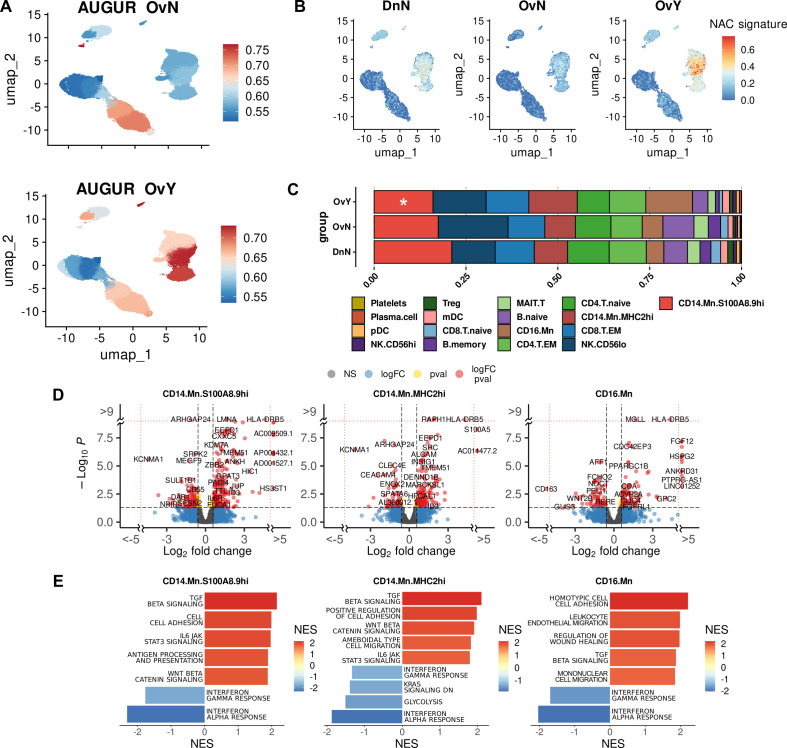
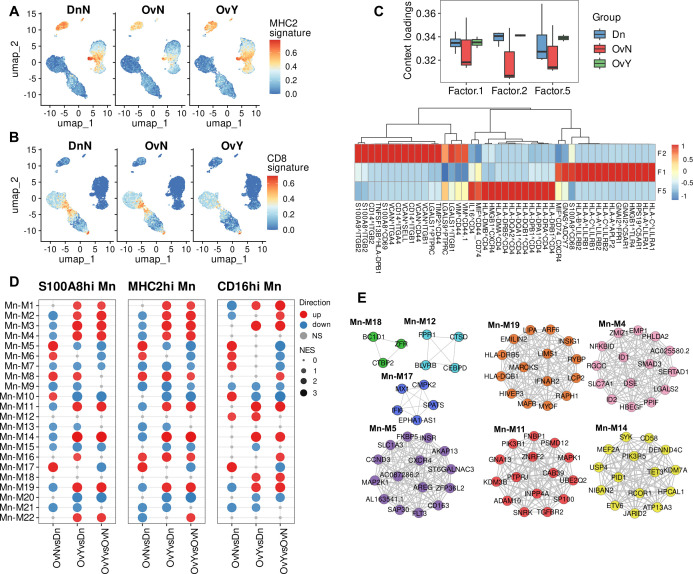
Ovarian cancer (OC) is the most lethal gynecologic malignancy worldwide. The major clinical challenge includes the asymptomatic state of the disease, making diagnosis possible only at advanced stages. Another OC complication is the high relapse rate and poor prognosis following the standard first-line treatment with platinum-based chemotherapy. At present, numerous clinical trials are being conducted focusing on immunotherapy in OC; nevertheless, there are still no FDA-approved indications. Personalized decision regarding the immunotherapy, including immune checkpoint blockade and immune cell-based immunotherapies, can depend on the effective antigen presentation required for the cytotoxic immune response. The major aim of our study was to uncover tumor-specific transcriptional and epigenetic changes in peripheral blood monocytes in patients with high-grade serous ovarian cancer (HGSOC). Another key point was to elucidate how chemotherapy can reprogram monocytes and how that relates to changes in other immune subpopulations in the blood. To this end, we performed single-cell RNA sequencing of peripheral blood mononuclear cells (PBMCs) from patients with HGSOC who underwent neoadjuvant chemotherapeutic treatment (NACT) and in treatment-naïve patients. Monocyte cluster was significantly affected by tumor-derived factors as well as by chemotherapeutic treatment. Bioinformatical analysis revealed three distinct monocyte subpopulations within PBMCs based on feature gene expression - CD14.Mn.S100A8.9hi, CD14.Mn.MHC2hi and CD16.Mn subsets. The intriguing result was that NACT induced antigen presentation in monocytes by the transcriptional upregulation of MHC class II molecules, but not by epigenetic changes. Increased MHC class II gene expression was a feature observed across all three monocyte subpopulations after chemotherapy. Our data also demonstrated that chemotherapy inhibited interferon-dependent signaling pathways, but activated some TGFb-related genes. Our results can enable personalized decision regarding the necessity to systemically re-educate immune cells to prime ovarian cancer to respond to anti-cancer therapy or to improve personalized prescription of existing immunotherapy in either combination with chemotherapy or a monotherapy regimen.
卵巢癌 (OC) 是全球致死率最高的妇科恶性肿瘤。主要的临床挑战包括疾病的无症状状态,这使得只有在晚期才能进行诊断。OC 的另一个并发症是在接受基于铂类的化疗的标准一线治疗后复发率高且预后差。目前,正在进行许多临床试验来研究 OC 的免疫疗法;然而,仍然没有 FDA 批准的适应症。免疫疗法的个性化决策,包括免疫检查点阻断和免疫细胞为基础的免疫疗法,可以取决于细胞毒性免疫反应所需的有效抗原呈递。我们的主要研究目的是揭示高等级浆液性卵巢癌 (HGSOC) 患者外周血单核细胞中的肿瘤特异性转录和表观遗传变化。另一个关键点是阐明化疗如何重新编程单核细胞,以及这与血液中其他免疫亚群的变化有何关系。为此,我们对接受新辅助化疗 (NACT) 的 HGSOC 患者和未经治疗的患者的外周血单核细胞 (PBMC) 进行了单细胞 RNA 测序。肿瘤来源的因素以及化疗治疗显著影响单核细胞簇。生物信息学分析基于特征基因表达揭示了 PBMC 中三个不同的单核细胞亚群 - CD14.Mn.S100A8.9hi、CD14.Mn.MHC2hi 和 CD16.Mn 亚群。有趣的结果是,NACT 通过 MHC Ⅱ类分子的转录上调诱导单核细胞中的抗原呈递,但不是通过表观遗传变化。化疗后所有三种单核细胞亚群均观察到 MHC Ⅱ类基因表达增加。我们的数据还表明,化疗抑制了干扰素依赖的信号通路,但激活了一些 TGFb 相关基因。我们的研究结果可以为是否需要系统性地重新教育免疫细胞以使卵巢癌对癌症治疗产生反应或改善现有的免疫疗法的个性化处方提供决策依据,无论是与化疗联合还是单独使用。