Ashour Ahmed, Hassan Ahmed, Aly Mohamed, Nafady Mahmoud Am
Trauma and Orthopaedics, Queen Elizabeth Hospital Birmingham, Birmingham, GBR.
Orthopaedics, Queen Elizabeth Hospital Birmingham, Birmingham, GBR.
Cureus. 2022 Jun 26;14(6):e26341. doi: 10.7759/cureus.26341. eCollection 2022 Jun.
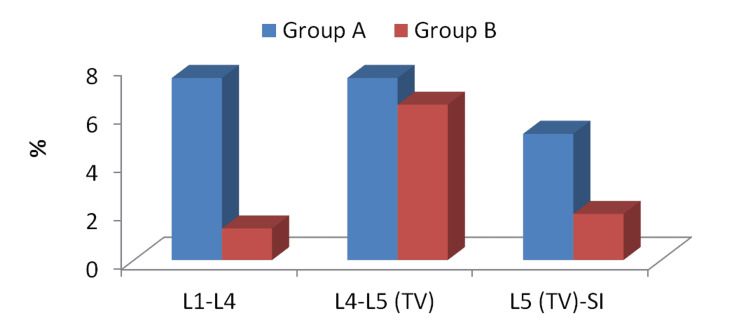
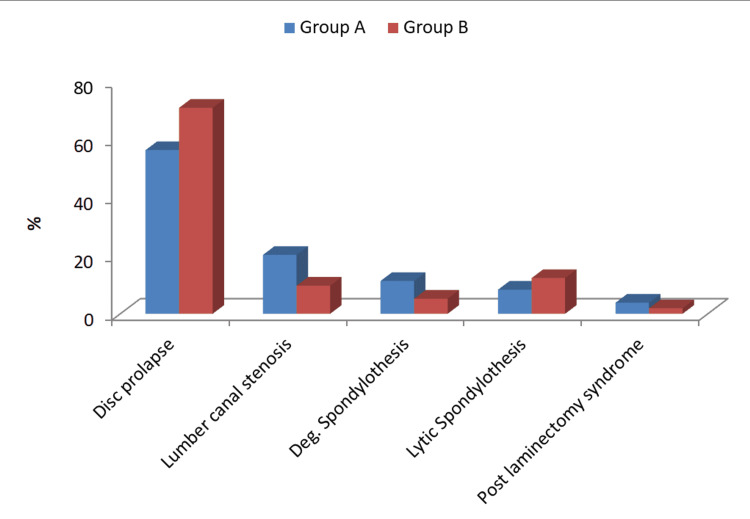
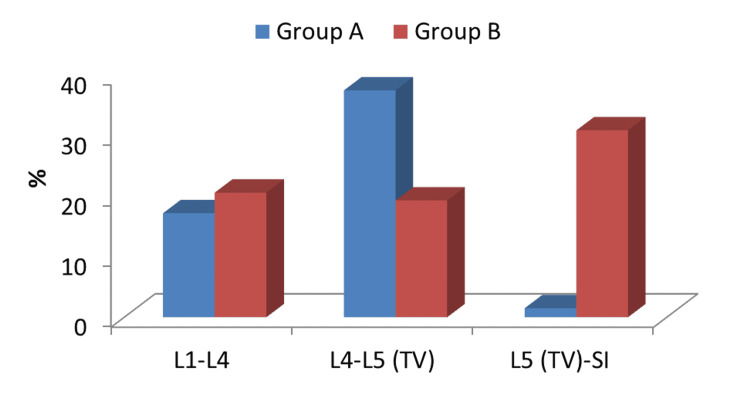
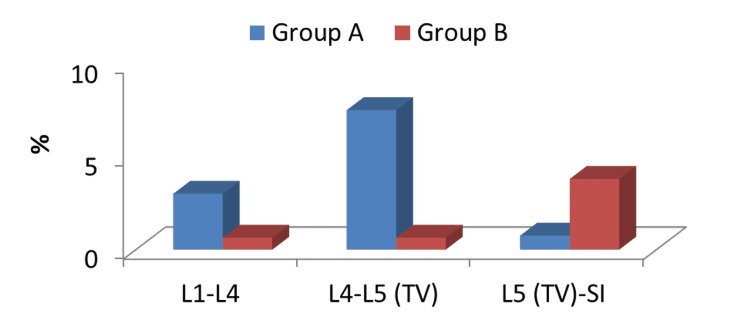
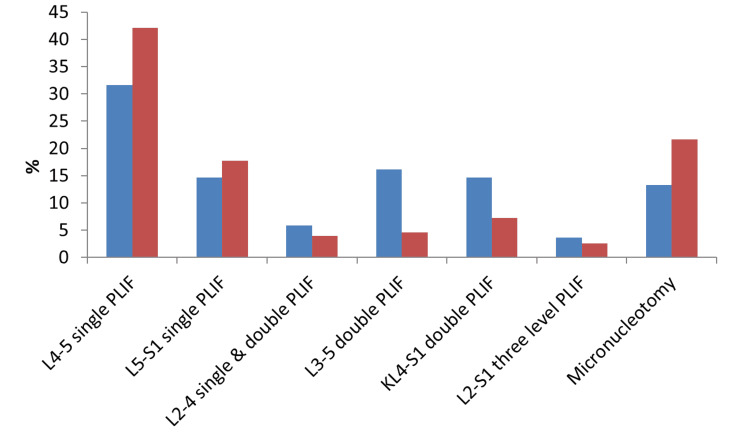
Introduction Bertolotti's syndrome (BS) describes the relationship between low back pain (LBP) and lumbosacral transitional vertebra (LSTV). It is a factor that is sometimes overlooked when it comes to evaluating and treating LBP.Because of the different diagnostic modalities and criteria used in the research, the LSTV incidence in the general population varies greatly, and hence the link between LSTV and LBP remains contentious.Some researchers found no link between low back pain and LSTV. As a result, the management of BS remains controversial and multiple treatments have been suggested, including locally injected steroid and various surgical approaches. Methods This retrospective cohort study included a total of 288 patients who underwent lumbosacral surgical procedures for disc prolapse, lumbar canal stenosis, spondylolithesis and post-laminectomy syndrome during the period between January 2016 and May 2020. Trauma, tumours and scoliotic patients were excluded. All data were collected from the departmental database. All cases were done by the same surgical team at El Hadra University Hospital Spine Unit, Egypt. The patients were divided into two groups. Group A consisted of 133 patients in whom LSTV was detected by radiologic findings. In contrast, Group B consisted of 155 patients in whom LSTV was not detected. Results In our study, the overall prevalence of LSTV among 288 patients who underwent lumbosacral surgical interventions was 46.2%. On comparing the incidence of surgical interventions between both groups, there was non-significant difference in most of surgical interventions. The incidence of L3-5 double-level posterior lumbar interbody fusion (PLIF) among LSTV patients was 16.5% compared to 4.61% in the other group. The incidence of L4-S1 double-level PLIF among LSTV patients was 15.04% compared to 7.24% in the other group. Regarding adjacent segment pathology, the incidence of lumbar canal stenosis and degenerative spondylolithesis was higher in the LSTV group (20.3% and 11.3%, respectively) compared to the non-LSTV group (9.7% and 5.2%, respectively). The incidence of disc prolapse was lower in the LSTV group (56.39%) compared to the non-LSTV group (71.0%). There was a non-significant difference between the incidence of lytic spondylolithesis and postlaminectomy syndrome between both groups. Conclusion The overall prevalence of LSTV among all cases who underwent lumbosacral surgical procedures at the El Hadra University Hospital was 46.2%. The incidence of lumbar canal stenosis and degenerative spondylolithesis was higher in the LSTV group compared to the non-LSTV group. However, the incidence of disc prolapse was lower in the LSTV group compared to the non-LSTV group. The incidence of disc prolapse and degenerative spondylolithesis at the L4-5 level was higher in the LSTV group compared to the non-LSTV group. In contrast, the incidence at L5-S1 was lower in the LSTV group compared to the non-LSTV group. Hence, LSTV is considered a risk factor for disc degenerative changes at the level above the transitional vertebra level.
引言
贝托洛蒂综合征(BS)描述了下腰痛(LBP)与腰骶部移行椎(LSTV)之间的关系。在评估和治疗下腰痛时,这是一个有时会被忽视的因素。由于研究中使用的诊断方式和标准不同,普通人群中LSTV的发生率差异很大,因此LSTV与LBP之间的联系仍存在争议。一些研究人员未发现下腰痛与LSTV之间存在关联。因此,BS的治疗仍存在争议,有人提出了多种治疗方法,包括局部注射类固醇和各种手术方法。
方法
这项回顾性队列研究共纳入了288例在2016年1月至2020年5月期间因椎间盘突出、腰椎管狭窄、椎体滑脱和椎板切除术后综合征而接受腰骶部手术的患者。排除了创伤、肿瘤和脊柱侧弯患者。所有数据均从科室数据库中收集。所有病例均由埃及哈德拉大学医院脊柱科同一手术团队完成。患者分为两组。A组由133例经影像学检查发现LSTV的患者组成。相比之下,B组由155例未发现LSTV的患者组成。
结果
在我们的研究中,288例接受腰骶部手术干预的患者中LSTV的总体患病率为46.2%。比较两组之间的手术干预发生率,大多数手术干预的差异无统计学意义。LSTV患者中L3 - 5双节段后路腰椎椎间融合术(PLIF)的发生率为16.5%,而另一组为4.61%。LSTV患者中L4 - S1双节段PLIF的发生率为15.04%,而另一组为7.24%。关于相邻节段病变,LSTV组腰椎管狭窄和退行性椎体滑脱的发生率(分别为20.3%和11.3%)高于非LSTV组(分别为9.7%和5.2%)。LSTV组椎间盘突出的发生率(56.39%)低于非LSTV组(71.0%)。两组之间溶骨性椎体滑脱和椎板切除术后综合征的发生率差异无统计学意义。
结论
在哈德拉大学医院接受腰骶部手术的所有病例中,LSTV的总体患病率为46.2%。LSTV组腰椎管狭窄和退行性椎体滑脱的发生率高于非LSTV组。然而,LSTV组椎间盘突出的发生率低于非LSTV组。LSTV组L4 - 5节段椎间盘突出和退行性椎体滑脱发生率高于非LSTV组。相比之下,LSTV组L5 - S1节段的发生率低于非LSTV组。因此,LSTV被认为是移行椎上方节段椎间盘退变的一个危险因素。