Department of Congential Heart Disease and Pediatric Cardiology German Heart Center Munich Germany.
Departments of Pediatrics and Biomedical Engineering Children's Wisconsin and Herma Heart Institute Milwaukee WI.
J Am Heart Assoc. 2022 Aug 2;11(15):e025224. doi: 10.1161/JAHA.121.025224. Epub 2022 Jul 29.
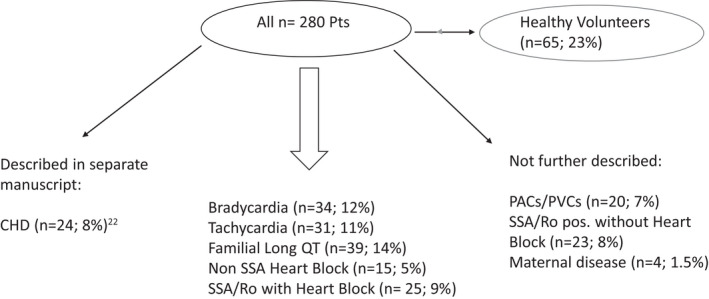
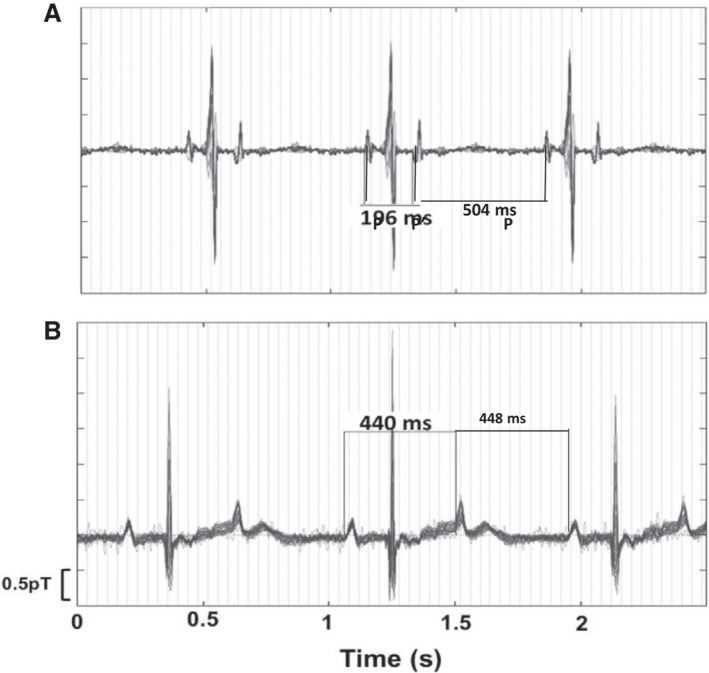
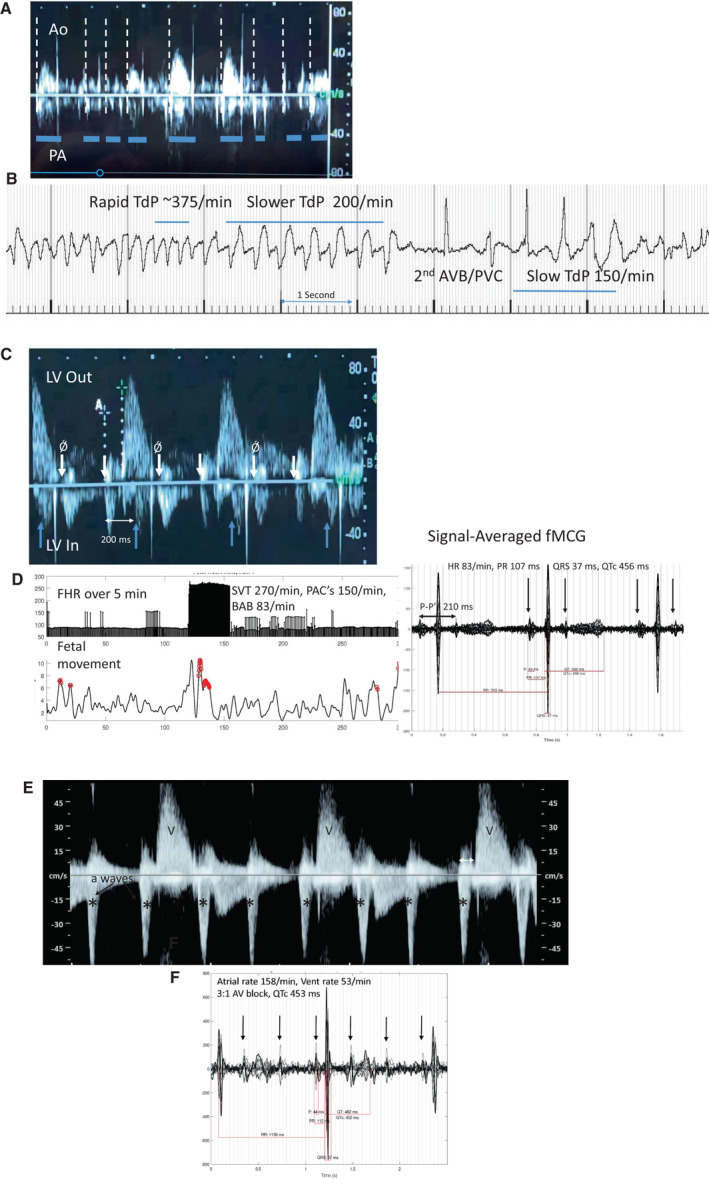
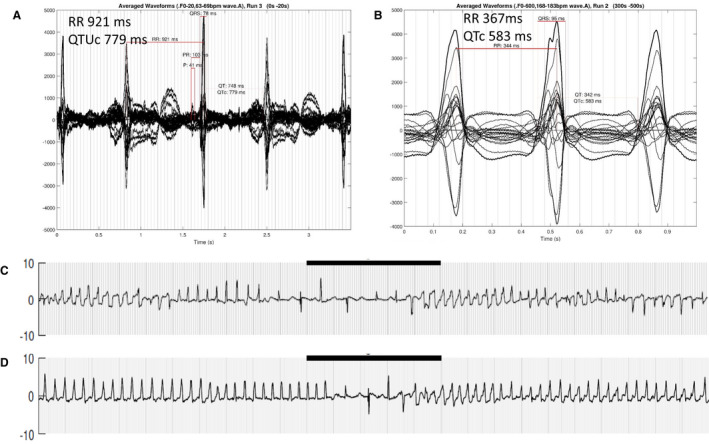
Background Fetal echocardiography has been the mainstay of fetal arrhythmia diagnosis; however, fetal magnetocardiography (fMCG) has recently become clinically available. We sought to determine to what extent fMCG contributed to the precision and accuracy of fetal arrhythmia diagnosis and risk assessment, and in turn, how this altered pregnancy management. Methods and Results We reviewed fMCG tracings and medical records of 215 pregnancies referred to the Biomagnetism Laboratory, UW-Madison, over the last 10 years, because of fetal arrhythmia or risk of arrhythmia. We compared referral diagnosis and treatment with fMCG diagnosis using a rating scale and restricted our review to the 144 subjects from the tachycardia, bradycardia/AV block, and familial long QT syndrome categories. Additional fMCG findings beyond those of the referring echocardiogram, or an alternative diagnosis were seen in 117/144 (81%), and 81 (56%) were critical changes. Eight (5.5%) had resolution of arrhythmia before fMCG. At least moderate changes in management were seen in 109/144 (76%) fetuses, of which 35/144 (24%) were major. The most diverse fMCG presentation was long QT syndrome, present in all 3 referral categories. Four of 5 stillbirths were seen with long QT syndrome. Nine fetuses showed torsades de pointes ventricular tachycardia, of which only 2 were recognized before fMCG. Conclusions FMCG has a significant impact on prenatal diagnosis and management of arrhythmias or familial arrhythmia risk, which cannot be fully met by existing technology. The combination of fMCG and fetal echocardiography in fetal care centers will be needed in the future to optimize care.
背景
胎儿超声心动图一直是胎儿心律失常诊断的主要手段;然而,胎儿磁心图(fMCG)最近已在临床上应用。我们旨在确定 fMCG 在多大程度上有助于提高胎儿心律失常诊断和风险评估的准确性,并相应地改变妊娠管理。
方法和结果
我们回顾了过去 10 年来因胎儿心律失常或心律失常风险而转诊至威斯康星大学麦迪逊分校生物磁学实验室的 215 例妊娠的 fMCG 描记和病历。我们使用评分量表比较了转诊诊断和治疗与 fMCG 诊断,并将我们的审查仅限于心动过速、心动过缓/房室传导阻滞和家族性长 QT 综合征类别的 144 例患者。在 144 例患者中,117/144(81%)有除转介超声心动图之外的额外 fMCG 发现或替代诊断,其中 81(56%)为关键改变。在 fMCG 之前,8(5.5%)例心律失常得到缓解。在 144 例患者中,至少有 109/144(76%)的患者管理发生了变化,其中 35/144(24%)是重大变化。最具多样性的 fMCG 表现是长 QT 综合征,存在于所有 3 个转介类别中。4 例死胎见于长 QT 综合征。9 例胎儿出现尖端扭转型室性心动过速,其中只有 2 例在 fMCG 之前被识别。
结论
fMCG 对心律失常或家族性心律失常风险的产前诊断和管理有重大影响,这是现有技术无法完全满足的。未来,在胎儿护理中心将需要将 fMCG 与胎儿超声心动图相结合,以优化护理。