Department of Medical Physics University of Wisconsin Madison WI.
Division of Cardiology Department of Pediatrics Children's Hospital of Wisconsin- Milwaukee Milwaukee WI.
J Am Heart Assoc. 2019 Aug 20;8(16):e013436. doi: 10.1161/JAHA.119.013436. Epub 2019 Aug 9.
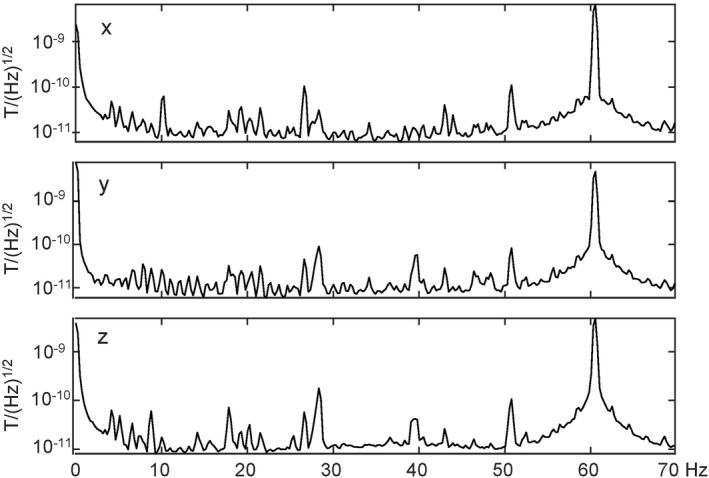
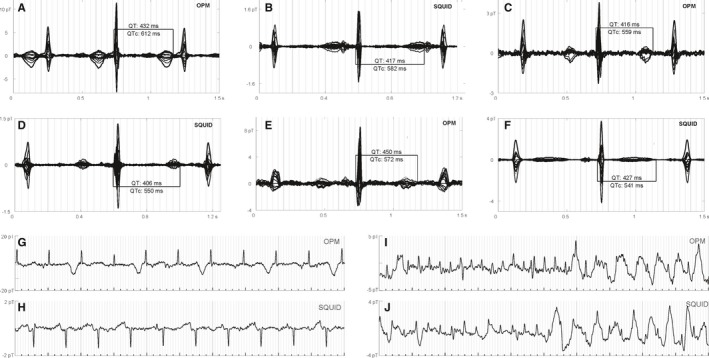
Background Fetal magnetocardiography (fMCG) is a highly effective technique for evaluation of fetuses with life-threatening arrhythmia, but its dissemination has been constrained by the high cost and complexity of Superconducting Quantum Interference Device (SQUID) instrumentation. Optically pumped magnetometers (OPMs) are a promising new technology that can replace SQUIDs for many applications. This study compares the performance of an fMCG system, utilizing OPMs operating in a person-sized magnetic shield, to that of a conventional fMCG system, utilizing SQUID magnetometers operating in a magnetically shielded room. Methods and Results fMCG recordings were made in 24 subjects using the SQUID system with the mother lying supine in a magnetically shielded room and the OPM system with the mother lying prone in a person-sized, cylindrical shield. Signal-to-noise ratios of the OPM and SQUID recordings were not statistically different and were adequate for diagnostic purposes with both technologies. Although the environmental noise was higher using the small open-ended shield, this was offset by the higher signal amplitude achieved with prone positioning, which reduced the distance between the fetus and sensors and improved patient comfort. In several subjects, fMCG provided a differential diagnosis that was more precise and/or definitive than was possible with echocardiography alone. Conclusions The OPM-based system was portable, improved patient comfort, and performed as well as the SQUID-based system at a small fraction of the cost. Electrophysiological assessment of fetal rhythm is now practical and will have a major impact on management of fetuses with long QT syndrome and other life-threatening arrhythmias.
背景 胎儿心磁图(fMCG)是评估危及生命的心律失常胎儿的一种非常有效的技术,但由于超导量子干涉仪(SQUID)仪器的成本高和复杂性,其传播受到限制。光泵磁强计(OPM)是一种有前途的新技术,可替代 SQUID 用于许多应用。本研究比较了使用在人大小的磁屏蔽中运行的 OPM 的 fMCG 系统与使用在磁屏蔽室中运行的 SQUID 磁强计的传统 fMCG 系统的性能。
方法和结果 在 24 名受试者中使用 SQUID 系统进行 fMCG 记录,母亲仰卧在磁屏蔽室中,使用 OPM 系统,母亲俯卧在人大小的圆柱形屏蔽中。OPM 和 SQUID 记录的信噪比没有统计学差异,两种技术都足以满足诊断目的。尽管使用小开口屏蔽时环境噪声较高,但这被俯卧位所获得的更高信号幅度所抵消,这降低了胎儿和传感器之间的距离,并提高了患者的舒适度。在几个受试者中,fMCG 提供了比单独使用超声心动图更精确和/或明确的鉴别诊断。
结论 基于 OPM 的系统便携、改善了患者的舒适度,并且以 SQUID 系统的一小部分成本执行得与 SQUID 系统一样好。胎儿节律的电生理学评估现在是可行的,将对长 QT 综合征和其他危及生命的心律失常胎儿的管理产生重大影响。