Yang Fan, Wu Xiang, Cui Han, Ou Zihao, Jiang Shan, Cai Sa, Zhou Qi, Wong Bryce G, Huang Hans, Hong Guosong
Department of Materials Science and Engineering, Stanford University, Stanford, CA 94305, USA.
Wu Tsai Neurosciences Institute, Stanford University, Stanford, CA 94305, USA.
Sci Adv. 2022 Jul 29;8(30):eabo6743. doi: 10.1126/sciadv.abo6743.
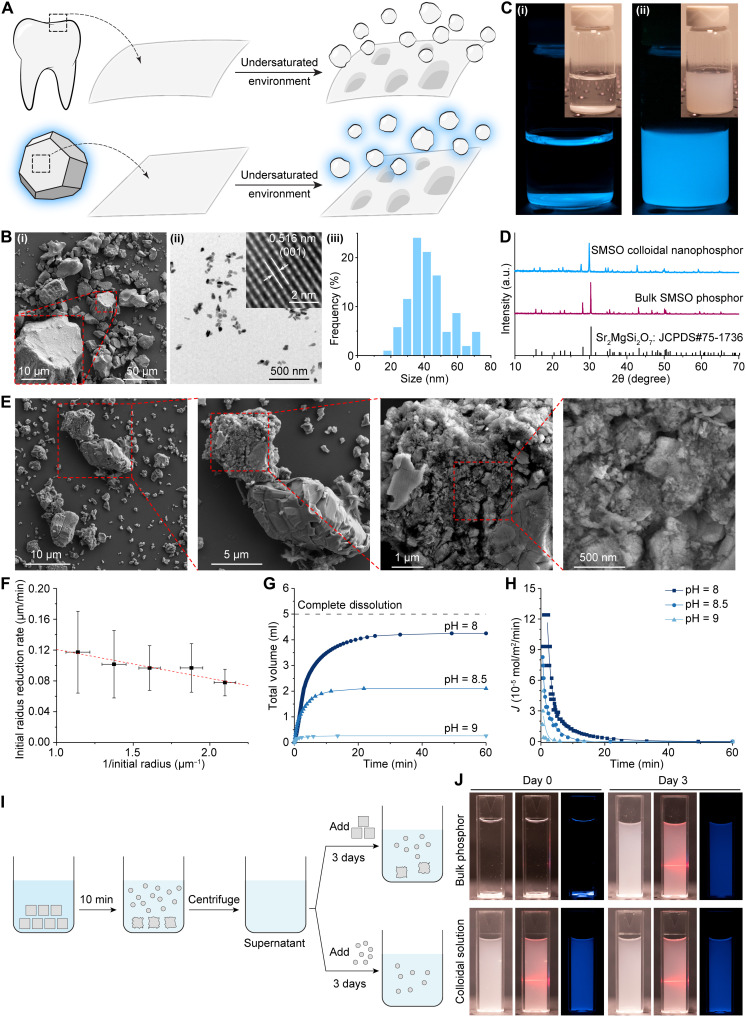
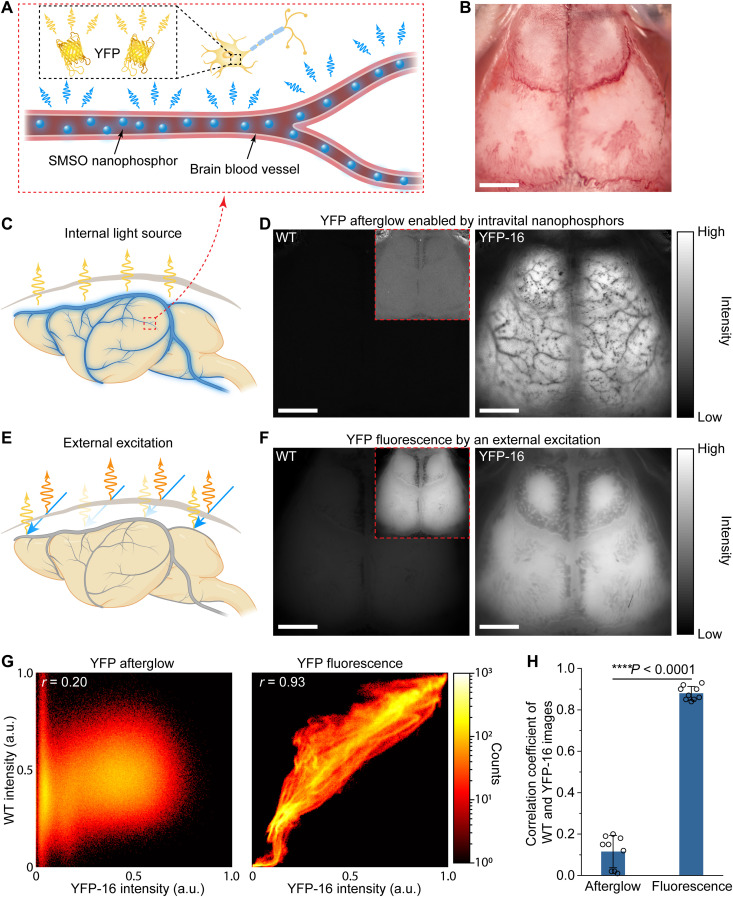
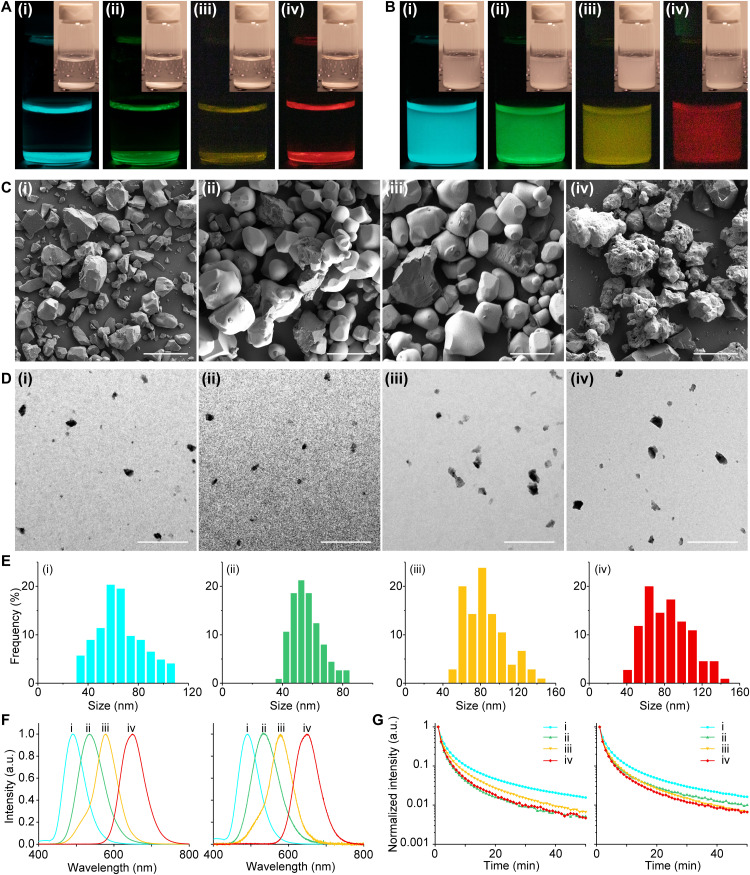
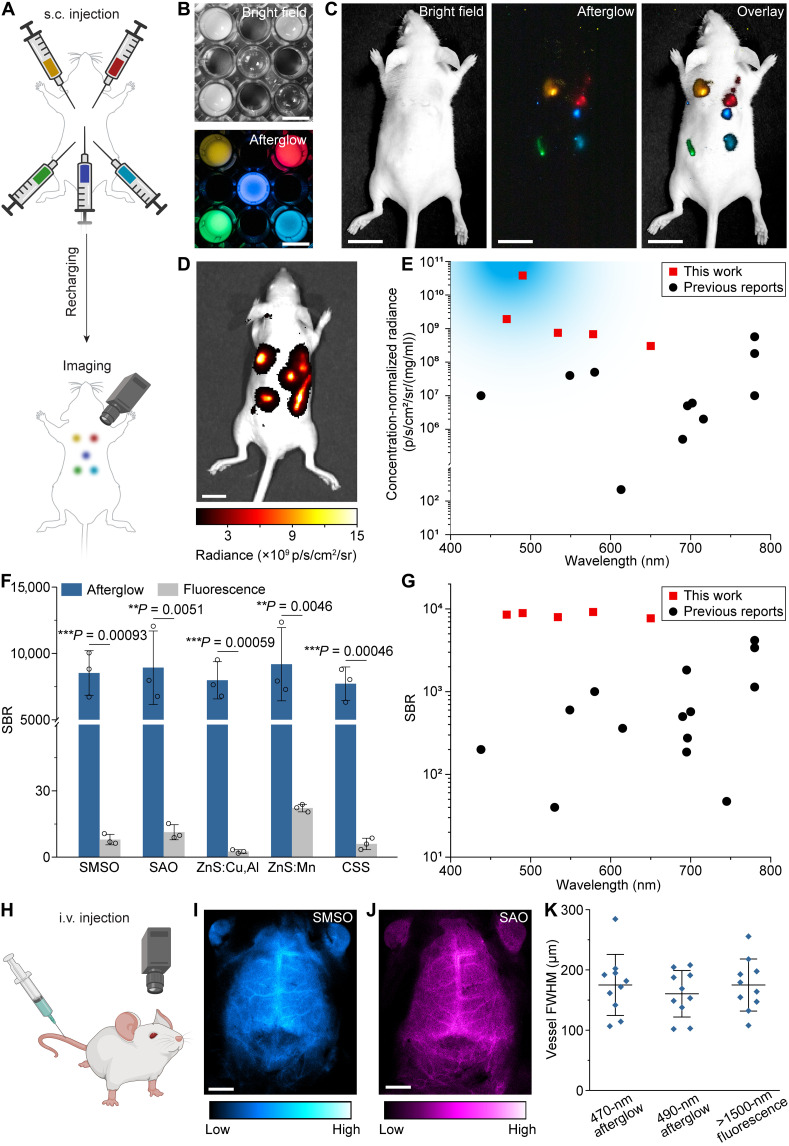
Many in vivo biological techniques, such as fluorescence imaging, photodynamic therapy, and optogenetics, require light delivery into biological tissues. The limited tissue penetration of visible light discourages the use of external light sources and calls for the development of light sources that can be delivered in vivo. A promising material for internal light delivery is persistent phosphors; however, there is a scarcity of materials with strong persistent luminescence of visible light in a stable colloid to facilitate systemic delivery in vivo. Here, we used a bioinspired demineralization (BID) strategy to synthesize stable colloidal solutions of solid-state phosphors in the range of 470 to 650 nm and diameters down to 20 nm. The exceptional brightness of BID-produced colloids enables their utility as multicolor luminescent tags in vivo with favorable biocompatibility. Because of their stable dispersion in water, BID-produced nanophosphors can be delivered systemically, acting as an intravascular colloidal light source to internally excite genetically encoded fluorescent reporters within the mouse brain.
许多体内生物学技术,如荧光成像、光动力疗法和光遗传学,都需要将光输送到生物组织中。可见光在组织中的穿透能力有限,这阻碍了外部光源的使用,因此需要开发能够在体内输送的光源。用于内部光输送的一种有前景的材料是长效磷光体;然而,缺乏在稳定胶体中具有强烈可见光持续发光的材料,以促进其在体内的全身输送。在这里,我们采用了一种仿生脱矿质(BID)策略,合成了固态磷光体的稳定胶体溶液,其波长范围为470至650纳米,直径低至20纳米。BID产生的胶体具有出色的亮度,使其能够作为体内多色发光标签,具有良好的生物相容性。由于它们在水中的稳定分散性,BID产生的纳米磷光体可以全身输送,作为血管内胶体光源,在小鼠脑内激发基因编码的荧光报告分子。