Department of Obstetrics and Gynaecology in Linköping, and Department of Biomedical and Clinical Sciences, Linköping University, 581 85, Linköping, Sweden.
Division of Nursing Sciences and Reproductive Health, Department of Health, Medicine and Caring Sciences, Linköping University, Linköping, Sweden.
BMC Womens Health. 2022 Jul 30;22(1):320. doi: 10.1186/s12905-022-01900-0.
Resistance training may be an effective intervention to improve menopausal symptoms and increase women's quality of life. However, most postmenopausal women do not perform regular resistance training. The purpose of this study was to explore postmenopausal women's experiences of participation in a resistance-training intervention to find barriers and motivators for the training.
Fifteen postmenopausal women with low physical activity, who participated in a randomized controlled trial evaluating the effect of a resistance-training program on vasomotor symptoms and health-related outcomes, were consecutively recruited to this qualitative study. After completion of the 15-week resistance-training program, they took part in individual semi-structured interviews, followed by a telephone interview 1 year later. All interviews were transcribed verbatim and thematic analysis was used to analyse the data.
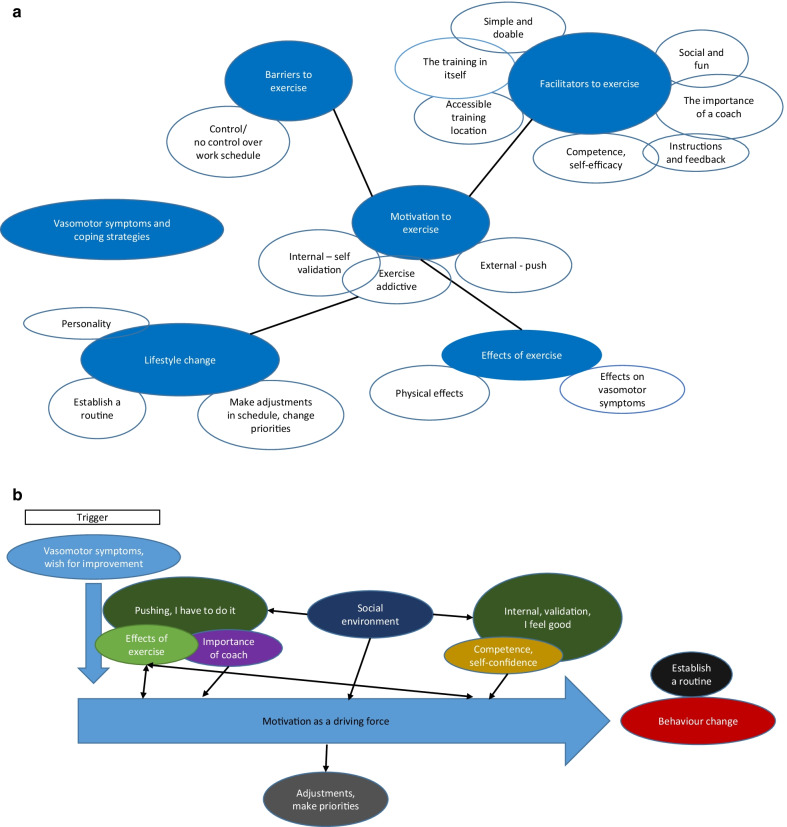
The analysis generated three themes that were involved at different time points. These were: "Trigger-Hopes of symptom relief", "An evolving motivation as a driving force for change" and "Finding new triggers". Accountability, and continuous professional and emotional support, were factors that fueled the women's motivation to perform regular resistance training during the study. Resistance training improved general well-being and most women experienced improvement in vasomotor symptoms. The women's motivation changed from being driven by a wish to improve bothersome symptoms, into a wish to achieve feelings of well-being and enjoyment. The change was seen regardless of effects of the intervention on vasomotor symptoms.
This first qualitative evaluation of physical exercise as an intervention to treat vasomotor symptoms in postmenopausal women, found that the symptoms acted as a motivational trigger to initiate resistance training in low-active women. The motivation to exercise changed during the intervention from a wish to ameliorate symptoms into something the women did for enjoyment and well-being in general. This change in motivating factors may have contributed to a behavior change since all participants had increased their physical activity after 1 year regardless of effects on VMS. Trial registration The trial was preregistered at ClinicalTrials.gov; www.
gov , ID: NCT01987778 , date of first registration: 19/11/2013.
阻力训练可能是改善更年期症状和提高女性生活质量的有效干预措施。然而,大多数绝经后妇女并不进行常规的阻力训练。本研究的目的是探讨绝经后妇女参与阻力训练干预的经验,以发现训练的障碍和动机。
从参加评估阻力训练计划对血管舒缩症状和健康相关结果影响的随机对照试验的低体力活动绝经后妇女中连续招募了 15 名妇女参加这项定性研究。在完成 15 周的阻力训练计划后,她们参加了个人半结构化访谈,一年后又进行了电话访谈。所有访谈均逐字记录,并采用主题分析对数据进行分析。
分析产生了三个主题,这些主题涉及不同的时间点。这些主题是:“触发-缓解症状的希望”、“不断变化的动机是改变的驱动力”和“寻找新的触发因素”。责任感以及持续的专业和情感支持,是推动妇女在研究期间进行常规阻力训练的动力因素。阻力训练改善了整体幸福感,大多数妇女的血管舒缩症状得到改善。妇女的动机从改善烦扰症状的愿望转变为实现幸福感和享受感的愿望。这种变化无论干预对血管舒缩症状的影响如何都可以看到。
这是首次对体育锻炼作为绝经后妇女血管舒缩症状治疗干预措施的定性评估发现,这些症状作为激励绝经后低活动妇女开始阻力训练的动机触发因素。在干预过程中,锻炼的动机从减轻症状的愿望转变为女性为了一般的幸福感和享受感而进行的运动。这种激励因素的变化可能促成了行为的改变,因为所有参与者在 1 年后都增加了体力活动,而不管对 VMS 的影响如何。
该试验在 ClinicalTrials.gov 上进行了预先登记;www.clinicaltrials.gov,ID:NCT01987778,首次登记日期:2013 年 11 月 19 日。