Department of Biology, Università degli Studi di Napoli "Federico II", 80126, Naples, Italy.
CDG & Allies - Professionals and Patient Associations International Network (CDG & Allies-PPAIN), Department of Life Sciences, School of Science and Technology, NOVA University Lisbon, 2819-516, Caparica, Portugal.
Orphanet J Rare Dis. 2022 Jul 30;17(1):303. doi: 10.1186/s13023-022-02460-0.
Congenital disorders of glycosylation (CDG) are a large family of rare genetic diseases for which therapies are virtually nonexistent. However, CDG therapeutic research has been expanding, thanks to the continuous efforts of the CDG medical/scientific and patient communities. Hence, CDG drug development is a popular research topic. The main aim of this study was to understand current and steer future CDG drug development and approval by collecting and analysing the views and experiences of the CDG community, encompassing professionals and families. An electronic (e-)survey was developed and distributed to achieve this goal.
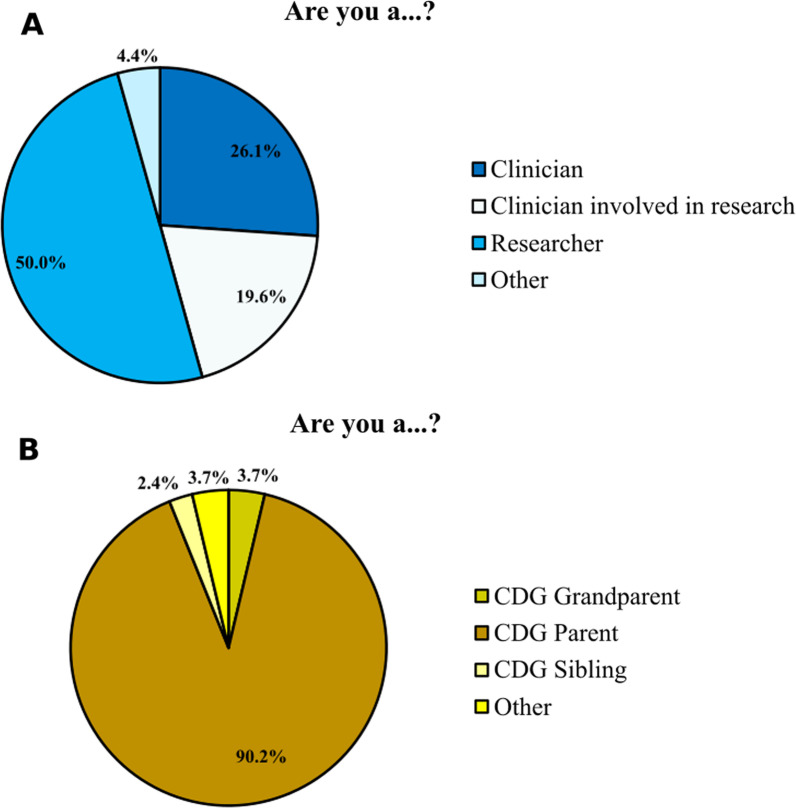
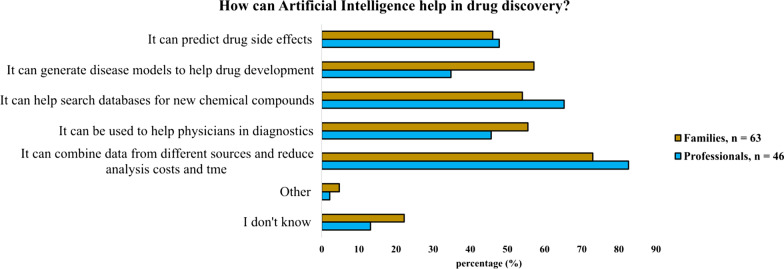
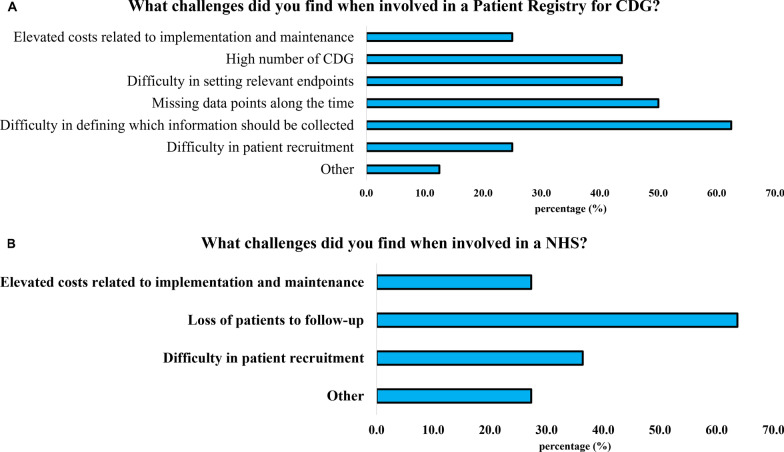
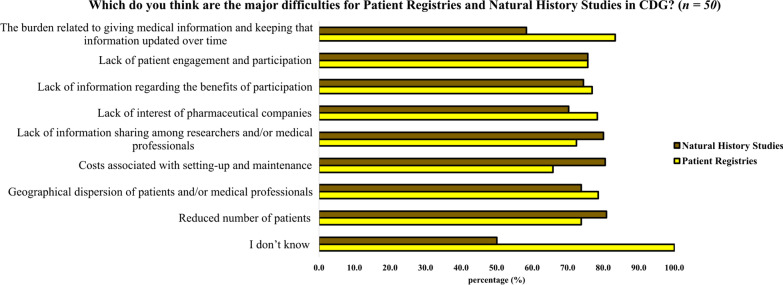
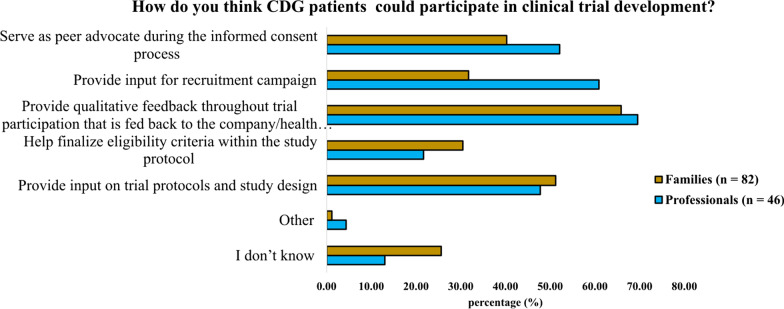
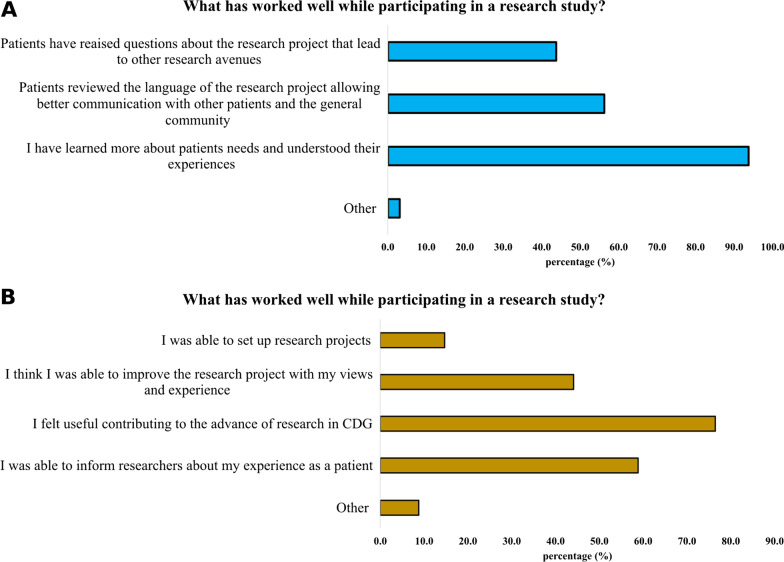
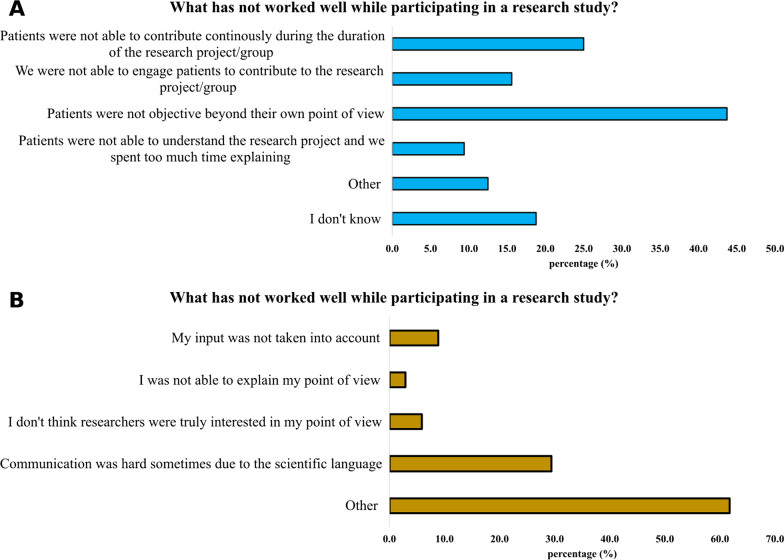
A total of 128 respondents (46 CDG professionals and 82 family members), mainly from Europe and the USA, participated in this study. Most professionals (95.0%) were relatively familiar with drug development and approval processes, while CDG families revealed low familiarity levels, with 8.5% admitting to never having heard about drug development. However, both stakeholder groups agreed that patients and families make significant contributions to drug development and approval. Regarding their perceptions of and experiences with specific drug development and approval tools, namely biobanks, disease models, patient registries, natural history studies (NHS) and clinical trials (CT), the CDG community stakeholders described low use and participation, as well as variable familiarity. Additionally, CDG professionals and families shared conflicting views about CT patient engagement and related information sharing. Families reported lower levels of involvement in CT design (25.0% declared ever being involved) and information (60.0% stated having been informed) compared to professionals (60.0% and 85.7%, respectively). These contrasting perceptions were further extended to their insights and experiences with patient-centric research. Finally, the CDG community (67.4% of professionals and 54.0% of families) reported a positive vision of artificial intelligence (AI) as a drug development tool. Nevertheless, despite the high AI awareness among CDG families (76.8%), professionals described limited AI use in their research (23.9%).
This community-centric study sheds new light on CDG drug development and approval. It identifies educational, communication and research gaps and opportunities for CDG professionals and families that could improve and accelerate CDG therapy development.
先天性糖基化障碍(CDG)是一大类罕见的遗传性疾病,目前几乎没有治疗方法。然而,由于 CDG 医学/科学和患者社区的持续努力,CDG 治疗研究一直在不断扩展。因此,CDG 药物开发是一个热门的研究课题。本研究的主要目的是通过收集和分析 CDG 社区(包括专业人士和患者家庭)的意见和经验,了解当前和指导未来的 CDG 药物开发和批准。为此,开发并分发了一份电子(e-)调查。
共有 128 名受访者(46 名 CDG 专业人士和 82 名家庭成员)参与了这项研究,他们主要来自欧洲和美国。大多数专业人士(95.0%)对药物开发和批准过程相对熟悉,而 CDG 家庭则表示熟悉程度较低,8.5%的人表示从未听说过药物开发。然而,这两个利益相关者群体都认为患者和家庭对药物开发和批准做出了重大贡献。关于他们对特定药物开发和批准工具(即生物库、疾病模型、患者登记处、自然病史研究(NHS)和临床试验(CT))的看法和经验,CDG 社区利益相关者描述了使用率和参与率低,以及认知程度不同。此外,CDG 专业人士和家庭对 CT 患者参与和相关信息共享存在冲突观点。与专业人士(分别为 60.0%和 85.7%)相比,家庭报告参与 CT 设计(25.0%表示曾经参与过)和信息(60.0%表示已被告知)的程度较低。这些对比的看法进一步延伸到他们对以患者为中心的研究的见解和经验。最后,CDG 社区(67.4%的专业人士和 54.0%的家庭)对人工智能(AI)作为药物开发工具持积极看法。然而,尽管 CDG 家庭对 AI 的认识度很高(76.8%),但专业人士表示他们在研究中很少使用 AI(23.9%)。
这项以社区为中心的研究为 CDG 药物开发和批准提供了新的视角。它确定了 CDG 专业人士和家庭在教育、沟通和研究方面的差距和机会,这可能会改善和加速 CDG 治疗的发展。