Institute of Animal Nutrition, Northeast Agricultural University, Harbin, 150030, People's Republic of China.
Microbiome. 2022 Jul 30;10(1):115. doi: 10.1186/s40168-022-01303-1.
Disease resistance phenotypes are associated with immune regulatory functions and immune tolerance and have implications for both the livestock industry and human health. Microbiota plays an essential role in regulating immunity and autoimmunity in the host organism, but the influence of host-microbiota interactions on disease resistance phenotypes remains unclear. Here, multiomics analysis was performed to identify potential regulatory mechanisms of disease resistance at both the microbiome and host levels in two pig breeds.
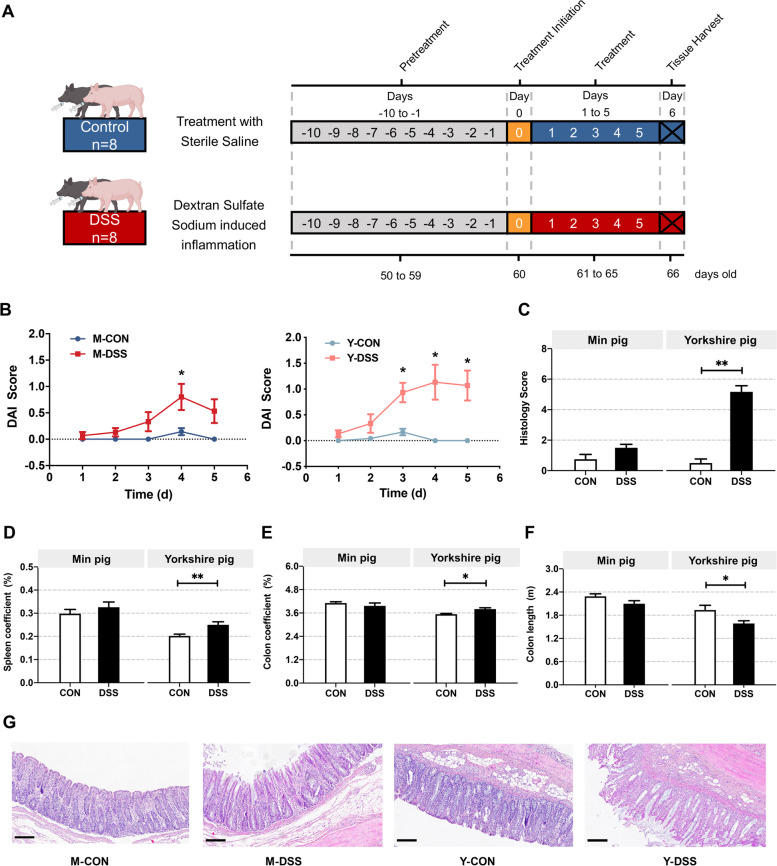
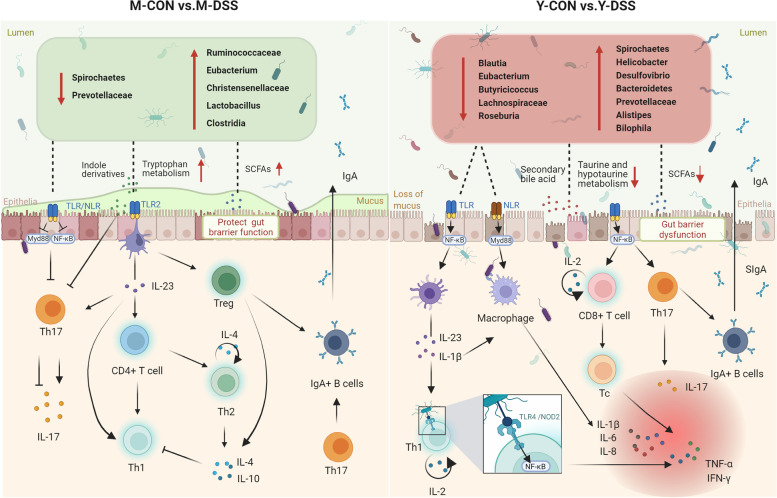
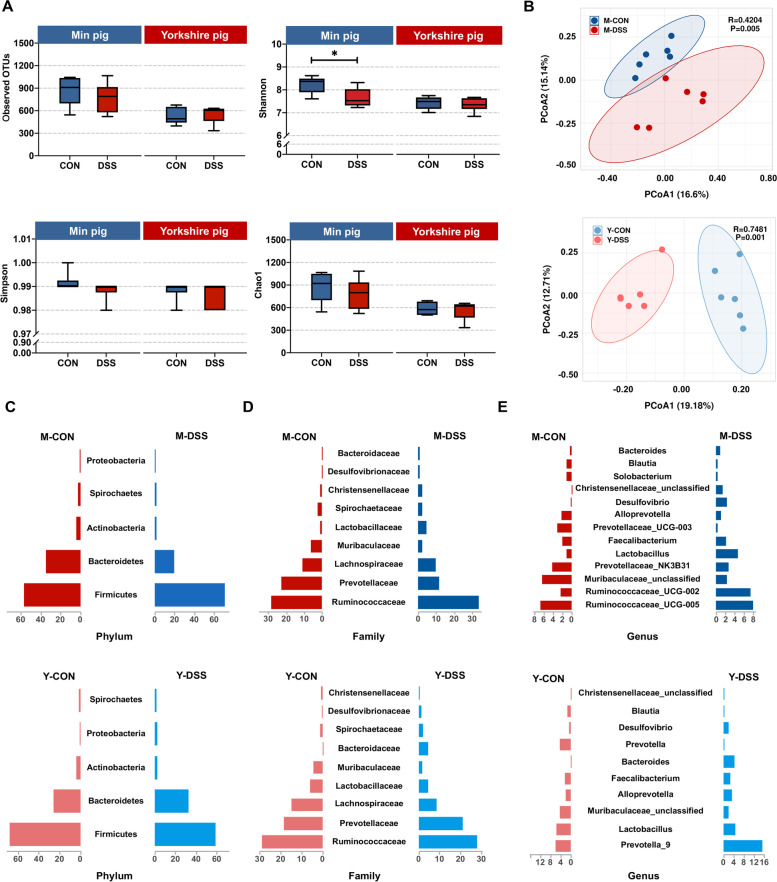
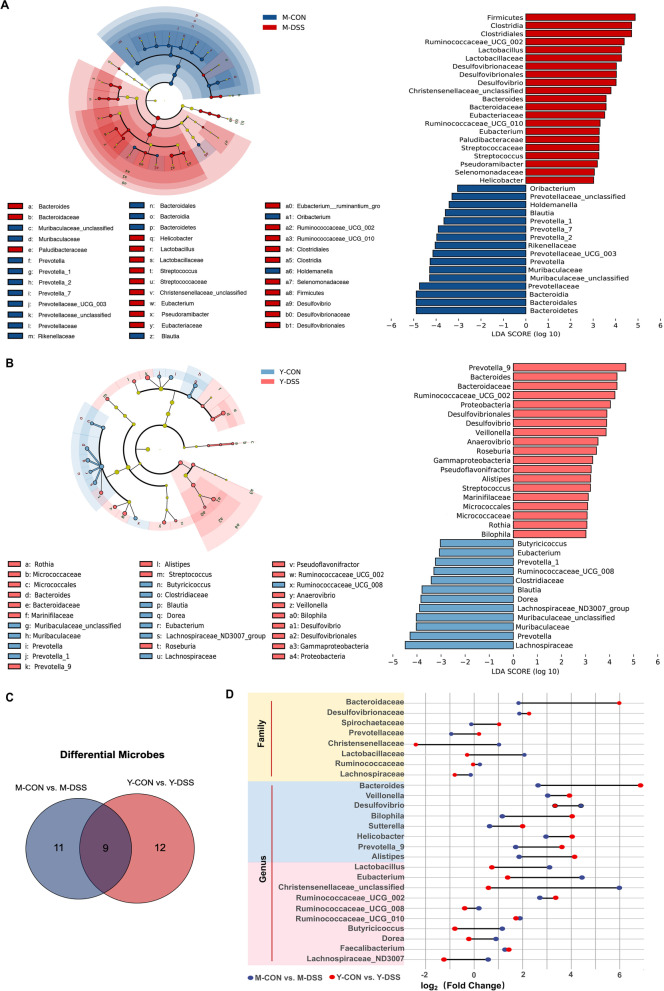
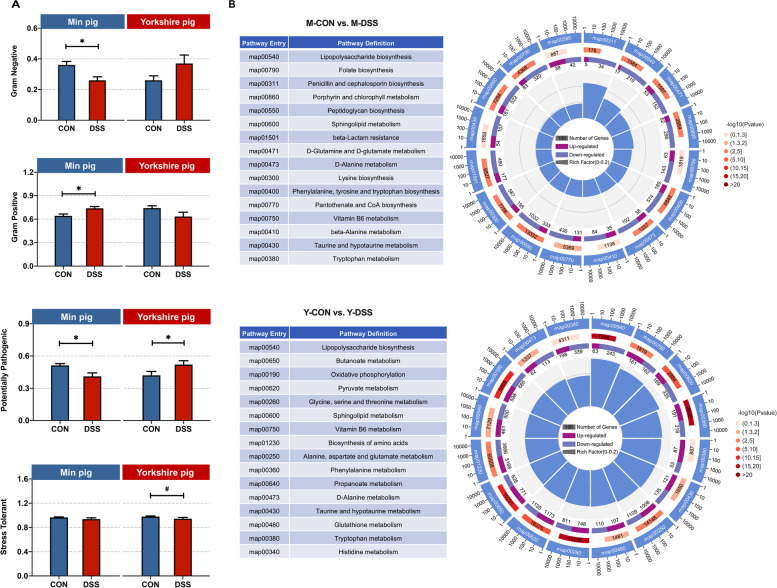
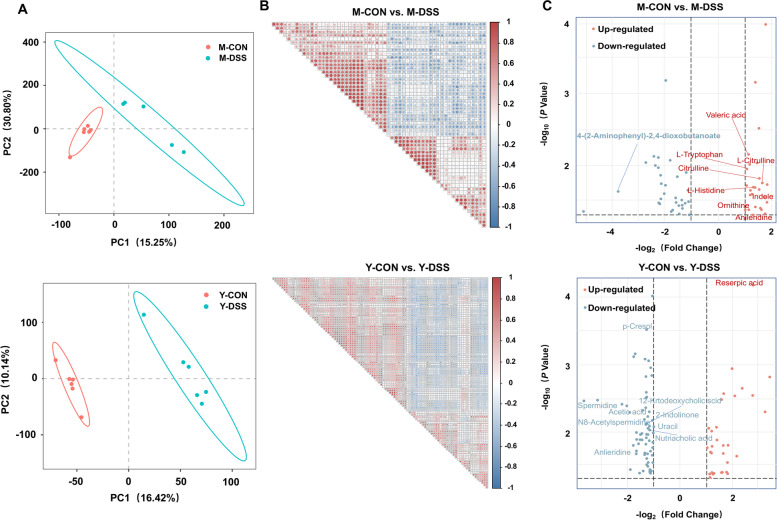
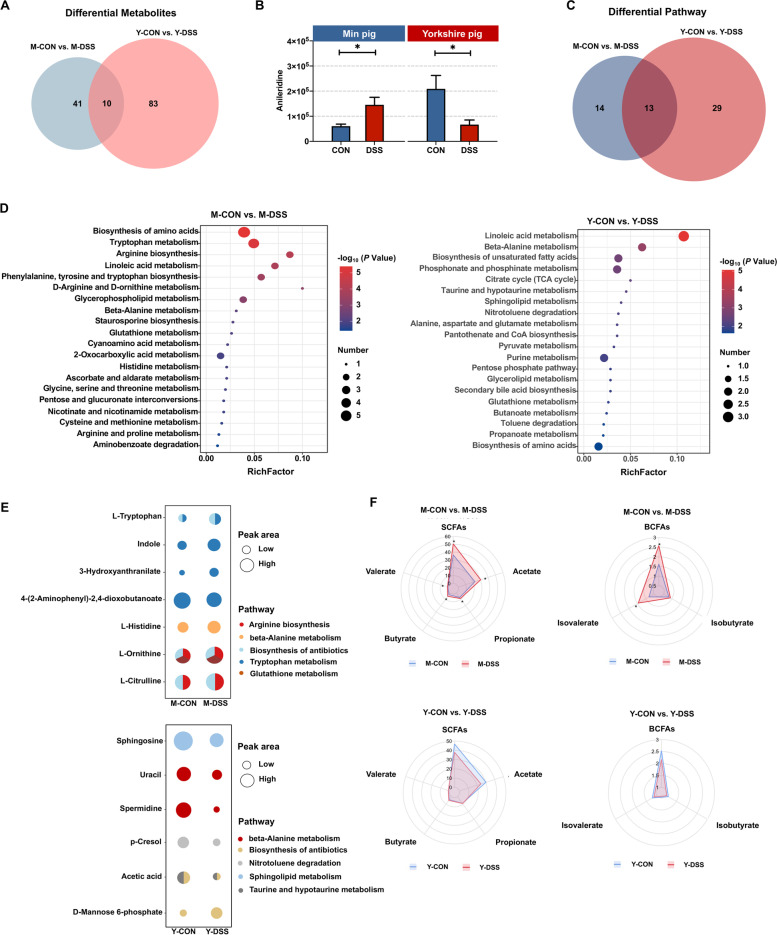
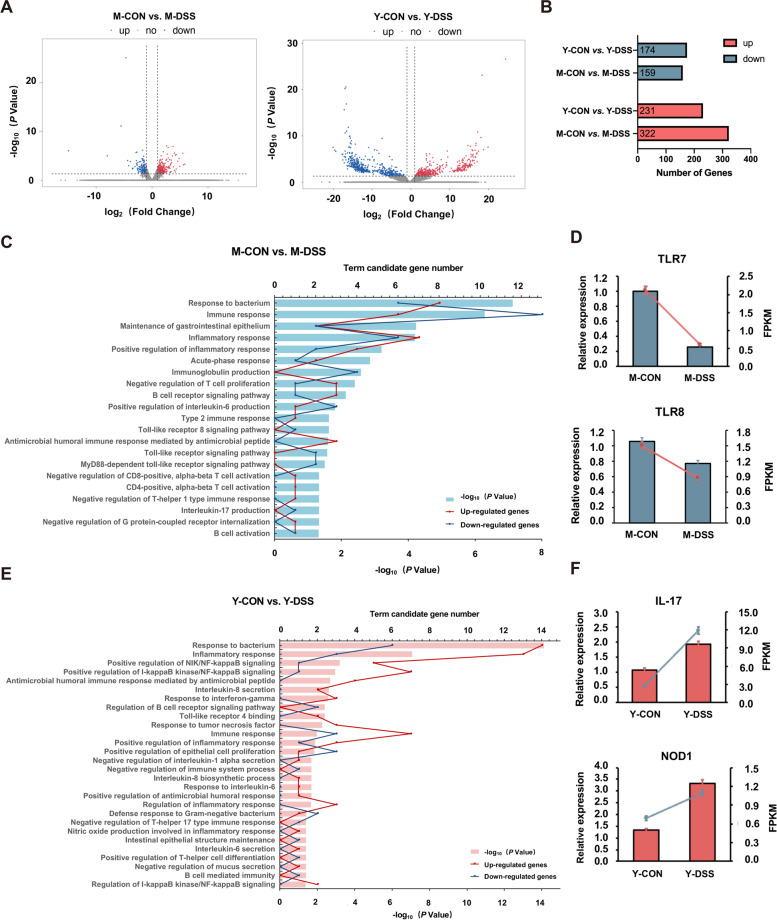
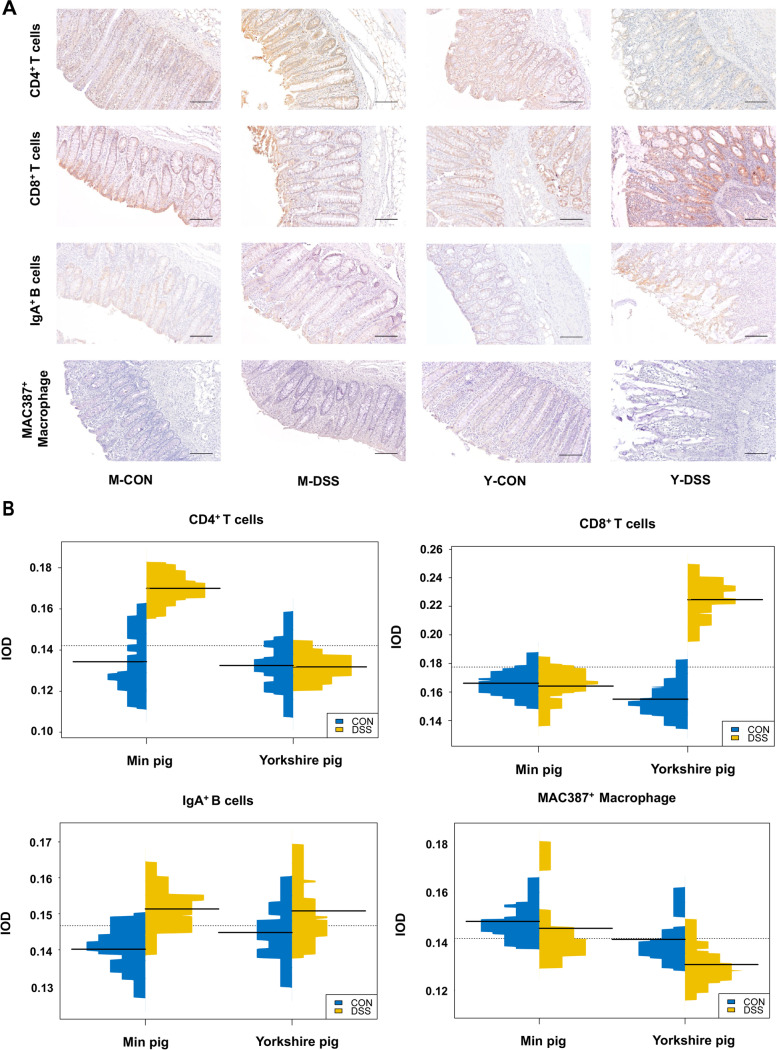
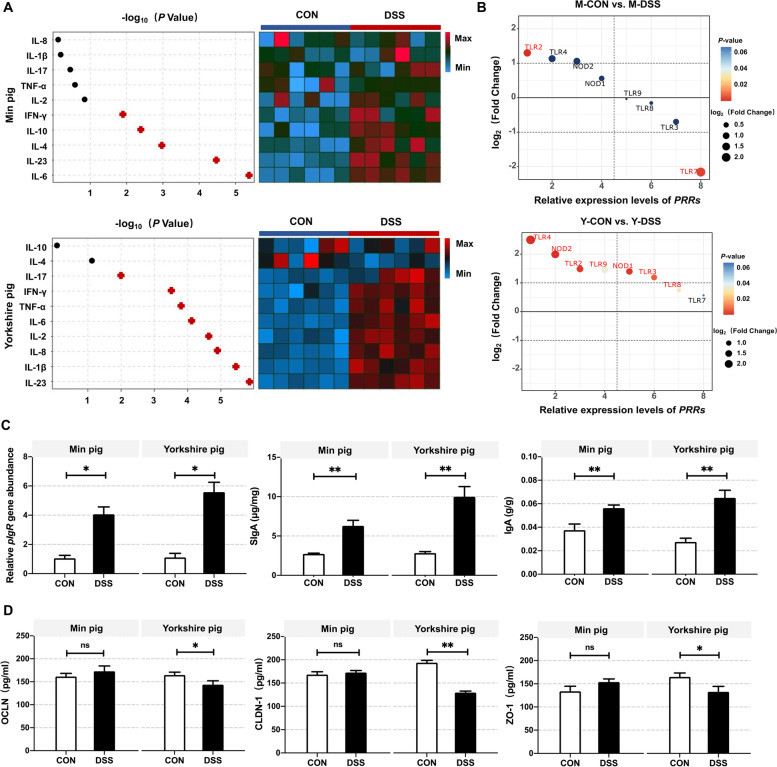
Acute colitis models were established in Min pigs and Yorkshire pigs, and control and diseased individuals were compared. Compared with Yorkshire pigs under the same nutritional and management conditions, Min pigs exhibited strong disease resistance, as indicated by a low disease activity index (DAI) and a low histological activity index (HAI). Microbiota sequencing analysis showed that potentially harmful microbes Desulfovibrio, Bacteroides and Streptococcus were enriched in diseased individuals of the two breeds. Notably, potentially beneficial microbes, such as Lactobacillus, Clostridia and Eubacterium, and several genera belonging to Ruminococcaceae and Christensenellaceae were enriched in diseased Min pigs and were found to be positively associated with the microbial metabolites related to intestinal barrier function. Specifically, the concentrations of indole derivatives and short-chain fatty acids were increased in diseased Min pigs, suggesting beneficial action in protecting intestinal barrier. In addition, lower concentrations of bile acid metabolites and short-chain fatty acids were observed in diseased Yorkshire pigs, which were associated with increased potentially harmful microbes, such as Bilophila and Alistipes. Concerning enrichment of the immune response, the increase in CD4 T cells in the lamina propria improved supervision of the host immunity response in diseased Min pigs, contributing to the maintenance of Th2-type immune superiority and immune tolerance patterns and control of excessive inflammation with the help of potentially beneficial microbes. In diseased Yorkshire pigs, more terms belonging to biological processes of immunity were enriched, including Toll-like receptors signalling, NF-κB signalling and Th1 and Th17-type immune responses, along with the increases of potentially harmful microbes and damaged intestinal barrier.
Cumulatively, the results for the two pig breeds highlight that host-microbiota crosstalk promotes a disease resistance phenotype in three ways: by maintaining partial PRR nonactivation, maintaining Th2-type immune superiority and immunological tolerance patterns and recovering gut barrier function to protect against colonic diseases. Video abstract.
疾病抗性表型与免疫调节功能和免疫耐受有关,对畜牧业和人类健康都有影响。微生物组在调节宿主生物体的免疫和自身免疫方面起着至关重要的作用,但宿主-微生物组相互作用对疾病抗性表型的影响尚不清楚。在这里,我们对两个猪品种进行了多组学分析,以确定在微生物组和宿主水平上疾病抗性的潜在调节机制。
在民猪和约克夏猪中建立了急性结肠炎模型,并比较了对照组和患病个体。与在相同营养和管理条件下的约克夏猪相比,民猪表现出较强的疾病抗性,其疾病活动指数(DAI)和组织学活动指数(HAI)均较低。微生物组测序分析表明,在两个品种的患病个体中,潜在有害微生物脱硫弧菌、拟杆菌和链球菌得到了富集。值得注意的是,潜在有益微生物,如乳酸杆菌、梭菌和真杆菌,以及属于瘤胃球菌科和克里斯滕森菌科的几个属,在患病的民猪中得到了富集,并与与肠道屏障功能相关的微生物代谢物呈正相关。具体来说,在患病的民猪中,吲哚衍生物和短链脂肪酸的浓度增加,表明其对肠道屏障有有益作用。此外,在患病的约克夏猪中观察到胆汁酸代谢物和短链脂肪酸的浓度降低,这与潜在有害微生物如 Bilophila 和 Alistipes 的增加有关。在免疫反应的富集方面,固有层中 CD4+T 细胞的增加改善了宿主免疫反应的监督,有助于维持 Th2 型免疫优势和免疫耐受模式,并在潜在有益微生物的帮助下控制过度炎症。在患病的约克夏猪中,更多属于免疫过程的术语得到了富集,包括 Toll 样受体信号、NF-κB 信号和 Th1 和 Th17 型免疫反应,同时潜在有害微生物和受损的肠道屏障增加。
总之,这两个猪品种的结果表明,宿主-微生物组相互作用通过三种方式促进疾病抗性表型:维持部分 PRR 非激活、维持 Th2 型免疫优势和免疫耐受模式以及恢复肠道屏障功能以预防结肠疾病。