Division of Hematology and Tumor, Children's Medical Center, The Second Xiangya Hospital, Central South University, Changsha, Hunan, People's Republic of China.
Sci Rep. 2022 Jul 30;12(1):13101. doi: 10.1038/s41598-022-17331-8.
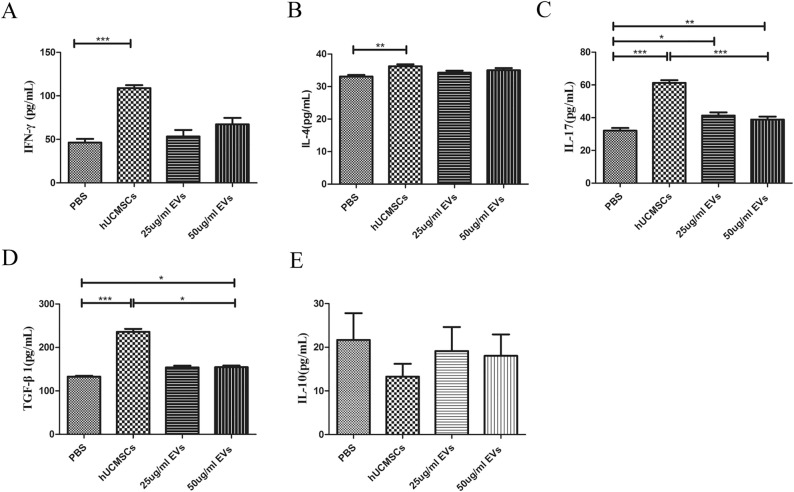
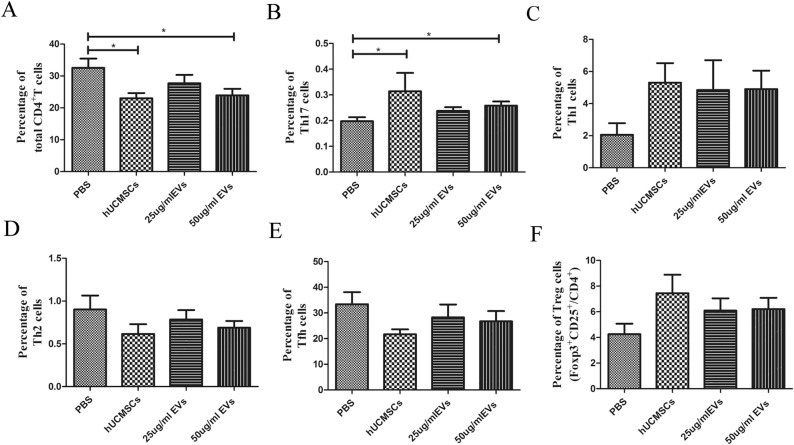
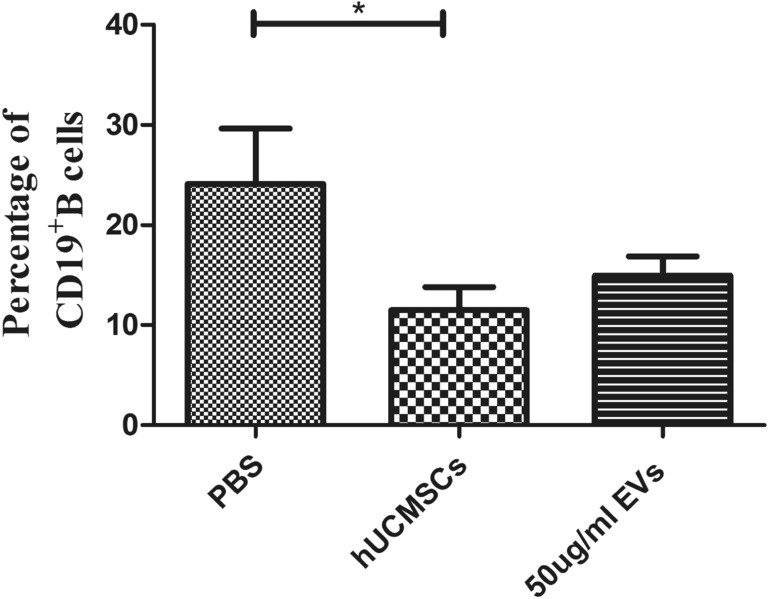
Systemic lupus erythematosus (SLE) is an autoimmune disease involving multiple systems. Immunopathology believes that abnormal T cell function and excessive production of autoantibodies by B cells are involved in multi-organ damage. Human umbilical cord mesenchymal stem cells (hUCMSCs) therapies have endowed with promise in SLE, while the function of MSC-derived extracellular vesicles (MSC-EVs) was still unclear. Extracellular vesicles (EVs) are subcellular components secreted by a paracellular mechanism and are essentially a group of nanoparticles. EVs play a vital role in cell-to-cell communication by acting as biological transporters. New evidence has shown beneficial effects of MSC-EVs on autoimmune diseases, such as their immunomodulatory properties. In this study, we investigated whether hUCMSCs derived extracellular vesicles (hUCMSC-EVs) could regulate abnormal immune responses of T cells or B cells in SLE. We isolated splenic mononuclear cells from MRL/lpr mice, a classical animal model of SLE. PBS (Phosphate-buffered saline), 2 × 10 hUCMSCs, 25 µg/ml hUCMSC-EVs, 50 µg/ml hUCMSC-EVs were co-cultured with 2 × 10 activated splenic mononuclear cells for 3 days in vitro, respectively. The proportions of CD4 T cell subsets, B cells and the concentrations of cytokines were detected. Both hUCMSCs and hUCMSC-EVs inhibited CD4 T cells, increased the production of T helper (Th)17 cells, promoted the production of interleukin (IL)-17 and transforming growth factor beta1 (TGF-β1) (P < 0.05), although they had no significant effects on Th1, Th2, T follicular helper (Tfh), regulatory T (Treg) cells and IL-10 (P > 0.05); only hUCMSCs inhibited CD19 B cells, promoted the production of interferon-gamma (IFN-γ) and IL-4 (P < 0.05). hUCMSCs exert immunoregulatory effects on SLE at least partially through hUCMSC-EVs in vitro, therefore, hUCMSC-EVs play novel and potential regulator roles in SLE.
系统性红斑狼疮(SLE)是一种涉及多个系统的自身免疫性疾病。免疫病理学认为,T 细胞功能异常和 B 细胞过度产生自身抗体与多器官损伤有关。人脐带间充质干细胞(hUCMSCs)治疗在 SLE 中具有广阔的前景,而 MSC 衍生的细胞外囊泡(MSC-EVs)的功能尚不清楚。细胞外囊泡(EVs)是通过旁分泌机制分泌的细胞亚成分,本质上是一组纳米颗粒。EVs 通过充当生物转运体在细胞间通讯中发挥重要作用。新的证据表明 MSC-EVs 对自身免疫性疾病具有有益作用,例如它们的免疫调节特性。在这项研究中,我们研究了 hUCMSCs 衍生的细胞外囊泡(hUCMSC-EVs)是否可以调节 SLE 中 T 细胞或 B 细胞的异常免疫反应。我们从 MRL/lpr 小鼠中分离出脾单核细胞,MRL/lpr 小鼠是 SLE 的一种经典动物模型。PBS(磷酸盐缓冲盐水)、2×10 hUCMSCs、25μg/ml hUCMSC-EVs 和 50μg/ml hUCMSC-EVs 分别与 2×10 个激活的脾单核细胞在体外共培养 3 天,检测 CD4 T 细胞亚群、B 细胞的比例和细胞因子的浓度。hUCMSCs 和 hUCMSC-EVs 均抑制 CD4 T 细胞,增加辅助性 T 细胞 17(Th17)细胞的产生,促进白细胞介素(IL)-17 和转化生长因子-β1(TGF-β1)的产生(P<0.05),但对 Th1、Th2、滤泡辅助性 T(Tfh)、调节性 T(Treg)细胞和 IL-10 没有显著影响(P>0.05);只有 hUCMSCs 抑制 CD19 B 细胞,促进干扰素-γ(IFN-γ)和 IL-4 的产生(P<0.05)。hUCMSCs 至少部分通过 hUCMSC-EVs 在体外对 SLE 发挥免疫调节作用,因此,hUCMSC-EVs 在 SLE 中发挥新的潜在调节作用。