Conceição-Neto Orlando C, da Costa Bianca Santos, Pontes Leilane da Silva, Silveira Melise Chaves, Justo-da-Silva Lívia Helena, de Oliveira Santos Ivson Cassiano, Teixeira Camila Bastos Tavares, Tavares E Oliveira Thamirys Rachel, Hermes Fernanda Stephens, Galvão Teca Calcagno, Antunes L Caetano M, Rocha-de-Souza Cláudio Marcos, Carvalho-Assef Ana P D
Laboratório de Pesquisa em Infecção Hospitalar (LAPIH), Instituto Oswaldo Cruz - Fundação Oswaldo Cruz (FIOCRUZ), Rio de Janeiro, Brazil.
Faculdade de Medicina, Universidade Estácio de Sá (UNESA), Rio de Janeiro, Brazil.
Front Cell Infect Microbiol. 2022 Jul 15;12:898125. doi: 10.3389/fcimb.2022.898125. eCollection 2022.
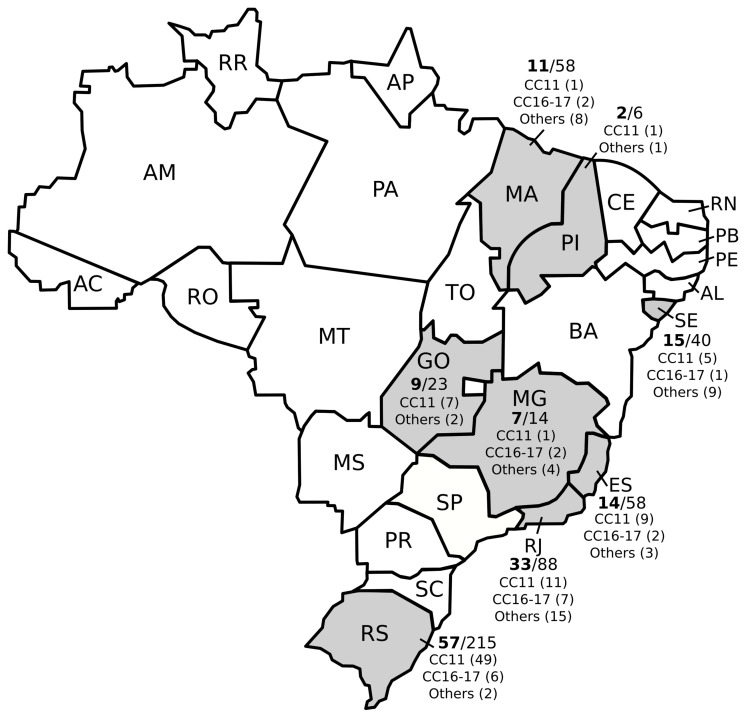
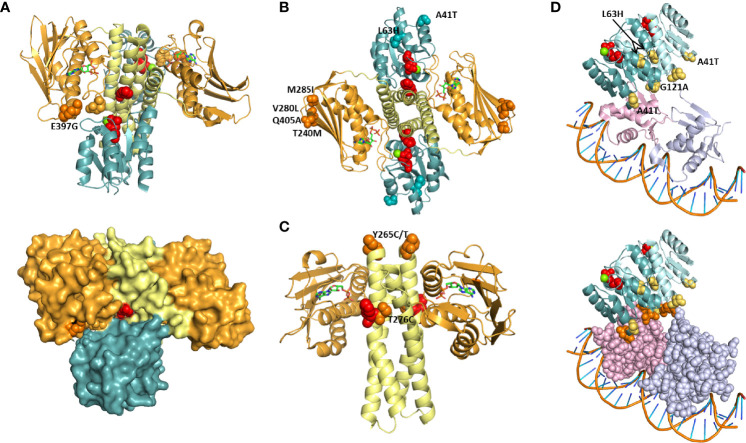
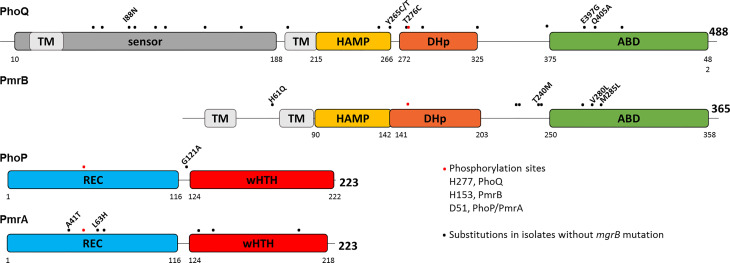
In Brazil, the production of KPC-type carbapenemases in Enterobacteriales is endemic, leading to widespread use of polymyxins. In the present study, 502 isolates were evaluated for resistance to polymyxins, their genetic determinants and clonality, in addition to the presence of carbapenem resistance genes and evaluation of antimicrobial resistance. Resistance to colistin (polymyxin E) was evaluated through initial selection on EMB agar containing 4% colistin sulfate, followed by Minimal Inhibitory Concentration (MIC) determination by broth microdilution. The susceptibility to 17 antimicrobials was assessed by disk diffusion. The presence of , and carbapenemases was investigated by phenotypic methods and conventional PCR. Molecular typing was performed by PFGE and MLST. Allelic variants of the gene were screened by PCR and chromosomal mutations in the , , , and genes were investigated by sequencing. Our work showed a colistin resistance frequency of 29.5% (n = 148/502) in isolates. Colistin MICs from 4 to >128 µg/mL were identified (MIC = 64 µg/mL; MIC >128 µg/mL). All isolates were considered MDR, with the lowest resistance rates observed for amikacin (34.4%), and 19.6% of the isolates were resistant to all tested antimicrobials. The gene was identified in 77% of the isolates, in consonance with the high rate of resistance to polymyxins related to its use as a therapeutic alternative. Through -PFGE, 51 pulsotypes were identified. MLST showed 21 STs, with ST437, ST258 and ST11 (CC11) being the most prevalent, and two new STs were determined: ST4868 and ST4869. The gene was identified in 3 isolates. Missense mutations in chromosomal genes were identified, as well as insertion sequences in . Furthermore, the identification of chromosomal mutations in isolates belonging from CC11 ensures its success as a high-risk epidemic clone in Brazil and worldwide.
在巴西,肠杆菌科细菌中KPC型碳青霉烯酶的产生呈地方性流行,导致多粘菌素的广泛使用。在本研究中,除了检测碳青霉烯耐药基因的存在情况和评估抗菌药物耐药性外,还对502株分离株进行了多粘菌素耐药性、其遗传决定因素和克隆性的评估。通过在含有4%硫酸多粘菌素的伊红美蓝琼脂上进行初步筛选,随后采用肉汤微量稀释法测定最低抑菌浓度(MIC),评估对粘菌素(多粘菌素E)的耐药性。通过纸片扩散法评估对17种抗菌药物的敏感性。通过表型方法和常规PCR检测KPC、NDM和VIM碳青霉烯酶的存在情况。采用脉冲场凝胶电泳(PFGE)和多位点序列分型(MLST)进行分子分型。通过PCR筛选mgrB基因的等位基因变异,并通过测序研究pmrA、pmrB、phoP、phoQ基因中的染色体突变。我们的研究表明,在分离株中粘菌素耐药频率为29.5%(n = 148/502)。鉴定出粘菌素MIC为4至>128 µg/mL(MIC = 64 µg/mL;MIC >128 µg/mL)。所有分离株均被视为多重耐药,对阿米卡星的耐药率最低(34.4%),19.6%的分离株对所有测试抗菌药物均耐药。77%的分离株中鉴定出KPC基因,这与其作为治疗替代药物导致的多粘菌素高耐药率一致。通过PFGE鉴定出51种脉冲型。MLST显示有21个序列型(ST),其中ST437、ST258和ST11(克隆群11)最为常见,并确定了两个新的ST:ST4868和ST4869。在三株分离株中鉴定出NDM基因。鉴定出染色体基因中的错义突变以及pmrB中的插入序列。此外,在属于克隆群11的分离株中鉴定出染色体突变,这确保了其作为巴西乃至全球高风险流行克隆的成功传播。