Martinez-Varela Alícia, Casas Gemma, Berrojalbiz Naiara, Piña Benjamin, Dachs Jordi, Vila-Costa Maria
Department of Environmental Chemistry, Institute of Environmental Assessment and Water Research, IDAEA-CSIC, Barcelona, Spain.
Front Microbiol. 2022 Jul 14;13:907265. doi: 10.3389/fmicb.2022.907265. eCollection 2022.
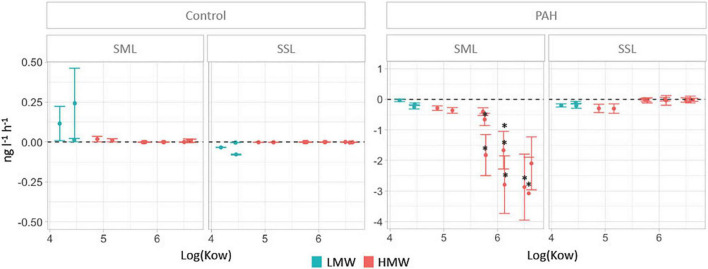
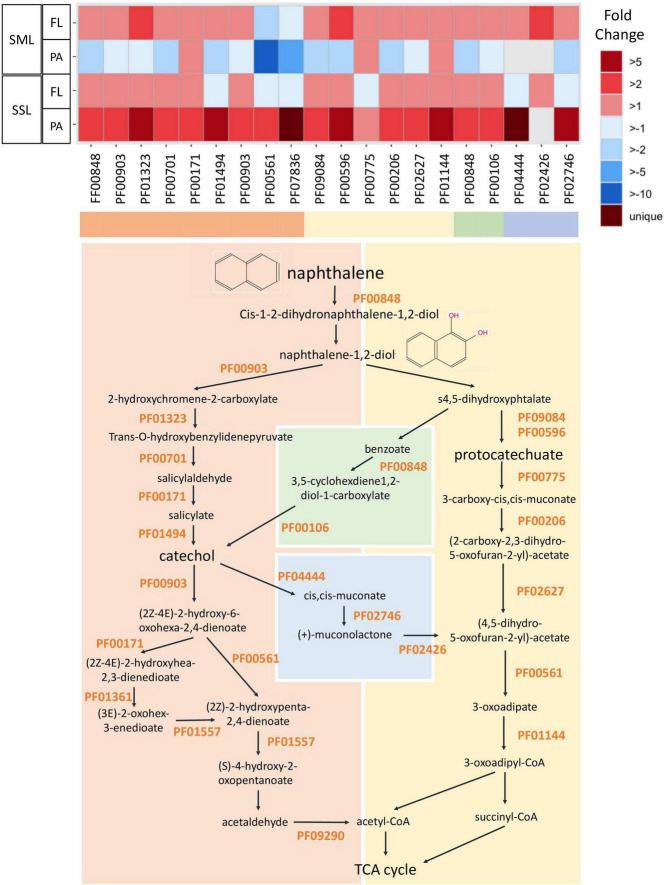
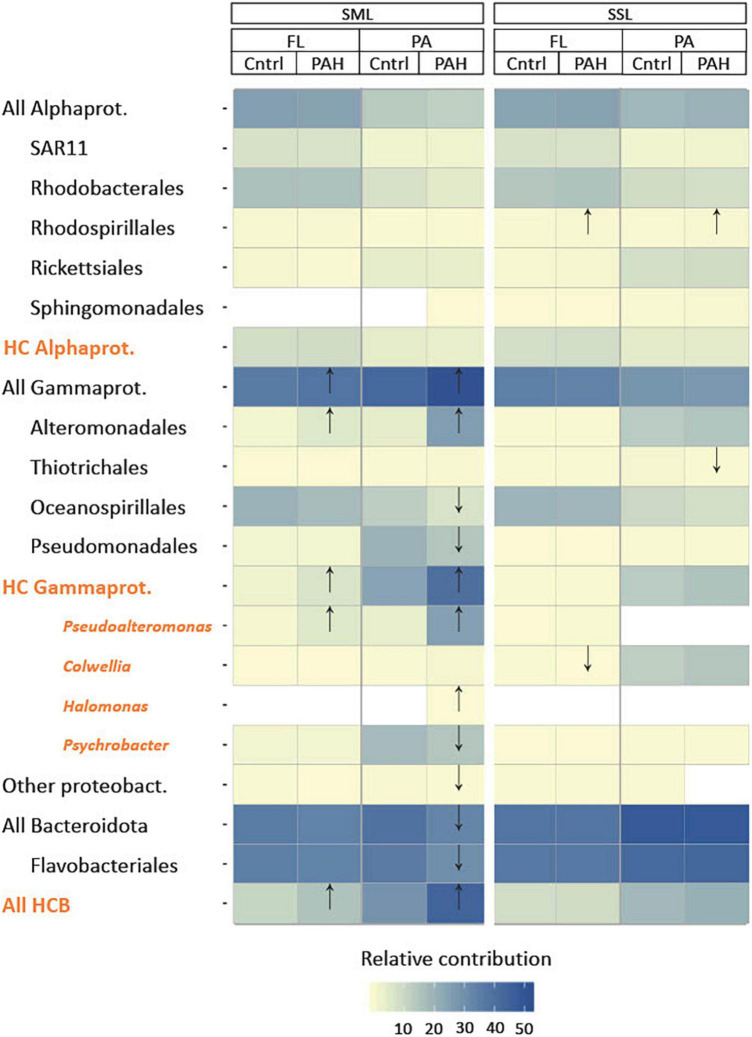
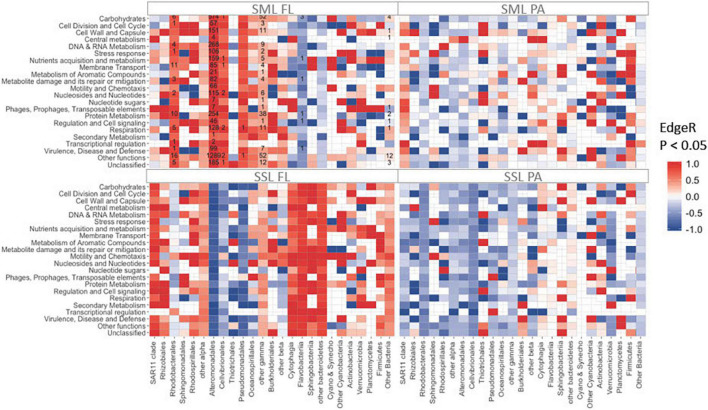
As much as 400 Tg of carbon from airborne semivolatile aromatic hydrocarbons is deposited to the oceans every year, the largest identified source of anthropogenic organic carbon to the ocean. Microbial degradation is a key sink of these pollutants in surface waters, but has received little attention in polar environments. We have challenged Antarctic microbial communities from the sea-surface microlayer (SML) and the subsurface layer (SSL) with polycyclic aromatic hydrocarbons (PAHs) at environmentally relevant concentrations. PAH degradation rates and the microbial responses at both taxonomical and functional levels were assessed. Evidence for faster removal rates was observed in the SML, with rates 2.6-fold higher than in the SSL. In the SML, the highest removal rates were observed for the more hydrophobic and particle-bound PAHs. After 24 h of PAHs exposure, particle-associated bacteria in the SML showed the highest number of significant changes in their composition. These included significant enrichments of several hydrocarbonoclastic bacteria, especially the fast-growing genera , which increased their relative abundances by eightfold. Simultaneous metatranscriptomic analysis showed that the free-living fraction of SML was the most active fraction, especially for members of the order Alteromonadales, which includes . Their key role in PAHs biodegradation in polar environments should be elucidated in further studies. This study highlights the relevant role of bacterial populations inhabiting the sea-surface microlayer, especially the particle-associated habitat, as relevant bioreactors for the removal of aromatic hydrocarbons in the oceans.
每年有多达400太克来自空气中半挥发性芳烃的碳沉积到海洋中,这是已确定的向海洋输送人为有机碳的最大来源。微生物降解是地表水这些污染物的一个关键汇,但在极地环境中却很少受到关注。我们用环境相关浓度的多环芳烃(PAHs)对来自海洋表层微层(SML)和次表层(SSL)的南极微生物群落进行了挑战。评估了PAH的降解速率以及在分类和功能水平上的微生物反应。在SML中观察到去除速率更快的证据,其速率比SSL高2.6倍。在SML中,疏水性更强且与颗粒结合的PAHs的去除速率最高。PAHs暴露24小时后,SML中与颗粒相关的细菌在其组成上显示出最多的显著变化。这些变化包括几种烃降解细菌的显著富集,特别是快速生长的属,其相对丰度增加了八倍。同时进行的宏转录组分析表明,SML的自由生活部分是最活跃的部分,特别是对于包括 在内的交替单胞菌目成员。它们在极地环境中PAHs生物降解中的关键作用应在进一步研究中阐明。这项研究突出了栖息在海洋表层微层的细菌种群,特别是与颗粒相关的栖息地,作为海洋中去除芳烃的相关生物反应器的重要作用。