Morales-Marroquín Jonathan A, Solis Miranda Regina, Baldin Pinheiro José, Zucchi Maria Imaculada
Genetics and Molecular Biology Department, Biology Institute, University of Campinas (UNICAMP), Campinas, Brazil.
School of Languages and Cultures, University of Sheffield, Sheffield, United Kingdom.
Front Res Metr Anal. 2022 Jul 14;7:898818. doi: 10.3389/frma.2022.898818. eCollection 2022.
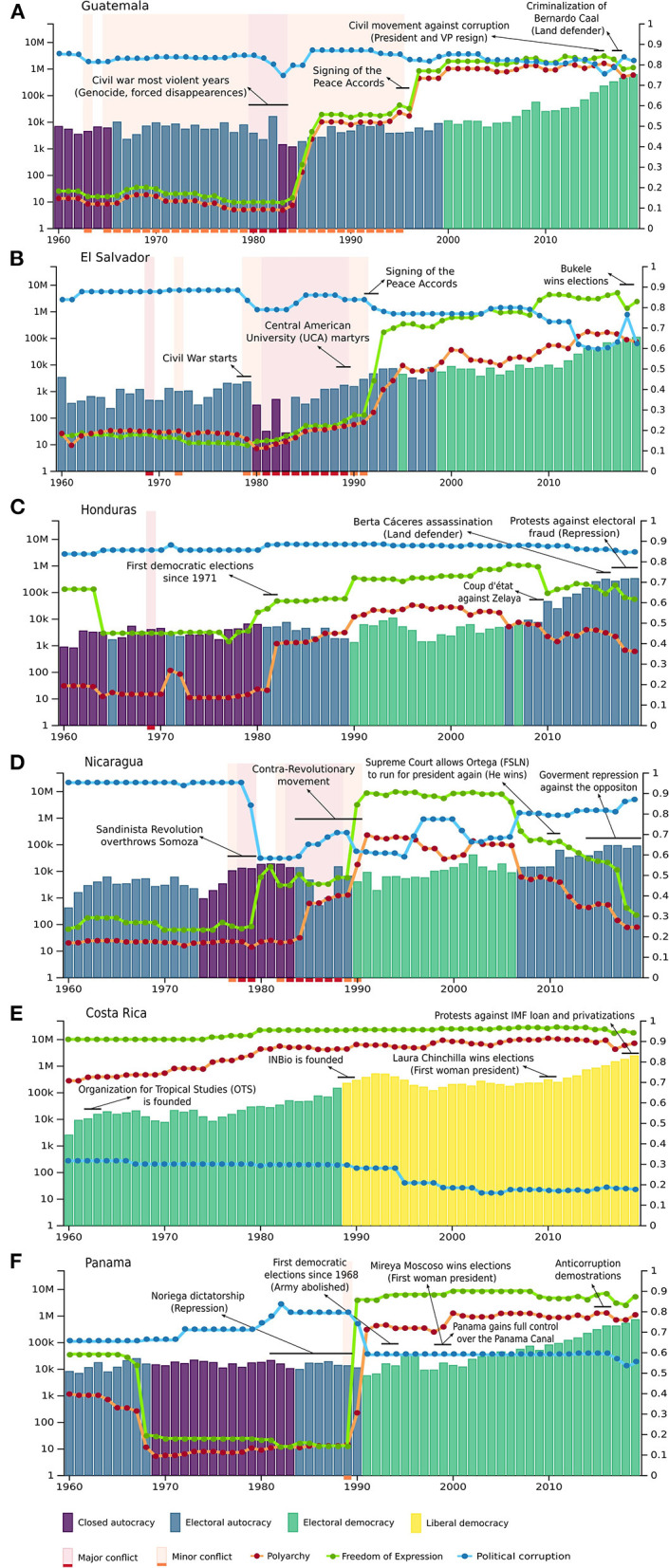
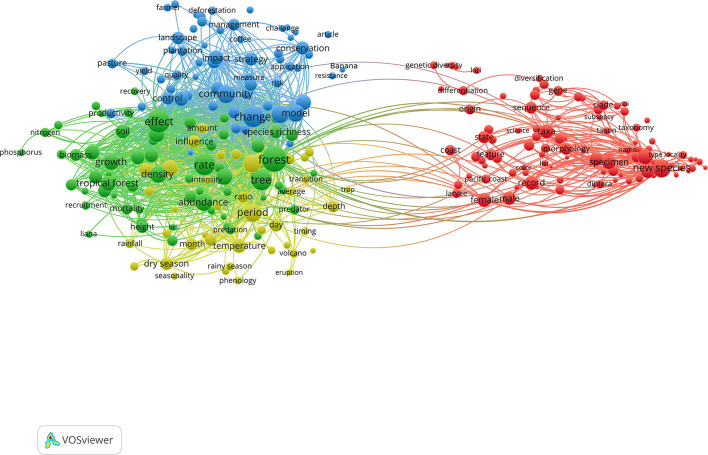
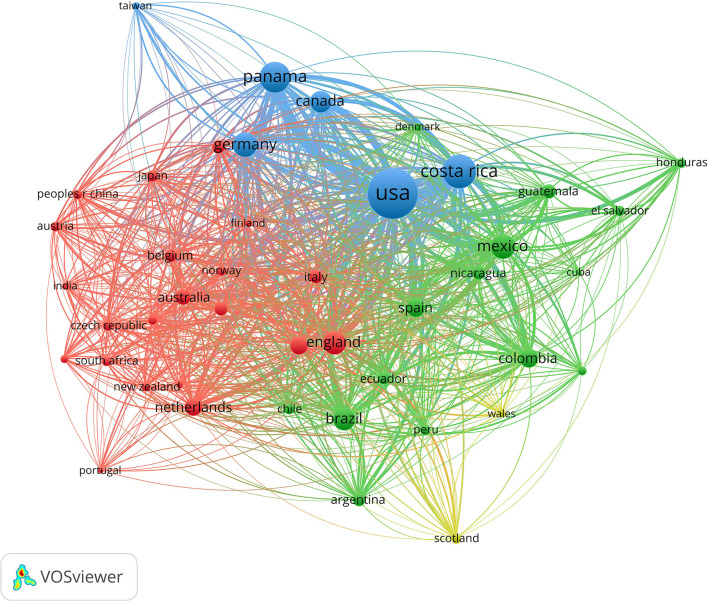
Central America science production on biodiversity topics is important in planning future adaptive and conservation policies in a climate-related risk region that is considered a biodiversity hotspot but has the lowest Human Development Index of Latin America. Science production on biodiversity is related to geo-referenced species occurrence records, but the accessibility depends on political frameworks and science funding. This paper aims at foregrounding how the democratic shifts throughout the years have had an impact on science production on biodiversity research, and species records. For this exploration we developed a novel systematic scientometric analysis of science production on biodiversity topics, we used Bio-Dem (open-source software of biodiversity records and socio-political variables) and briefly analyzed the history-from 1980 to 2020-of Guatemala, El Salvador, Honduras, Nicaragua, Costa Rica, and Panama. With a data set of 16,304 documents, our analysis shows the significant discrepancies between the low science production of Central American Northern countries (Guatemala, El Salvador, Honduras, and Nicaragua), the prolific production from the Southern (Costa Rica and Panama), and how this relates to democratic stability. Scientific production tends to be more abundant when democratic conditions are guaranteed. The state capture phenomenon and colonial-rooted interactions worldwide have an effect on the conditions under which science is being produced in Central America. Democracy, science production, funding, and conservation are core elements that go hand in hand, and that need to be nourished in a region that struggles with the protection of life and extractive activities in a climate change scenario.
中美洲关于生物多样性主题的科学产出,对于在一个与气候相关的风险地区规划未来的适应性和保护政策至关重要。该地区被视为生物多样性热点地区,但却是拉丁美洲人类发展指数最低的地区。生物多样性方面的科学产出与地理参考物种出现记录相关,但获取这些记录取决于政治框架和科学资金。本文旨在突出多年来的民主转变如何影响生物多样性研究的科学产出以及物种记录。为了进行这一探索,我们对生物多样性主题的科学产出开展了一项全新的系统科学计量分析,我们使用了Bio-Dem(生物多样性记录和社会政治变量的开源软件),并简要分析了危地马拉、萨尔瓦多、洪都拉斯、尼加拉瓜、哥斯达黎加和巴拿马从1980年到2020年的历史。通过一个包含16304份文献的数据集,我们的分析显示了中美洲北部国家(危地马拉、萨尔瓦多、洪都拉斯和尼加拉瓜)科学产出较低与南部国家(哥斯达黎加和巴拿马)丰富产出之间的显著差异,以及这与民主稳定性的关系。当民主条件得到保障时,科学产出往往更为丰富。全球范围内的国家俘获现象和植根于殖民的互动,对中美洲科学产出的条件产生影响。民主、科学产出、资金和保护是相辅相成的核心要素,在一个气候变化背景下既要努力保护生命又要开展采掘活动的地区,这些要素需要得到培育。