Centre d'étude de la forêt, Institut de Recherche sur les Forêts (IRF), Université du Québec en Abitibi-Témiscamingue (UQAT), Rouyn-Noranda, Québec, Canada.
Département des sciences du bois et de la forêt, Centre d'étude de la forêt, Faculté de foresterie, de géographie et de géomatique, Université Laval, Québec City, Québec City, Canada.
PLoS One. 2021 Mar 11;16(3):e0234587. doi: 10.1371/journal.pone.0234587. eCollection 2021.
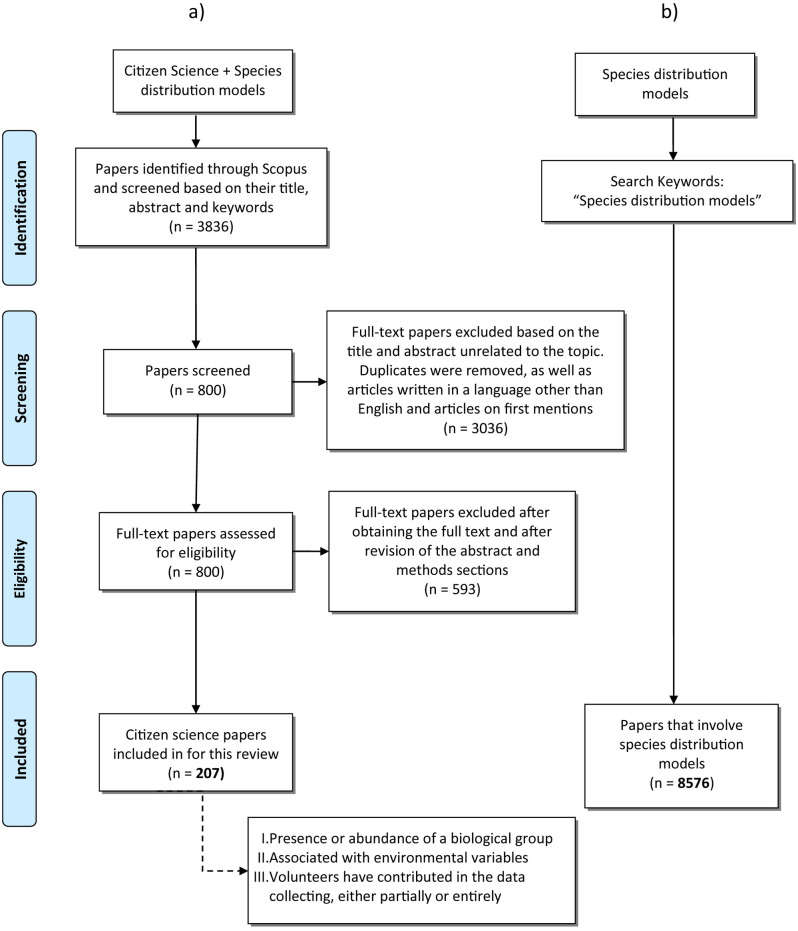
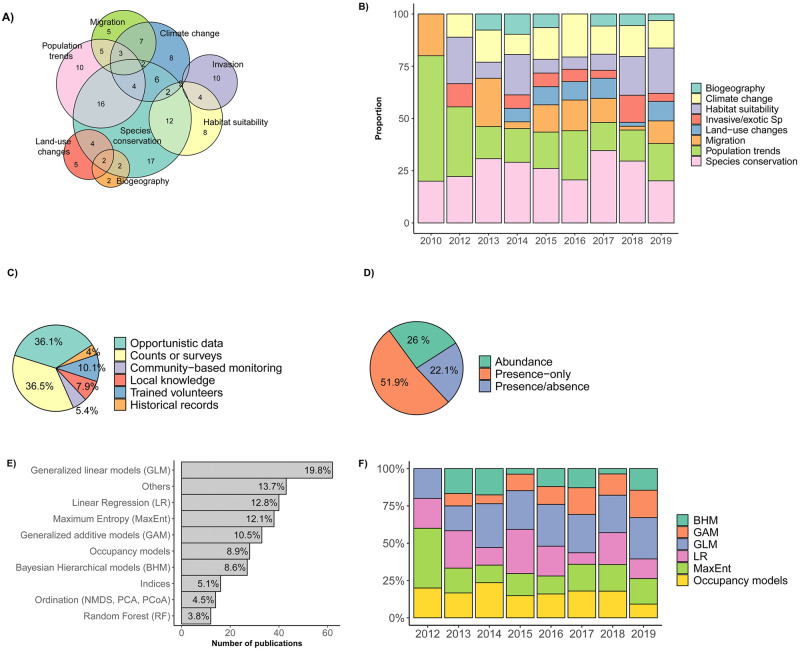
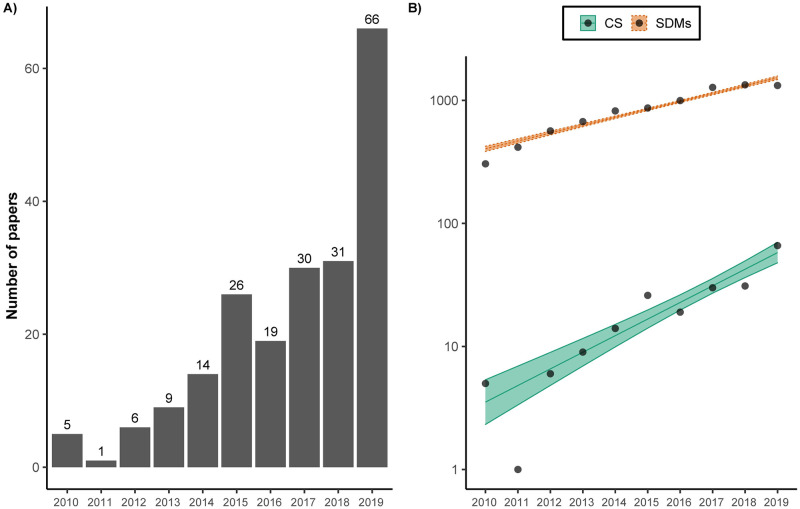
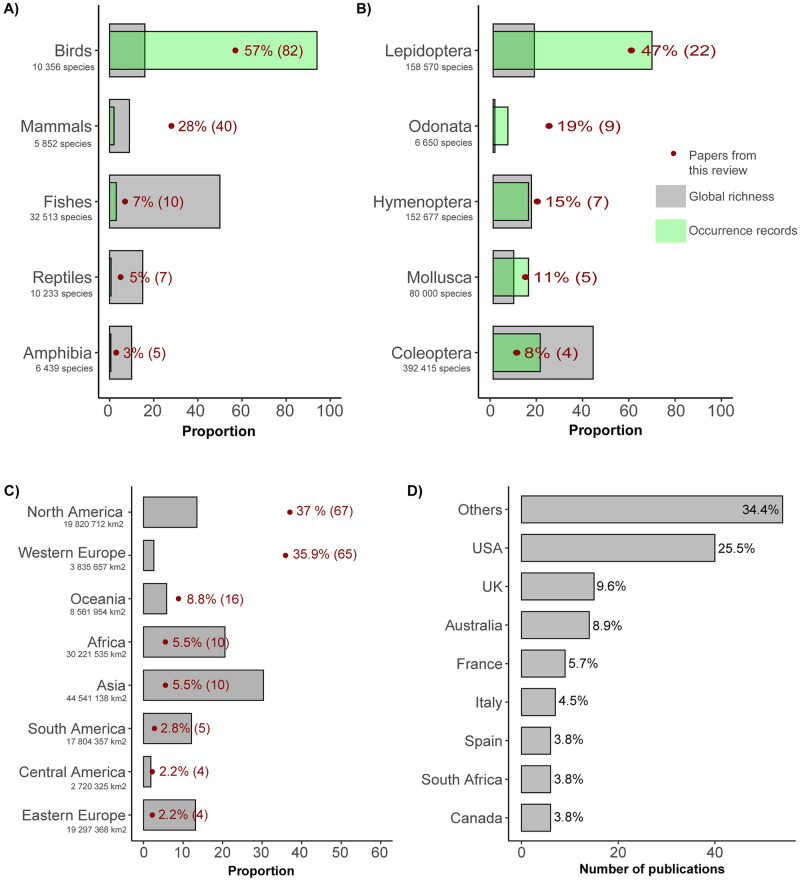
Citizen science (CS) currently refers to the participation of non-scientist volunteers in any discipline of conventional scientific research. Over the last two decades, nature-based CS has flourished due to innovative technology, novel devices, and widespread digital platforms used to collect and classify species occurrence data. For scientists, CS offers a low-cost approach of collecting species occurrence information at large spatial scales that otherwise would be prohibitively expensive. We examined the trends and gaps linked to the use of CS as a source of data for species distribution models (SDMs), in order to propose guidelines and highlight solutions. We conducted a quantitative literature review of 207 peer-reviewed articles to measure how the representation of different taxa, regions, and data types have changed in SDM publications since the 2010s. Our review shows that the number of papers using CS for SDMs has increased at approximately double the rate of the overall number of SDM papers. However, disparities in taxonomic and geographic coverage remain in studies using CS. Western Europe and North America were the regions with the most coverage (73%). Papers on birds (49%) and mammals (19.3%) outnumbered other taxa. Among invertebrates, flying insects including Lepidoptera, Odonata and Hymenoptera received the most attention. Discrepancies between research interest and availability of data were as especially important for amphibians, reptiles and fishes. Compared to studies on animal taxa, papers on plants using CS data remain rare. Although the aims and scope of papers are diverse, species conservation remained the central theme of SDM using CS data. We present examples of the use of CS and highlight recommendations to motivate further research, such as combining multiple data sources and promoting local and traditional knowledge. We hope our findings will strengthen citizen-researchers partnerships to better inform SDMs, especially for less-studied taxa and regions. Researchers stand to benefit from the large quantity of data available from CS sources to improve global predictions of species distributions.
公民科学(CS)目前是指非科学家志愿者参与任何传统科学研究领域的活动。在过去的二十年中,由于创新技术、新型设备以及用于收集和分类物种出现数据的广泛数字平台的出现,基于自然的 CS 蓬勃发展。对于科学家来说,CS 提供了一种低成本的方法,可以在大空间尺度上收集物种出现信息,否则这将是非常昂贵的。我们研究了将 CS 用作物种分布模型(SDM)数据来源的趋势和差距,以便提出指导方针并突出解决方案。我们对 207 篇同行评议的文章进行了定量文献综述,以衡量自 2010 年代以来,SDM 出版物中不同分类群、区域和数据类型的代表性变化。我们的综述表明,使用 CS 进行 SDM 的论文数量以大约是 SDM 论文总数增长率的两倍的速度增加。然而,在使用 CS 的研究中,分类和地理覆盖范围的差距仍然存在。西欧和北美是覆盖范围最广的地区(73%)。关于鸟类(49%)和哺乳动物(19.3%)的论文数量超过了其他分类群。在无脊椎动物中,鳞翅目、蜻蜓目和膜翅目等飞行昆虫受到的关注最多。研究兴趣和数据可用性之间的差异在两栖动物、爬行动物和鱼类中尤为重要。与动物分类群的研究相比,使用 CS 数据的植物论文仍然很少。尽管论文的目的和范围各不相同,但使用 CS 数据进行 SDM 的中心主题仍然是物种保护。我们展示了 CS 的使用示例,并提出了一些建议,以激励进一步的研究,例如结合多种数据源和促进地方和传统知识。我们希望我们的发现将加强公民研究人员的合作伙伴关系,以更好地为 SDM 提供信息,特别是对于研究较少的分类群和地区。研究人员可以从 CS 来源提供的大量数据中受益,以改善对全球物种分布的预测。