Veronesi Francesca, Contartese Deyanira, Martini Lucia, Visani Andrea, Fini Milena
Complex Structure of Surgical Sciences and Technologies, IRCCS Istituto Ortopedico Rizzoli, Bologna, Italy.
Front Med (Lausanne). 2022 Jul 14;9:930789. doi: 10.3389/fmed.2022.930789. eCollection 2022.
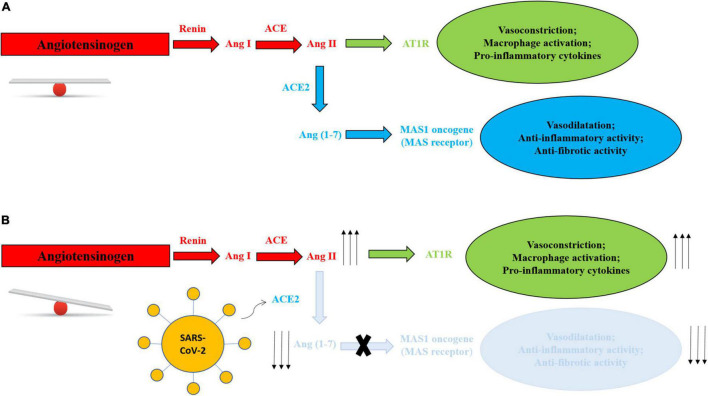
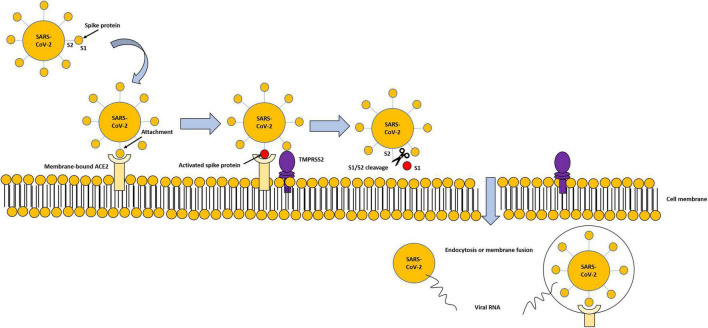
Coronavirus disease 2019 (COVID-19) primarily affects the respiratory tract, but also many other organs and tissues, leading to different pathological pictures, such as those of the musculoskeletal tissues. The present study should be considered as a speculation on the relationship between COVID-19 infection and some frequent musculoskeletal pathologies, in particular sarcopenia, bone loss/osteoporosis (OP) and fracture risk and osteoarthritis (OA), to hypothesize how the virus acts on these pathologies and consequently on the tissue regeneration/healing potential. The study focuses in particular on the modalities of interaction of COVID-19 with Angiotensin-Converting Enzyme 2 (ACE2) and on the "cytokine storm." Knowing the effects of COVID-19 on musculoskeletal tissues could be important also to understand if tissue regenerative/reparative capacity is compromised, especially in elderly and frail patients. We speculate that ACE2 and serine proteases together with an intense inflammation, immobilization and malnutrition could be the responsible for muscle weakness, altered bone remodeling, increase in bone fracture risk and inflammatory joint pathologies. Future preclinical and clinical studies may focus on the regenerative/reparative properties of the musculoskeletal tissues after COVID-19 infection, toward a personalized treatment usually based on scaffolds, cells, and growth factors.
2019冠状病毒病(COVID-19)主要影响呼吸道,但也会影响许多其他器官和组织,导致不同的病理表现,如肌肉骨骼组织的病理表现。本研究应被视为对COVID-19感染与一些常见肌肉骨骼疾病之间关系的推测,特别是肌肉减少症、骨质流失/骨质疏松症(OP)、骨折风险和骨关节炎(OA),以推测病毒如何作用于这些疾病,进而影响组织再生/愈合潜力。该研究特别关注COVID-19与血管紧张素转换酶2(ACE2)的相互作用方式以及“细胞因子风暴”。了解COVID-19对肌肉骨骼组织的影响对于理解组织再生/修复能力是否受损也很重要,尤其是在老年和体弱患者中。我们推测,ACE2和丝氨酸蛋白酶,再加上强烈的炎症、制动和营养不良,可能是导致肌肉无力、骨重塑改变、骨折风险增加和炎症性关节疾病的原因。未来的临床前和临床研究可能会关注COVID-19感染后肌肉骨骼组织的再生/修复特性,朝着通常基于支架、细胞和生长因子的个性化治疗方向发展。