Leupold Lukas, Sigutova Veronika, Gerasimova Elizaveta, Regensburger Martin, Zundler Sebastian, Zunke Friederike, Xiang Wei, Winner Beate, Prots Iryna
Department of Stem Cell Biology, University Hospital Erlangen, Friedrich-Alexander-Universität Erlangen-Nürnberg, Erlangen, Germany.
Department of Molecular Neurology, University Hospital Erlangen, Friedrich-Alexander-Universität Erlangen-Nürnberg, Erlangen, Germany.
Front Neurol. 2022 Jul 15;13:869103. doi: 10.3389/fneur.2022.869103. eCollection 2022.
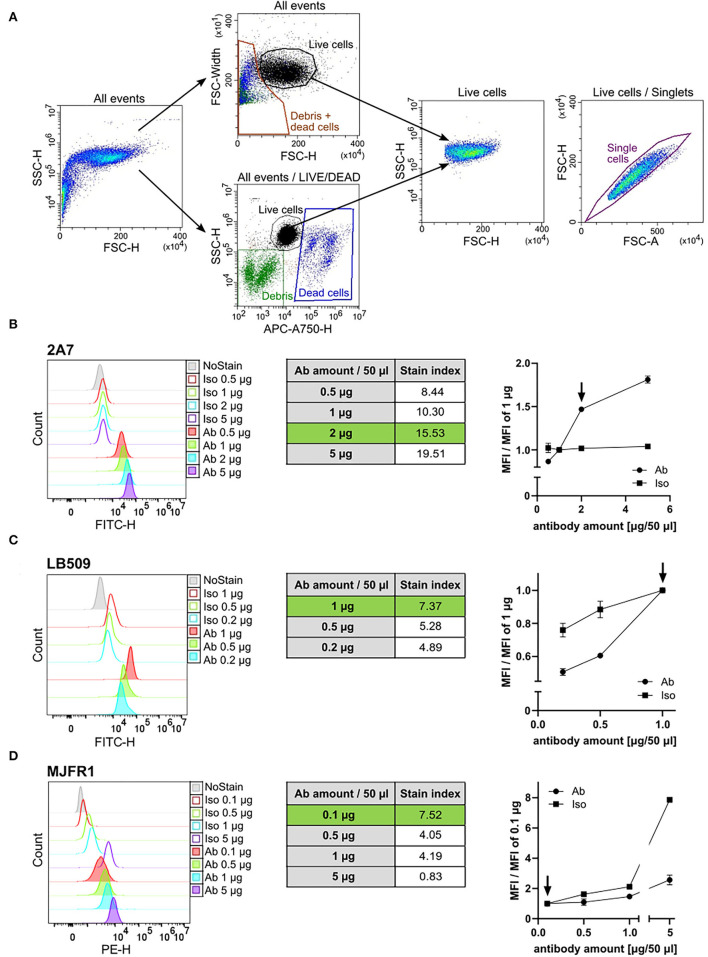
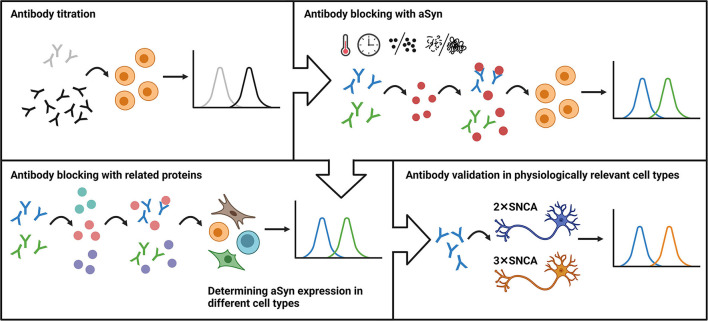
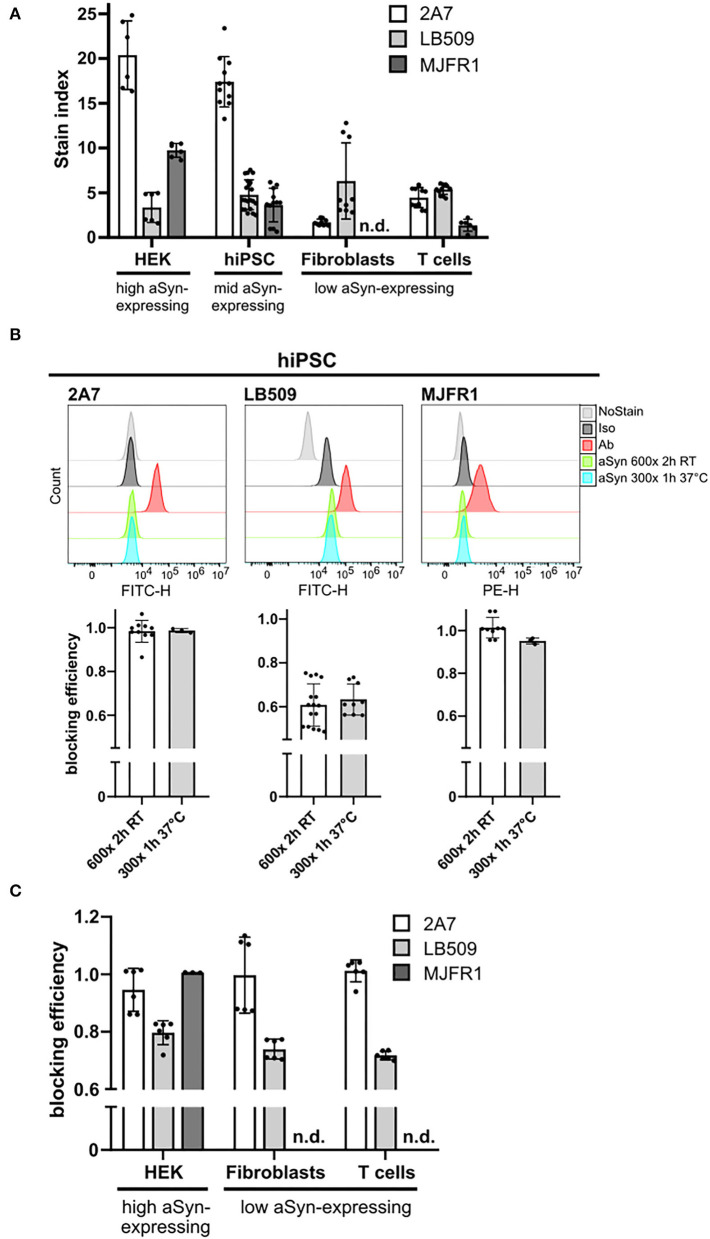
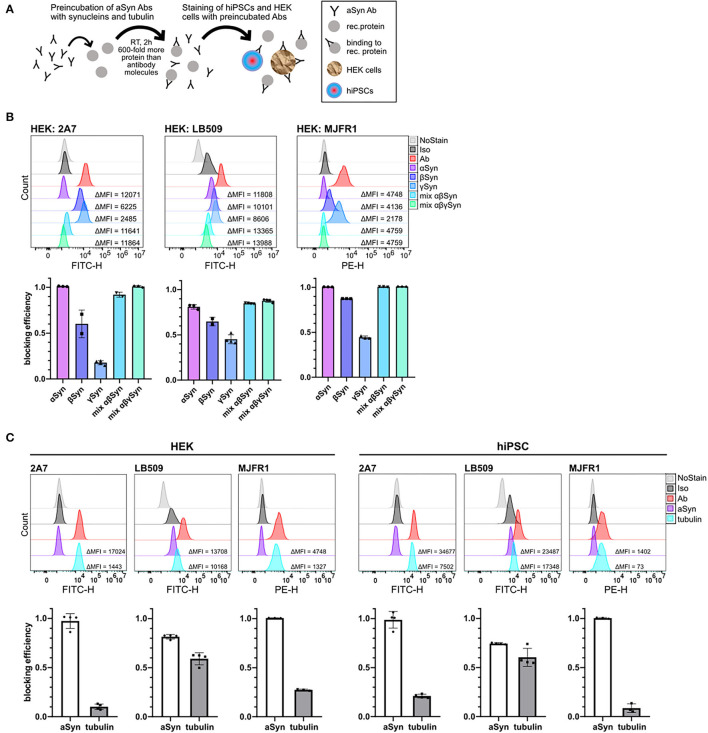
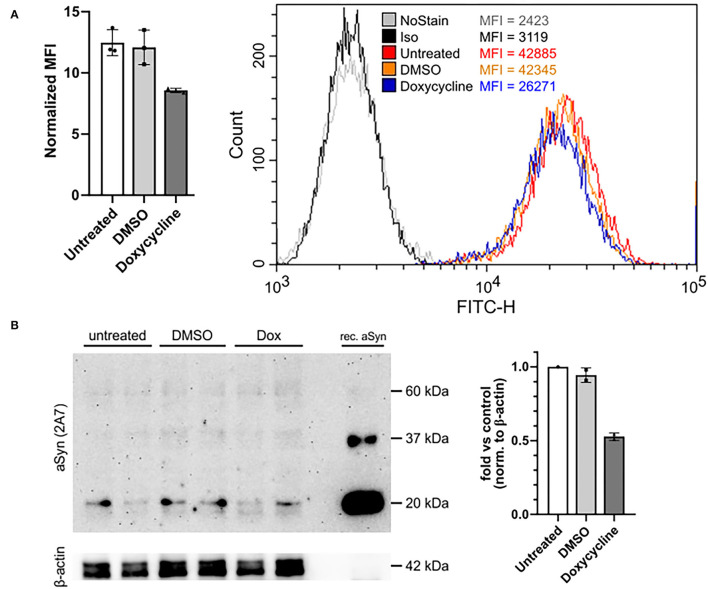
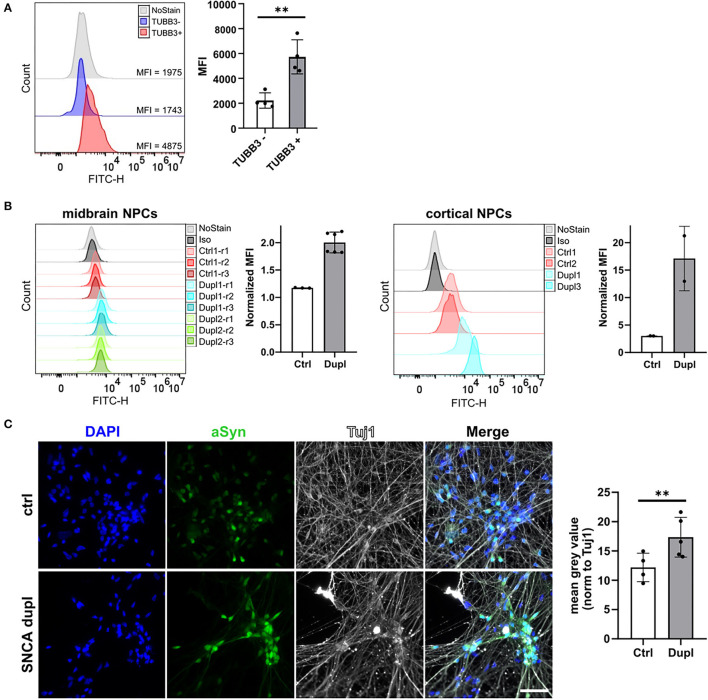
The accumulation of alpha-synuclein (aSyn) is the hallmark of a group of neurodegenerative conditions termed synucleopathies. Physiological functions of aSyn, including those outside of the CNS, remain elusive. However, a reliable and reproducible evaluation of aSyn protein expression in different cell types and especially in low-expressing cells is impeded by the existence of a huge variety of poorly characterized anti-aSyn antibodies and a lack of a routinely used sensitive detection methods. Here, we developed a robust flow cytometry-based workflow for aSyn detection and antibody validation. We test our workflow using three commercially available antibodies (MJFR1, LB509, and 2A7) in a variety of human cell types, including induced pluripotent stem cells, T lymphocytes, and fibroblasts, and provide a cell- and antibody-specific map for aSyn expression. Strikingly, we demonstrate a previously unobserved unspecificity of the LB509 antibody, while the MJFR1 clone revealed specific aSyn binding however with low sensitivity. On the other hand, we identified an aSyn-specific antibody clone 2A7 with an optimal sensitivity for detecting aSyn in a range of cell types, including those with low aSyn expression. We further utilize our workflow to demonstrate the ability of the 2A7 antibody to distinguish between physiological differences in aSyn expression in neuronal and non-neuronal cells from the cortical organoids, and in neural progenitors and midbrain dopaminergic neurons from healthy controls and in patients with Parkinson's disease who have aSyn gene locus duplication. Our results provide a proof of principle for the use of high-throughput flow cytometry-based analysis of aSyn and highlight the necessity of rigorous aSyn antibody validation to facilitate the research of aSyn physiology and pathology.
α-突触核蛋白(aSyn)的积累是一组被称为突触核病的神经退行性疾病的标志。aSyn的生理功能,包括中枢神经系统之外的功能,仍然不清楚。然而,由于存在大量特征不明的抗aSyn抗体以及缺乏常规使用的灵敏检测方法,对不同细胞类型尤其是低表达细胞中aSyn蛋白表达进行可靠且可重复的评估受到了阻碍。在此,我们开发了一种基于流式细胞术的强大工作流程用于aSyn检测和抗体验证。我们使用三种市售抗体(MJFR1、LB509和2A7)在多种人类细胞类型中测试了我们的工作流程,这些细胞类型包括诱导多能干细胞、T淋巴细胞和成纤维细胞,并提供了aSyn表达的细胞和抗体特异性图谱。令人惊讶的是,我们证明了LB509抗体存在先前未观察到的非特异性,而MJFR1克隆显示出特异性的aSyn结合,但灵敏度较低。另一方面,我们鉴定出一种aSyn特异性抗体克隆——2A7,它在一系列细胞类型中检测aSyn具有最佳灵敏度,包括那些aSyn低表达的细胞。我们进一步利用我们的工作流程来证明2A7抗体能够区分来自皮质类器官的神经元和非神经元细胞、健康对照以及aSyn基因座重复的帕金森病患者的神经祖细胞和中脑多巴胺能神经元中aSyn表达的生理差异。我们的结果为基于高通量流式细胞术分析aSyn的应用提供了原理证明,并强调了严格进行aSyn抗体验证以促进aSyn生理学和病理学研究的必要性。