Ravindran Ajith, Nirmal D, Jebalin I V Binola K, Pinkymol K P, Prajoon P, Ajayan J
Karunya Institute of Technology and Sciences, Coimbatore and Saintgits College of Engineering, Kottayam, India.
Karunya Institute of Technology and Sciences, Coimbatore, India.
Opt Quantum Electron. 2022;54(9):555. doi: 10.1007/s11082-022-04002-1. Epub 2022 Jul 26.
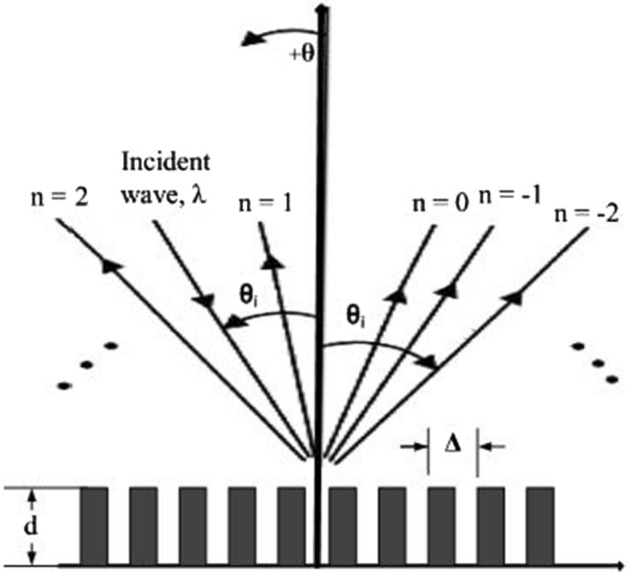
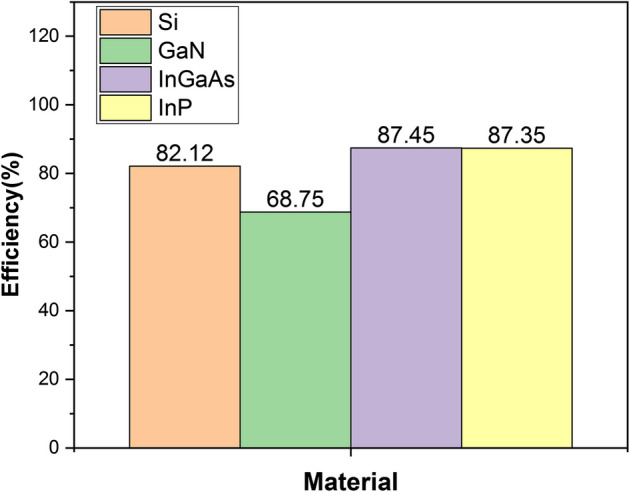
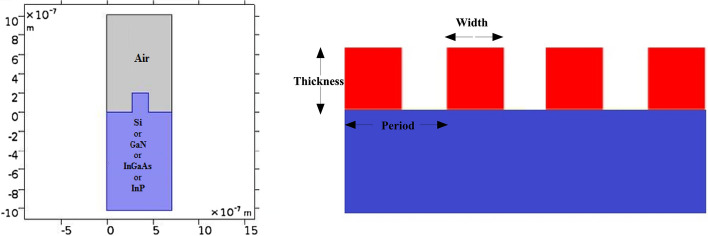
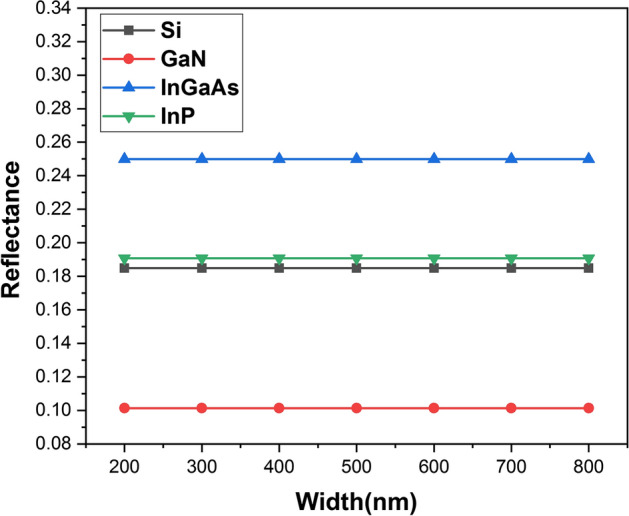
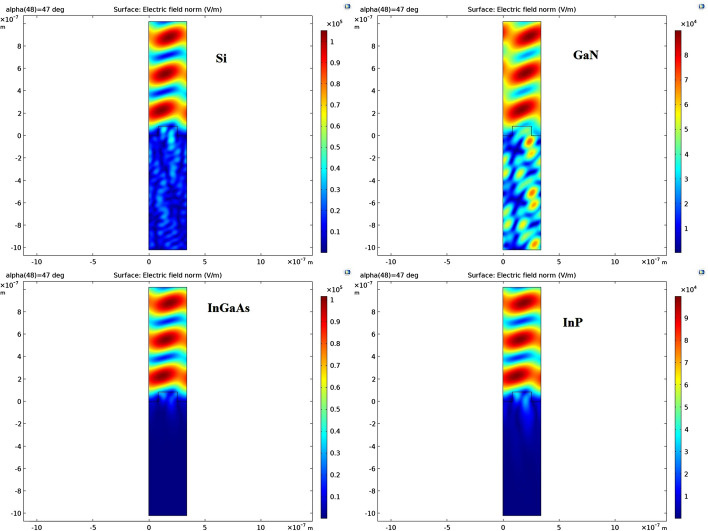
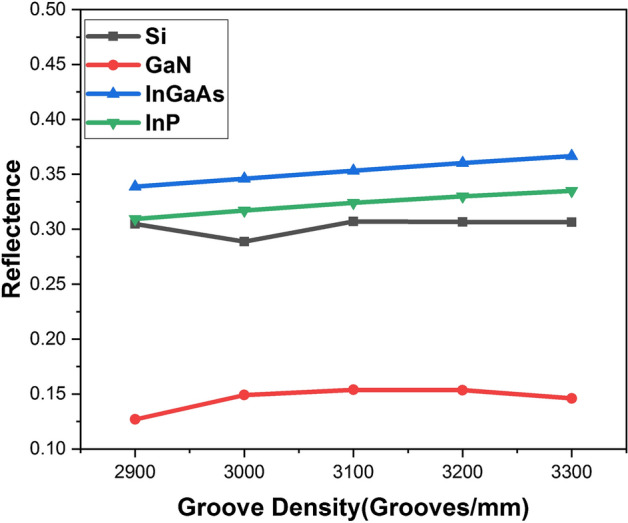
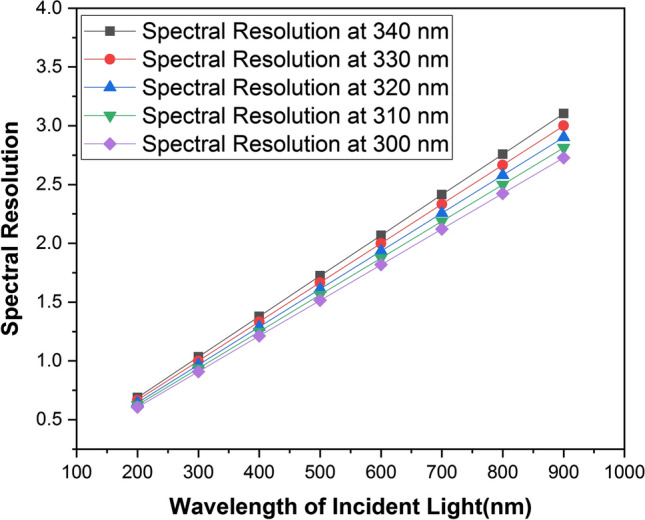
During the outbreak of the COVID-19 illness, mRNA (messenger RNA) injections proved to be effective vaccination. Among the presently available analytical techniques, UV/VIS spectrophotometry is a trustworthy and practical instrument that may provide information on the chemical components of the vaccine at the molecular level. In this paper, we will present a one-dimensional grating of InGaAs as a prospect grating structure for UV-VIS spectrometer that can be used for mRNA vaccine development. The main parameters and the wavelength region used in mRNA vaccine development lies in the range of 200 nm to 700 nm (UV-VIS Range). The incorporation of new materials that are excellent for cutting-edge semiconductor industry procedures for MEMS manufacture, as well as new optimal parameters, will improve the grating and spectrometer's performance which will enhance the mRNA vaccine development and manufacturing workflows enabled by UV-VIS spectroscopy. Hence we evaluated the feasibility of the materials, Si (Silicon), GaN (Gallium Nitride), InGaAs (Indium Gallium Arsenide) and InP (Indium Phosphide) as a grating material. Reflection spectrum of the proposed structure shows 48% increase compared to the grating made up of Silicon. In order to model wave propagation in one grating unit cell, electromagnetic waves frequency domain interface is used. The periodic constraints of floquet periodicity are used for simulation at both faces of the unit cell. The reflectance of grating with each material as functions of the angle of incidence was plotted. Also we evaluated the effect of grating thickness, groove density, spectral resolution and efficiency over different materials namely Si, GaN, InGaAs and InP. After optimizing geometric parameters, the designed InGaAs based grating achieved a efficiency of 87.45% and can be a reliable prospect for mRNA based vaccine development.
在新冠疫情爆发期间,信使核糖核酸(mRNA)注射剂被证明是有效的疫苗。在目前可用的分析技术中,紫外/可见分光光度法是一种可靠且实用的仪器,它可以在分子水平上提供有关疫苗化学成分的信息。在本文中,我们将介绍一种用于紫外-可见光谱仪的一维铟镓砷光栅,作为一种有望用于mRNA疫苗开发的光栅结构。mRNA疫苗开发中使用的主要参数和波长范围在200纳米至700纳米(紫外-可见范围)之间。将对前沿半导体行业微机电系统制造工艺优异的新材料以及新的最佳参数纳入其中,将提高光栅和光谱仪的性能,从而增强紫外-可见光谱法助力的mRNA疫苗开发和制造工作流程。因此,我们评估了硅(Si)、氮化镓(GaN)、铟镓砷(InGaAs)和磷化铟(InP)作为光栅材料的可行性。所提出结构的反射光谱显示,与由硅制成的光栅相比,反射率提高了48%。为了对一个光栅单元中的波传播进行建模,使用了电磁波频域接口。弗洛凯周期性的周期性约束用于在单元两面进行模拟。绘制了每种材料的光栅反射率随入射角的变化曲线。我们还评估了光栅厚度、槽密度、光谱分辨率和效率对不同材料(即Si、GaN、InGaAs和InP)的影响。在优化几何参数后,设计的基于铟镓砷的光栅实现了87.45%的效率,对于基于mRNA的疫苗开发而言可能是一个可靠的选择。