Friedman School of Nutrition Science and Policy, Tufts University, Boston, MA (M.W., D.M.).
Department of Cardiovascular and Metabolic Sciences (Z.W., J.A.D., W.H.W.T., S.L.H.), Cleveland Clinic, OH.
Arterioscler Thromb Vasc Biol. 2022 Sep;42(9):e273-e288. doi: 10.1161/ATVBAHA.121.316533. Epub 2022 Aug 1.
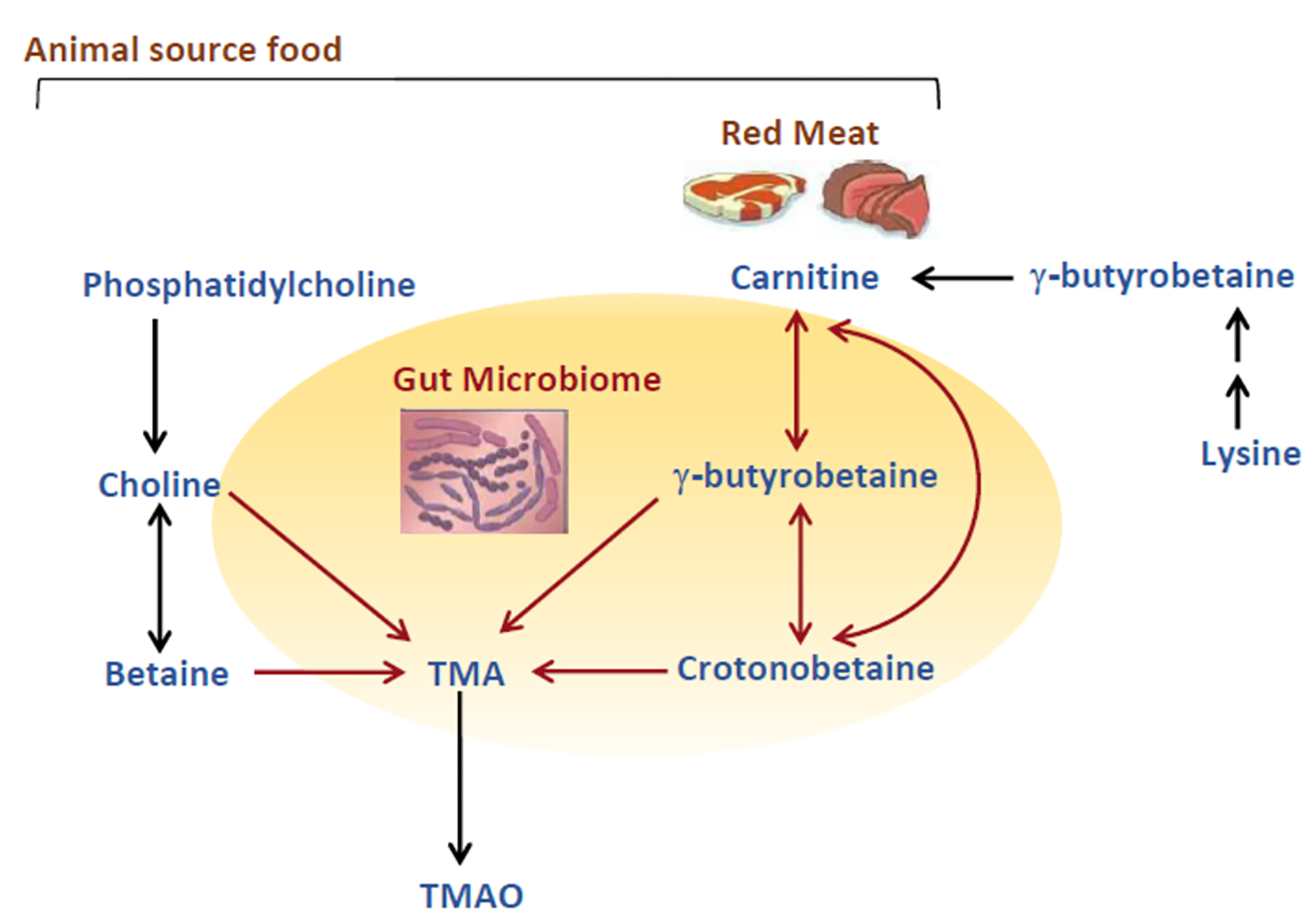
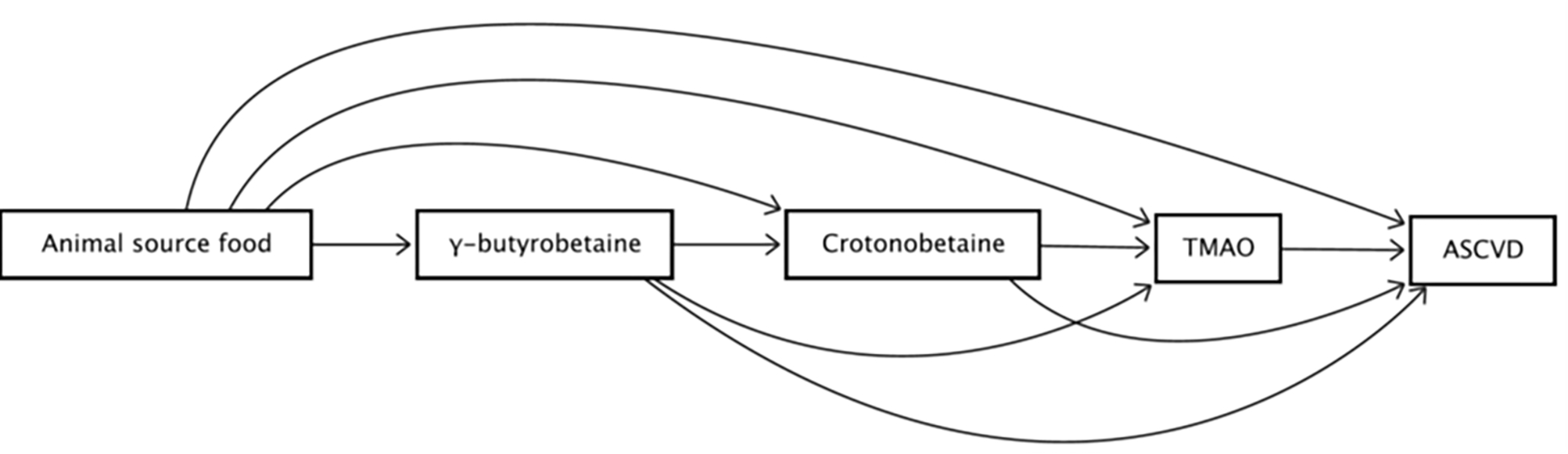
Effects of animal source foods (ASF) on atherosclerotic cardiovascular disease (ASCVD) and underlying mechanisms remain controversial. We investigated prospective associations of different ASF with incident ASCVD and potential mediation by gut microbiota-generated trimethylamine N-oxide, its L-carnitine-derived intermediates γ-butyrobetaine and crotonobetaine, and traditional ASCVD risk pathways.
Among 3931 participants from a community-based US cohort aged 65+ years, ASF intakes and trimethylamine N-oxide-related metabolites were measured serially over time. Incident ASCVD (myocardial infarction, fatal coronary heart disease, stroke, other atherosclerotic death) was adjudicated over 12.5 years median follow-up. Cox proportional hazards models with time-varying exposures and covariates examined ASF-ASCVD associations; and additive hazard models, mediation proportions by different risk pathways.
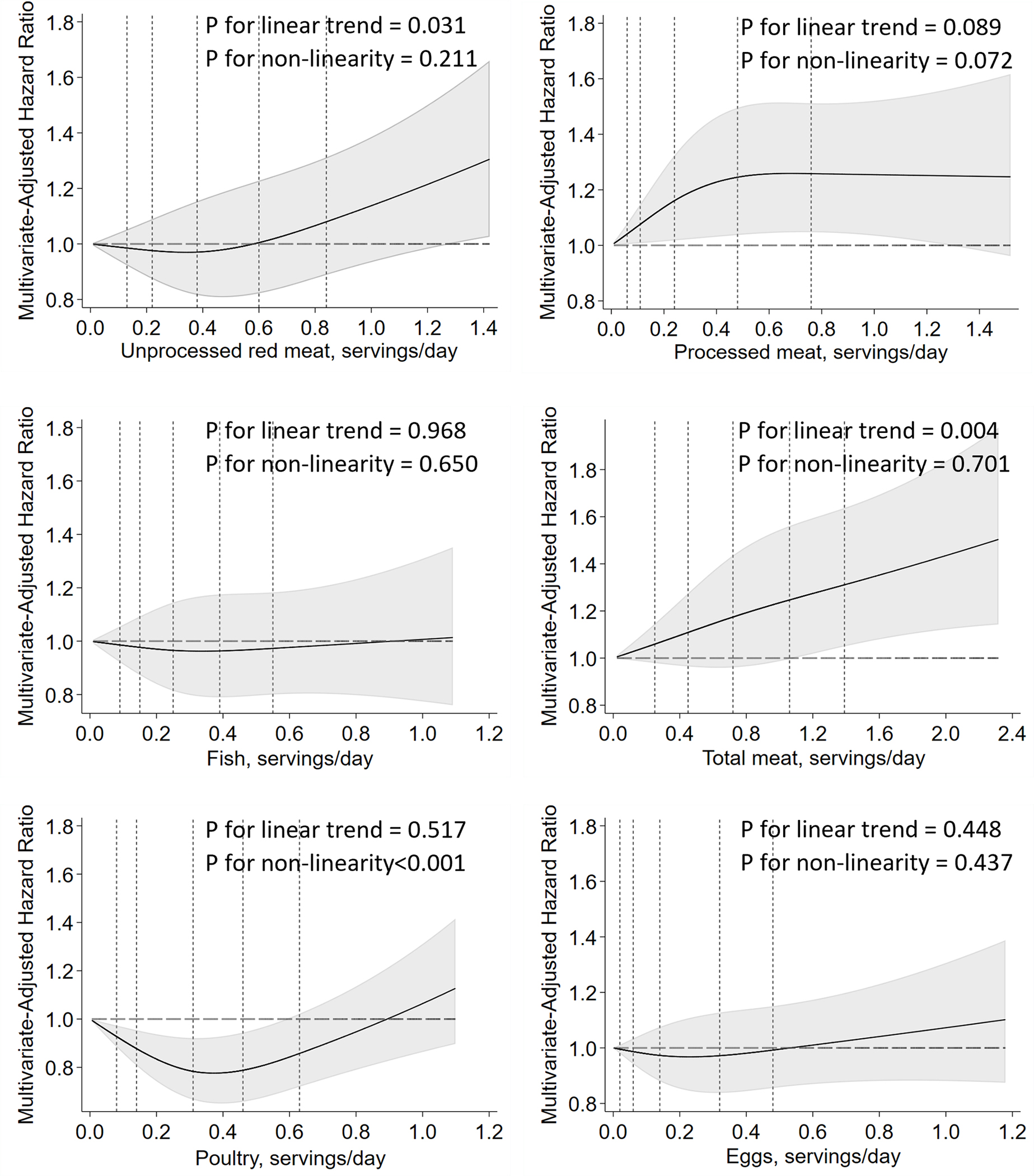
After multivariable-adjustment, higher intakes of unprocessed red meat, total meat, and total ASF associated with higher ASCVD risk, with hazard ratios (95% CI) per interquintile range of 1.15 (1.01-1.30), 1.22 (1.07-1.39), and 1.18 (1.03-1.34), respectively. Trimethylamine N-oxide-related metabolites together significantly mediated these associations, with mediation proportions (95% CI) of 10.6% (1.0-114.5), 7.8% (1.0-32.7), and 9.2% (2.2-44.5), respectively. Processed meat intake associated with a nonsignificant trend toward higher ASCVD (1.11 [0.98-1.25]); intakes of fish, poultry, and eggs were not significantly associated. Among other risk pathways, blood glucose, insulin, and C-reactive protein, but not blood pressure or blood cholesterol, each significantly mediated the total meat-ASCVD association.
In this large, community-based cohort, higher meat intake associated with incident ASCVD, partly mediated by microbiota-derived metabolites of L-carnitine, abundant in red meat. These novel findings support biochemical links between dietary meat, gut microbiome pathways, and ASCVD.
动物源食品(ASF)对动脉粥样硬化性心血管疾病(ASCVD)的影响及其潜在机制仍存在争议。我们研究了不同 ASF 与 ASCVD 发病风险的前瞻性关联,以及肠道微生物群产生的三甲胺 N-氧化物、其左旋肉碱衍生的中间产物γ-丁氧基甜菜碱和克罗诺甜菜碱,以及传统 ASCVD 风险途径的潜在中介作用。
在一项基于社区的美国队列中,共有 3931 名年龄在 65 岁及以上的参与者,在 12.5 年的中位随访期间,定期检测 ASF 摄入量和三甲胺 N-氧化物相关代谢物。在经过 12.5 年的中位随访后,通过协方差分析调整了时间变化的暴露和协变量,评估了 ASF-ASCVD 之间的相关性;并采用加性风险模型,通过不同的风险途径来评估中介作用的比例。
经过多变量调整后,未加工红肉、总肉和总 ASF 的摄入量与 ASCVD 风险增加相关,五分位间距每增加一个单位,风险比(95%可信区间)分别为 1.15(1.01-1.30)、1.22(1.07-1.39)和 1.18(1.03-1.34)。三甲胺 N-氧化物相关代谢物共同显著介导了这些关联,其中介作用比例(95%可信区间)分别为 10.6%(1.0-114.5)、7.8%(1.0-32.7)和 9.2%(2.2-44.5)。加工肉类的摄入量与 ASCVD 发病风险呈显著的正相关趋势(1.11[0.98-1.25]);而鱼类、家禽和鸡蛋的摄入量与 ASCVD 无显著相关性。在其他风险途径中,血糖、胰岛素和 C 反应蛋白,而不是血压或胆固醇,都显著介导了总肉类与 ASCVD 的关联。
在这项大型社区队列研究中,较高的肉类摄入量与 ASCVD 发病风险增加有关,部分原因是肠道微生物群衍生的左旋肉碱代谢物所致,这些代谢物在红肉中含量丰富。这些新发现支持了饮食肉类、肠道微生物群途径和 ASCVD 之间的生化联系。