Department of Chemistry and Biochemistry, University of Wisconsin-Eau Claire, 101 Roosevelt Avenue, Eau Claire, WI, 54701, USA.
Protein J. 2022 Oct;41(4-5):444-456. doi: 10.1007/s10930-022-10065-6. Epub 2022 Aug 1.
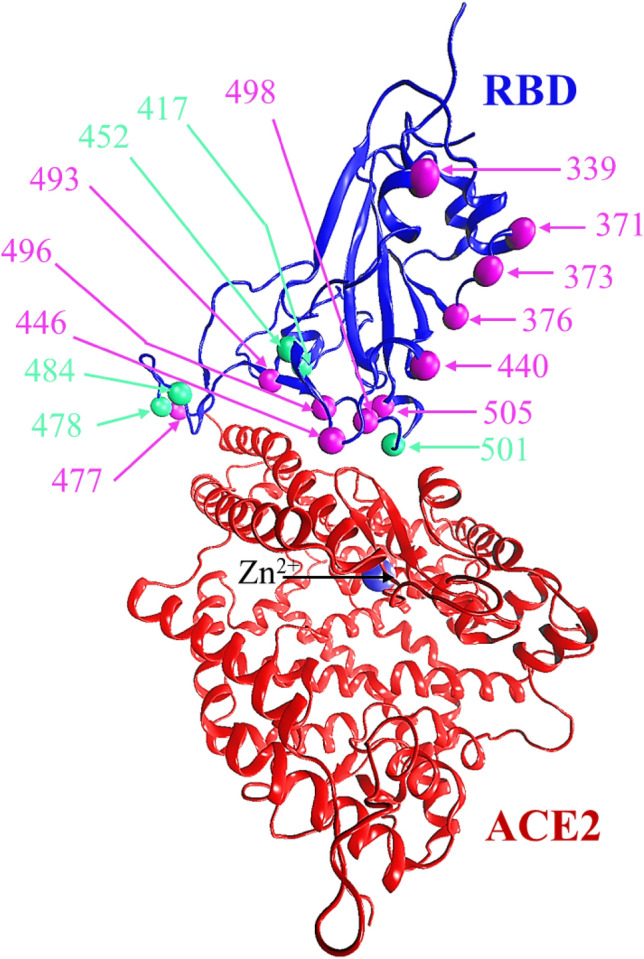
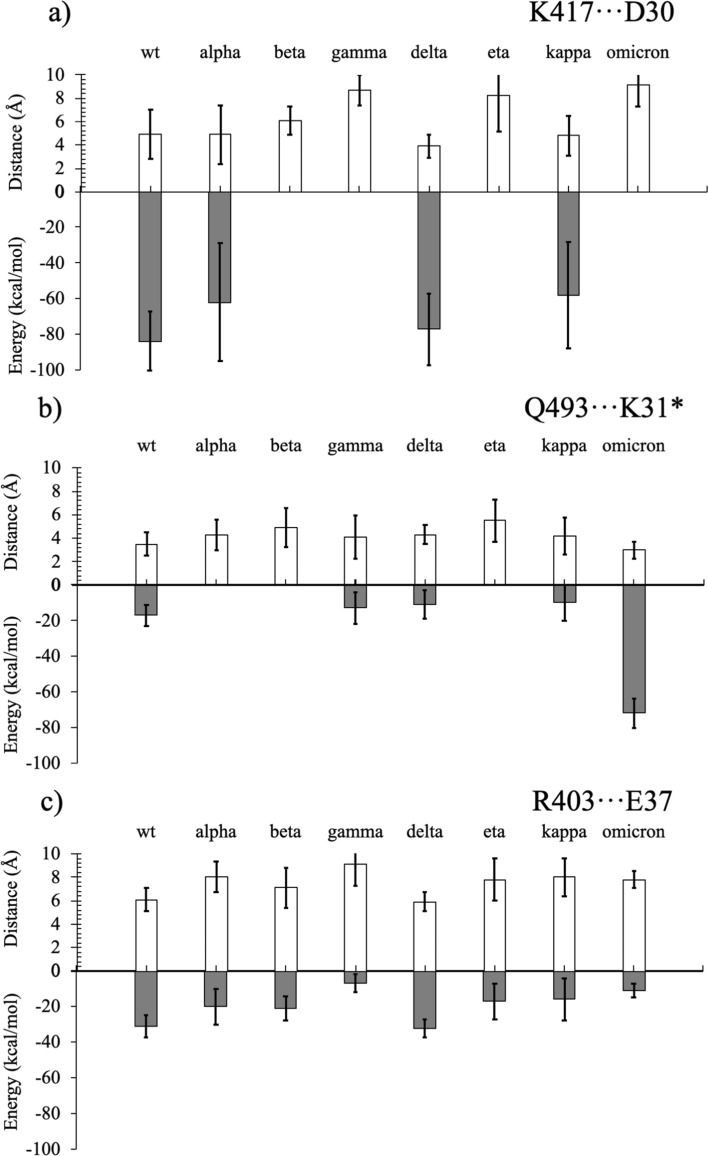
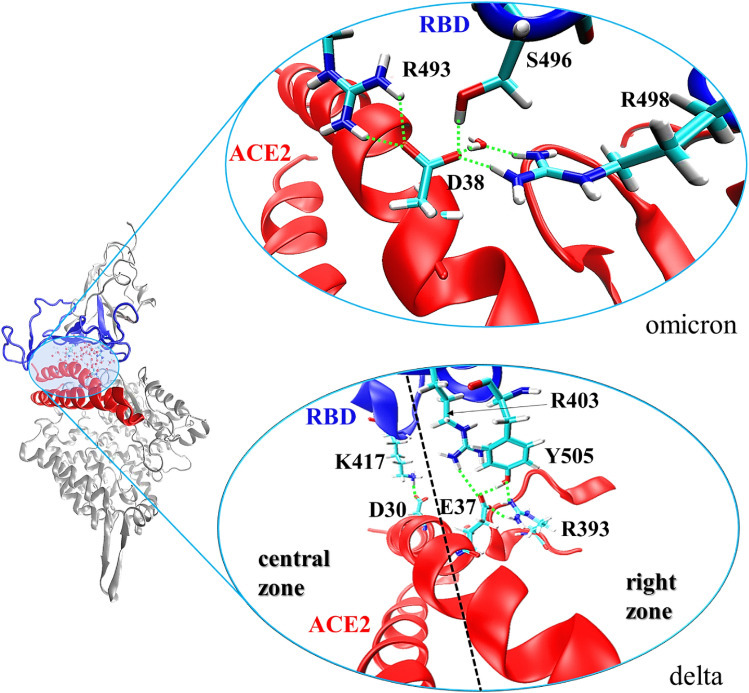
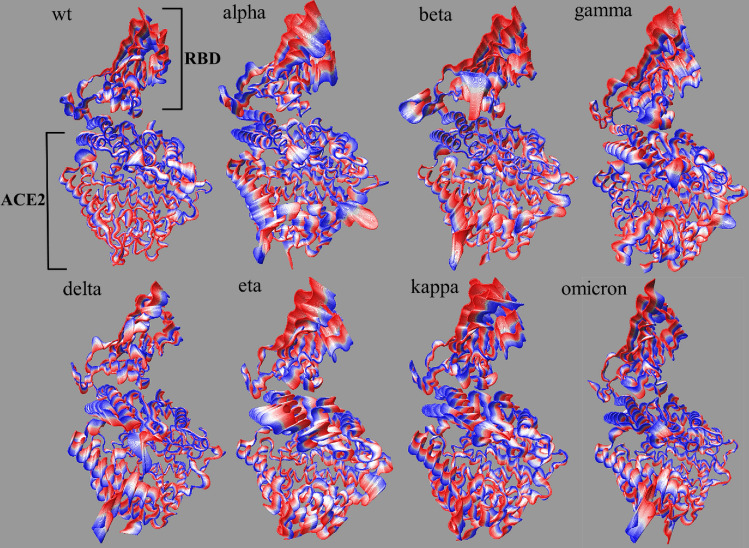
Using molecular dynamics simulations, the protein-protein interactions of the receptor-binding domain of the wild-type and seven variants of the severe acute respiratory syndrome coronavirus 2 spike protein and the peptidase domain of human angiotensin-converting enzyme 2 were investigated. These variants are alpha, beta, gamma, delta, eta, kappa, and omicron. Using 100 ns simulation data, the residue interaction networks at the protein-protein interface were identified. Also, the impact of mutations on essential protein dynamics, backbone flexibility, and interaction energy of the simulated protein-protein complexes were studied. The protein-protein interface for the wild-type, delta, and omicron variants contained several stronger interactions, while the alpha, beta, gamma, eta, and kappa variants exhibited an opposite scenario as evident from the analysis of the inter-residue interaction distances and pair-wise interaction energies. The study reveals that two distinct residue networks at the central and right contact regions forge stronger binding affinity between the protein partners. The study provides a molecular-level insight into how enhanced transmissibility and infectivity by delta and omicron variants are most likely tied to a handful of interacting residues at the binding interface, which could potentially be utilized for future antibody constructs and structure-based antiviral drug design.
利用分子动力学模拟,研究了野生型和七种严重急性呼吸综合征冠状病毒 2 刺突蛋白受体结合域变体以及人血管紧张素转换酶 2 肽酶域的蛋白-蛋白相互作用。这些变体包括 alpha、beta、gamma、delta、eta、kappa 和 omicron。使用 100ns 的模拟数据,确定了蛋白质-蛋白质界面处的残基相互作用网络。此外,还研究了突变对模拟蛋白-蛋白复合物中必需蛋白动力学、骨架柔性和相互作用能的影响。野生型、delta 和 omicron 变体的蛋白-蛋白界面包含几个较强的相互作用,而 alpha、beta、gamma、eta 和 kappa 变体则表现出相反的情况,这可以从分析残基间相互作用距离和成对相互作用能得出。研究揭示了中央和右侧接触区域的两个不同的残基网络在蛋白配体之间形成更强的结合亲和力。该研究从分子水平上深入了解了 delta 和 omicron 变体如何通过少数相互作用残基增强传染性和感染性,这可能为未来的抗体构建和基于结构的抗病毒药物设计提供依据。