The Koch Institute for Integrative Cancer Research, Massachusetts Institute of Technology, Cambridge, MA 02142.
Department of Chemistry, Massachusetts Institute of Technology, Cambridge, MA 02139.
Proc Natl Acad Sci U S A. 2022 Aug 9;119(32):e2204078119. doi: 10.1073/pnas.2204078119. Epub 2022 Aug 1.
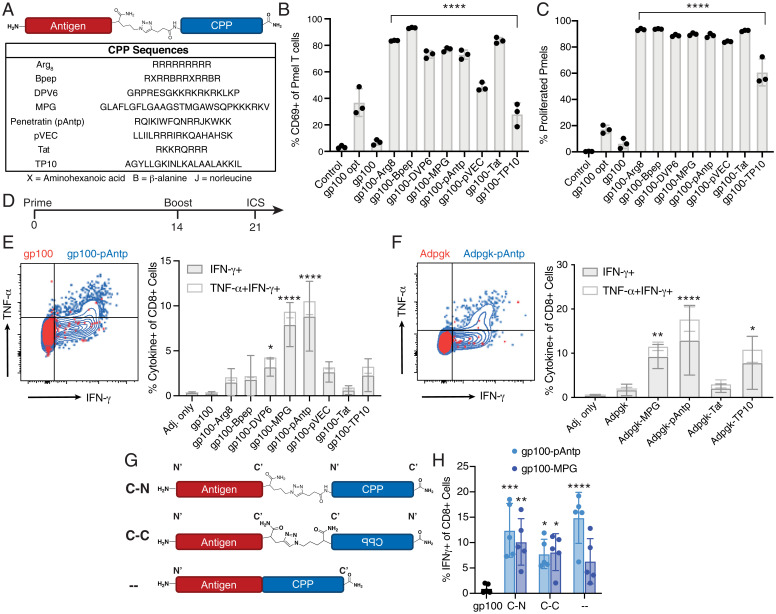
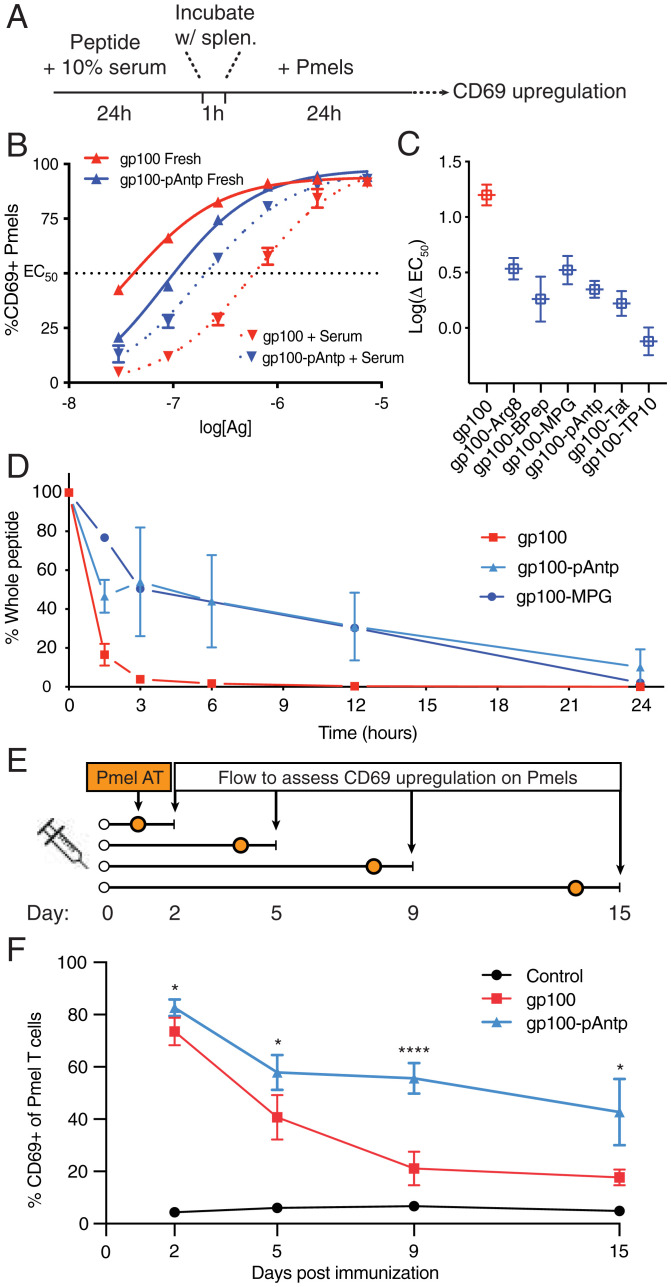
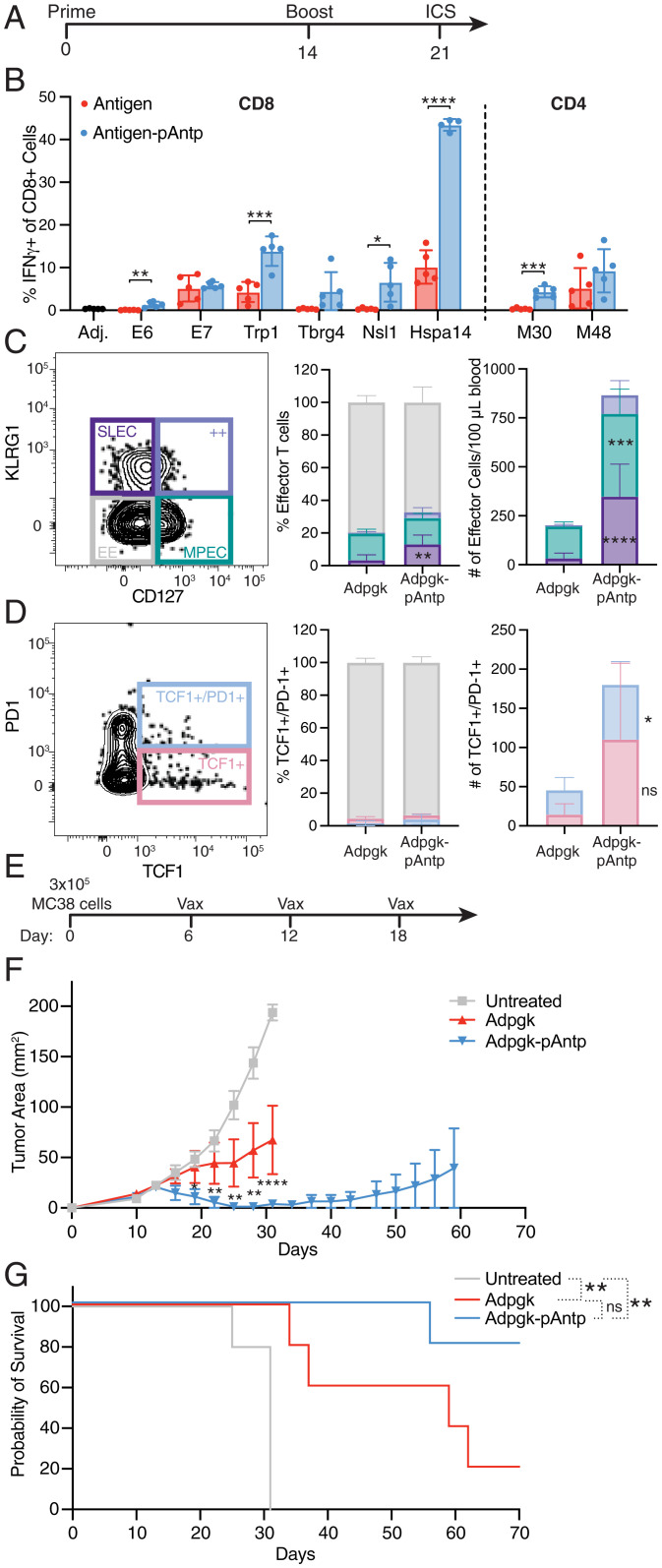
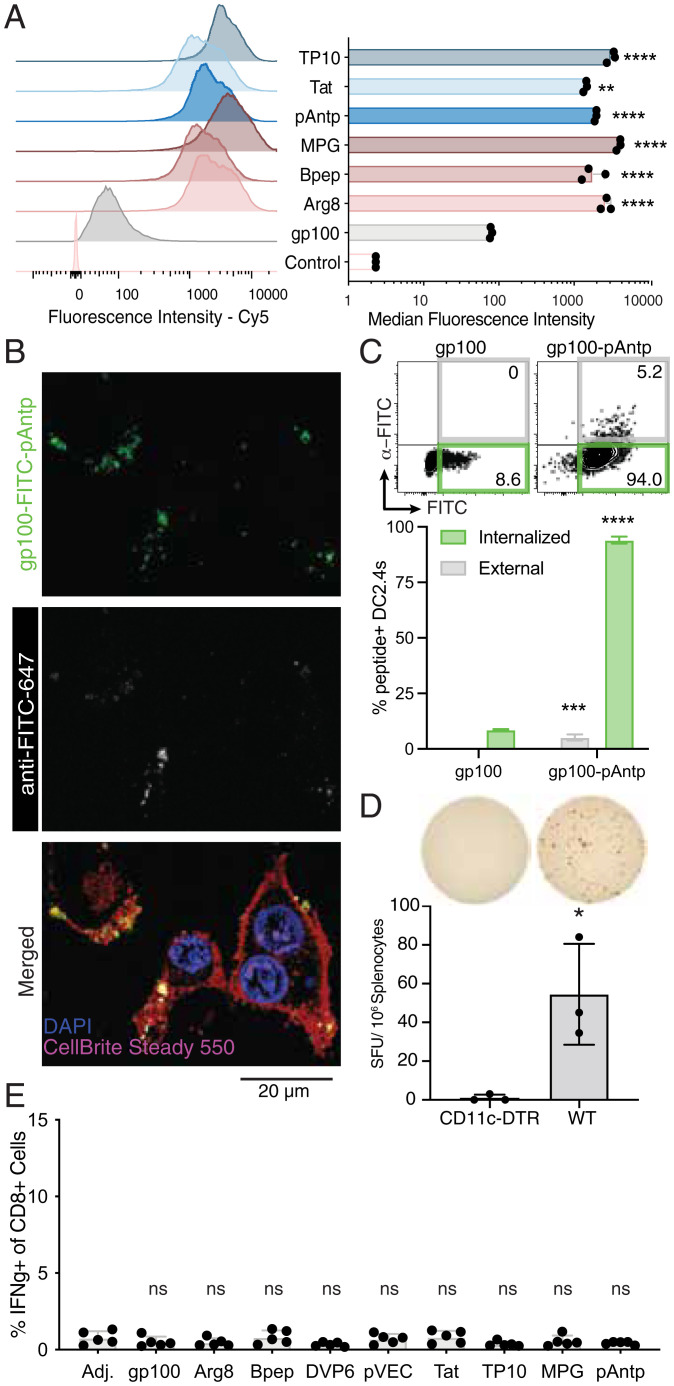
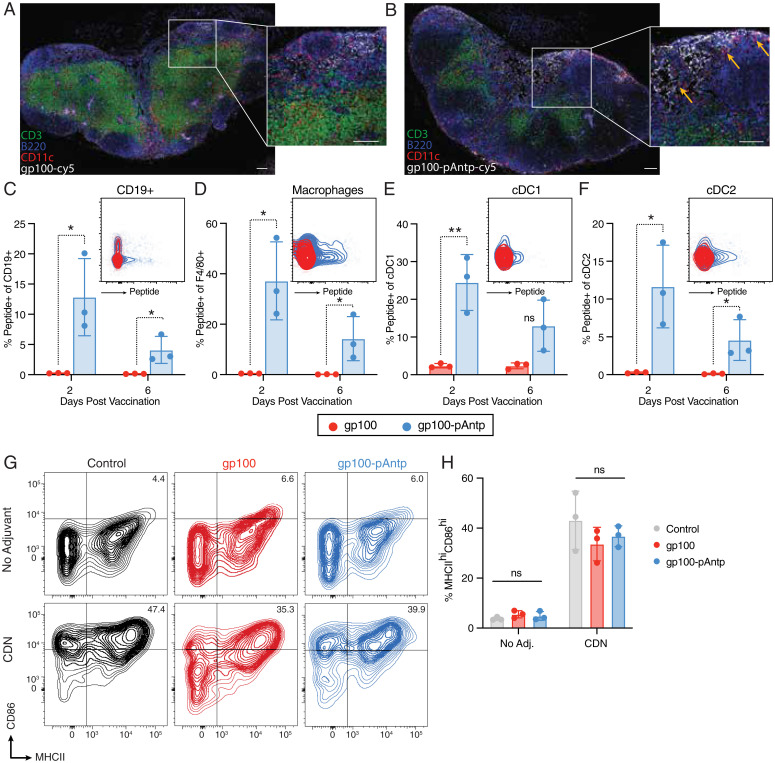
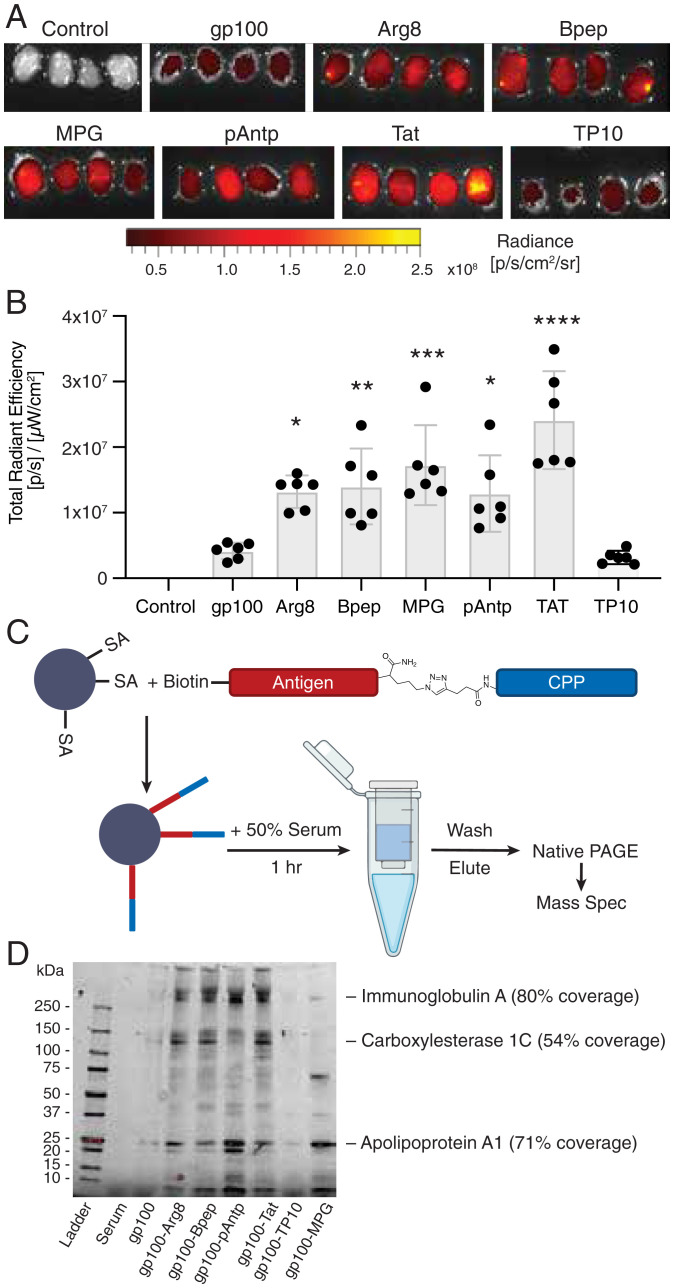
Peptide-based cancer vaccines are widely investigated in the clinic but exhibit modest immunogenicity. One approach that has been explored to enhance peptide vaccine potency is covalent conjugation of antigens with cell-penetrating peptides (CPPs), linear cationic and amphiphilic peptide sequences designed to promote intracellular delivery of associated cargos. Antigen-CPPs have been reported to exhibit enhanced immunogenicity compared to free peptides, but their mechanisms of action in vivo are poorly understood. We tested eight previously described CPPs conjugated to antigens from multiple syngeneic murine tumor models and found that linkage to CPPs enhanced peptide vaccine potency in vivo by as much as 25-fold. Linkage of antigens to CPPs did not impact dendritic cell activation but did promote uptake of linked antigens by dendritic cells both in vitro and in vivo. However, T cell priming in vivo required -dependent dendritic cells, suggesting that antigens delivered by CPP peptides were predominantly presented via the process of cross-presentation and not through CPP-mediated cytosolic delivery of peptide to the classical MHC class I antigen processing pathway. Unexpectedly, we observed that many CPPs significantly enhanced antigen accumulation in draining lymph nodes. This effect was associated with the ability of CPPs to bind to lymph-trafficking lipoproteins and protection of CPP-antigens from proteolytic degradation in serum. These two effects resulted in prolonged presentation of CPP-peptides in draining lymph nodes, leading to robust T cell priming and expansion. Thus, CPPs can act through multiple unappreciated mechanisms to enhance T cell priming that can be exploited for cancer vaccines with enhanced potency.
基于肽的癌症疫苗在临床上得到了广泛的研究,但表现出适度的免疫原性。一种增强肽疫苗效力的方法是将抗原与细胞穿透肽(CPP)共价偶联,CPP 是设计用于促进相关货物细胞内递送的线性阳离子和亲脂肽序列。与游离肽相比,抗原-CPP 已被报道表现出增强的免疫原性,但它们在体内的作用机制知之甚少。我们测试了 8 种先前描述的与来自多种同基因小鼠肿瘤模型的抗原偶联的 CPP,发现与 CPP 的偶联在体内增强了肽疫苗的效力,高达 25 倍。将抗原与 CPP 偶联不会影响树突状细胞的激活,但确实促进了树突状细胞对连接抗原的摄取,无论是在体外还是体内。然而,体内 T 细胞的启动需要依赖于树突状细胞,这表明 CPP 肽递呈的抗原主要是通过交叉呈递的过程,而不是通过 CPP 介导的将肽递呈到经典 MHC I 抗原加工途径的细胞质内递呈。出乎意料的是,我们观察到许多 CPP 显著增加了引流淋巴结中的抗原积累。这种效应与 CPP 结合淋巴转运脂蛋白的能力以及保护 CPP-抗原免受血清中蛋白水解降解有关。这两种效应导致 CPP-肽在引流淋巴结中的呈递时间延长,从而导致强大的 T 细胞启动和扩增。因此,CPP 可以通过多种未被认识的机制发挥作用,增强 T 细胞的启动,从而可以利用增强效力的癌症疫苗。