Hirszfeld Institute of Immunology and Experimental Therapy, Polish Academy of Sciences, 12 R. Weigla Street, 53-114, Wroclaw, Poland.
Mol Med. 2022 Aug 3;28(1):89. doi: 10.1186/s10020-022-00516-2.
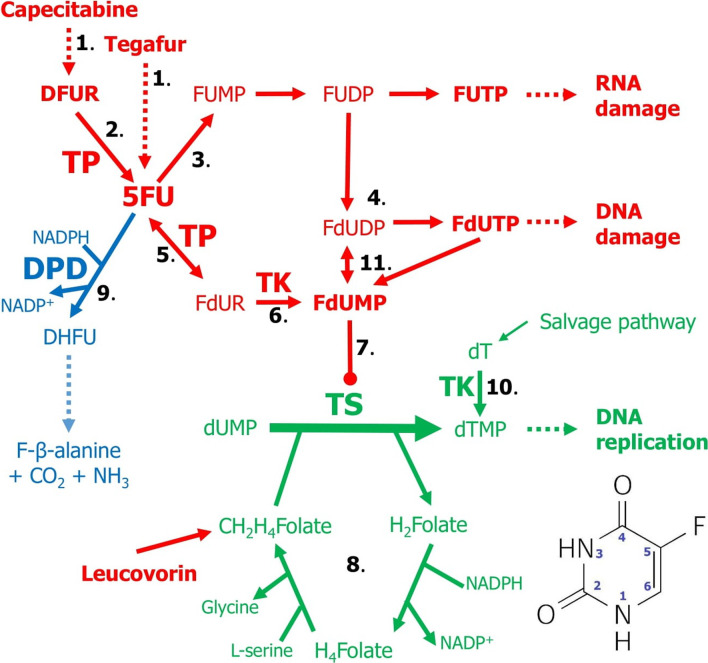
The active metabolite of 5-Fluorouracil (5FU), used in the treatment of several types of cancer, acts by inhibiting the thymidylate synthase encoded by the TYMS gene, which catalyzes the rate-limiting step in DNA replication. The major failure of 5FU-based cancer therapy is the development of drug resistance. High levels of TYMS-encoded protein in cancerous tissues are predictive of poor response to 5FU treatment. Expression of TYMS is regulated by various mechanisms, including involving non-coding RNAs, both miRNAs and long non-coding RNAs (lncRNAs).
To delineate the miRNAs and lncRNAs network regulating the level of TYMS-encoded protein.
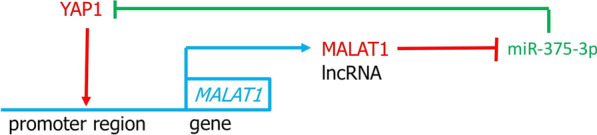
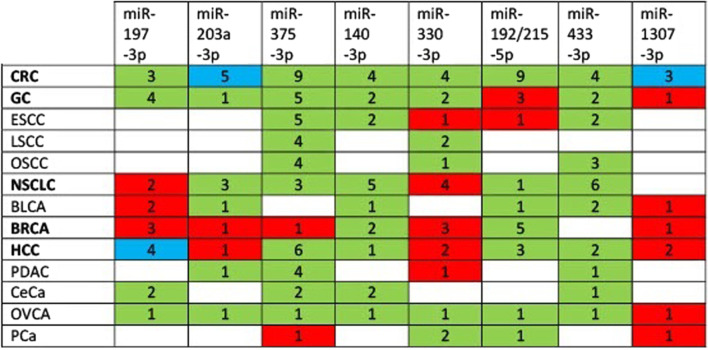
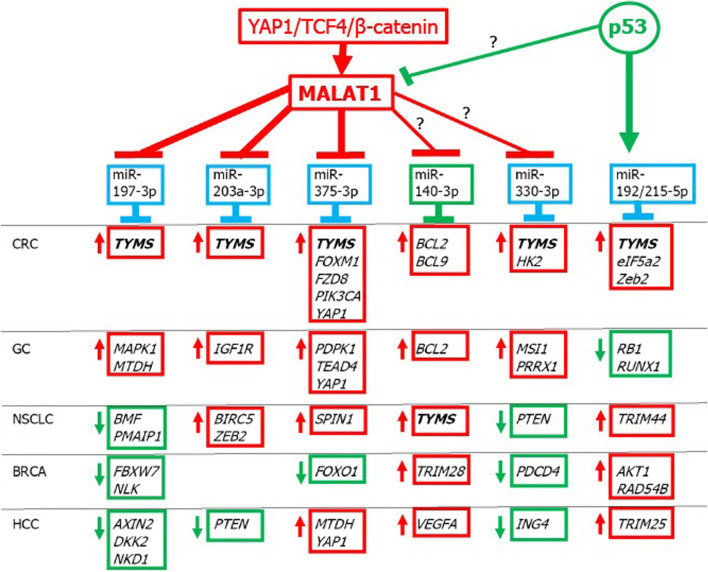
Several miRNAs targeting TYMS mRNA have been identified in colon cancers, the levels of which can be regulated to varying degrees by lncRNAs. Due to their regulation by the MALAT1 lncRNA, these miRNAs can be divided into three groups: (1) miR-197-3p, miR-203a-3p, miR-375-3p which are downregulated by MALAT1 as confirmed experimentally and the levels of these miRNAs are actually reduced in colon and gastric cancers; (2) miR-140-3p, miR-330-3p that could potentially interact with MALAT1, but not yet supported by experimental results; (3) miR-192-5p, miR-215-5p whose seed sequences do not recognize complementary response elements within MALAT1. Considering the putative MALAT1-miRNAs interaction network, attention is drawn to the potential positive feedback loop causing increased expression of MALAT1 in colon cancer and hepatocellular carcinoma, where YAP1 acts as a transcriptional co-factor which, by binding to the TCF4 transcription factor/ β-catenin complex, may increase the activation of the MALAT1 gene whereas the MALAT1 lncRNA can inhibit miR-375-3p which in turn targets YAP1 mRNA.
The network of non-coding RNAs may reduce the sensitivity of cancer cells to 5FU treatment by upregulating the level of thymidylate synthase.
5-氟尿嘧啶(5FU)的活性代谢物,用于治疗多种类型的癌症,通过抑制胸苷酸合成酶(TYMS)基因编码的酶来发挥作用,该酶催化 DNA 复制的限速步骤。基于 5FU 的癌症治疗的主要失败是耐药性的发展。癌组织中 TYMS 编码蛋白水平高预示着对 5FU 治疗反应不佳。TYMS 的表达受多种机制调节,包括涉及非编码 RNA,包括 microRNA 和长非编码 RNA(lncRNA)。
描绘调节 TYMS 编码蛋白水平的 microRNA 和 lncRNA 网络。
已经在结肠癌中鉴定出几种靶向 TYMS mRNA 的 microRNA,其水平可以通过 lncRNA 不同程度地调节。由于它们受 MALAT1 lncRNA 的调节,这些 microRNA 可以分为三组:(1)miR-197-3p、miR-203a-3p、miR-375-3p,其表达水平被 MALAT1 下调,实验证实这些 microRNA 的水平实际上在结肠癌和胃癌中降低;(2)miR-140-3p、miR-330-3p 可能与 MALAT1 相互作用,但尚未得到实验结果的支持;(3)miR-192-5p、miR-215-5p 的种子序列不识别 MALAT1 内的互补反应元件。考虑到可能的 MALAT1-miRNA 相互作用网络,人们注意到导致结肠癌和肝细胞癌中 MALAT1 表达增加的潜在正反馈回路,YAP1 作为转录共因子,通过与 TCF4 转录因子/β-连环蛋白复合物结合,可能增加 MALAT1 基因的激活,而 MALAT1 lncRNA 可以抑制 miR-375-3p,进而靶向 YAP1 mRNA。
非编码 RNA 网络可能通过上调胸苷酸合成酶的水平来降低癌细胞对 5FU 治疗的敏感性。