VanDenBerg Kelly R, Oravecz-Wilson Katherine, Krolikowski Lauren, Hill Valerie, Reddy Pavan, Freeman Zachary T
Office of Research, University of Michigan Medical School, Ann Arbor, MI, United States.
Department of Internal Medicine, Division of Hematology and Oncology, University of Michigan, Ann Arbor, MI, United States.
Front Physiol. 2022 Jul 18;13:925784. doi: 10.3389/fphys.2022.925784. eCollection 2022.
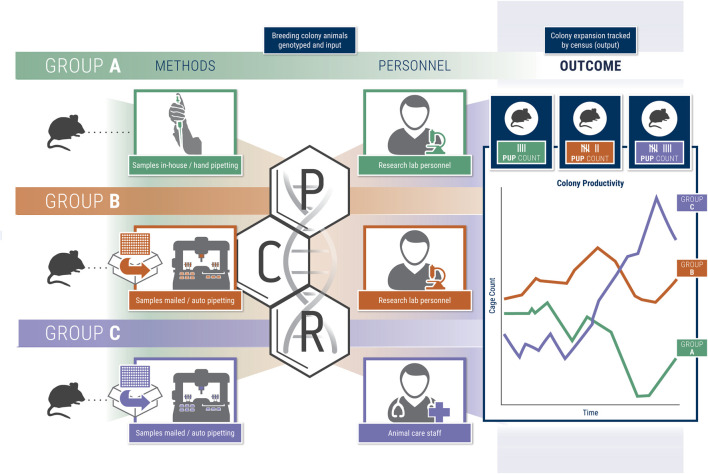
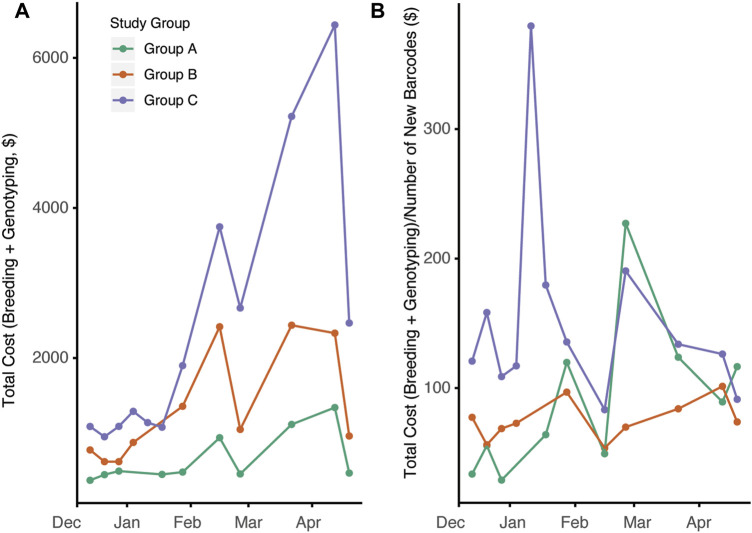
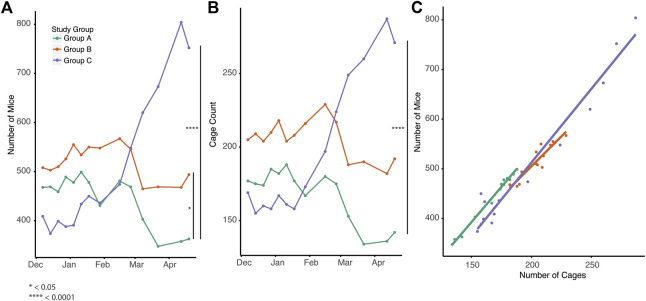
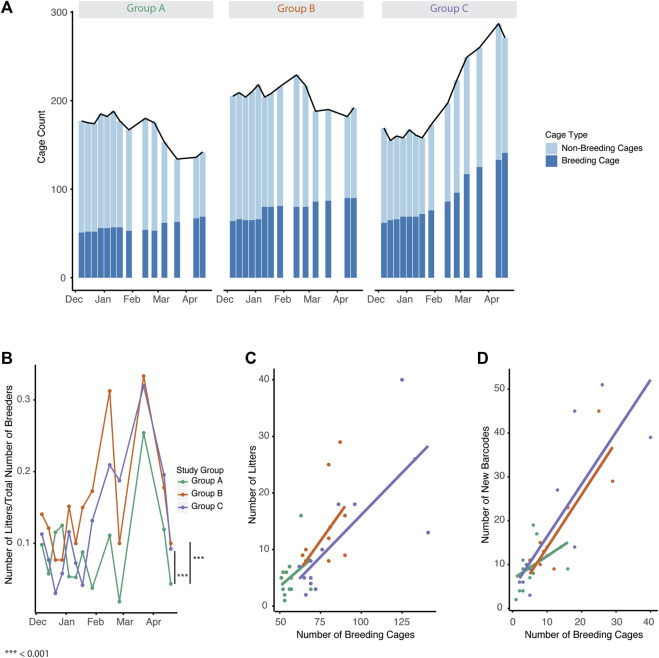
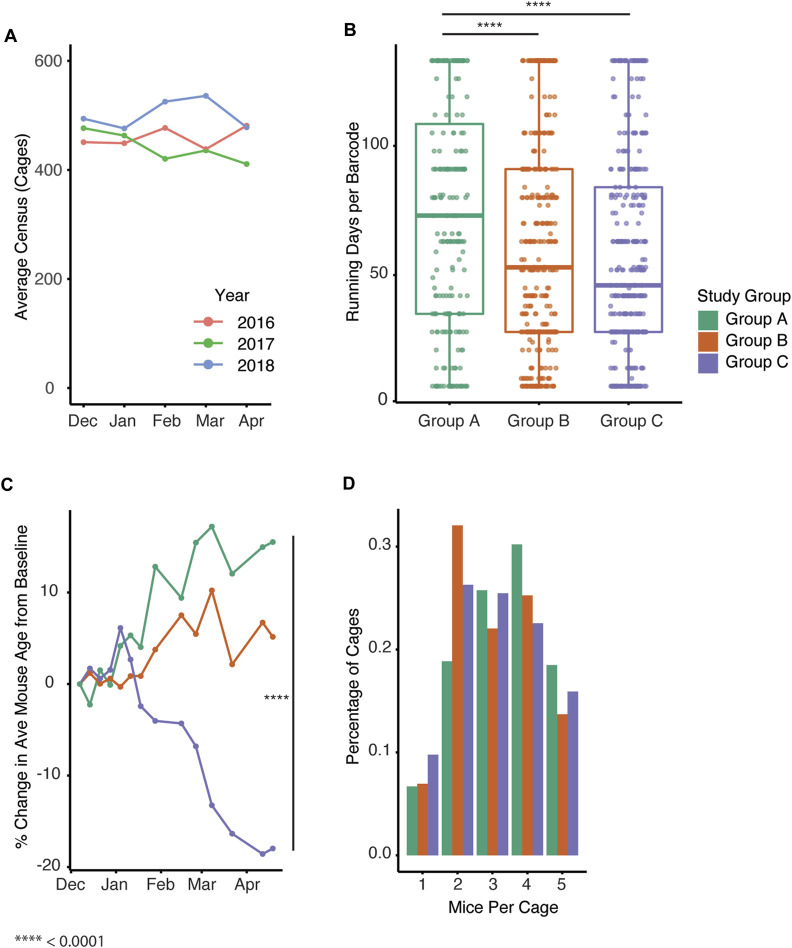
Mice have become increasingly popular as genetic tools, facilitated by the production of advanced genetically engineered mouse models (GEMMs). GEMMs often require in-house breeding and production by research groups, which can be quite complex depending on the design of the GEMM. Identification of methods to increase the efficiency of breeding practices offers opportunities to optimize and reduce the number of animals bred for research while maintaining similar research output. We investigated the use of commercial automated genotyping and centralized breeding management on overall breeding colony productivity in a colony of multiple GEMM lines. This study involved a three-group study design, where the first group continued their standard breeding practices (group A), the second utilized standard breeding practices but outsourced genotyping in place of inhouse genotyping (group B), and a third group outsourced genotyping and had assistance with routine breeding practices from the laboratory animal care team (group C). Compared to standard practice (group A), groups B and C produced more cages and mice over time, which appeared to be driven primarily by an increase in the number of breeding cages in each colony. Higher numbers of breeders correlated with an increased number of litters and generation of new cages. The increases in colony productivity measures were further enhanced in group C compared to group B. The overall cost associated with producing new animals was lowest in group B, followed by groups A and C. Although, by the end of the study, cost to produce new mice was comparable between all three groups. These data suggest that by optimizing breeding practices and management, fewer animals could be utilized to produce the same amount of progeny and reduce overall animal usage and production.
随着先进的基因工程小鼠模型(GEMMs)的产生,小鼠作为遗传工具越来越受欢迎。GEMMs通常需要研究团队进行内部繁殖和生产,这根据GEMM的设计可能会相当复杂。确定提高繁殖效率的方法为优化和减少用于研究的繁殖动物数量提供了机会,同时保持相似的研究产出。我们研究了商业自动化基因分型和集中繁殖管理对多个GEMM品系群体中整体繁殖群体生产力的影响。这项研究采用了三组研究设计,第一组继续其标准繁殖做法(A组),第二组采用标准繁殖做法,但将基因分型外包以取代内部基因分型(B组),第三组外包基因分型并得到实验动物护理团队的常规繁殖协助(C组)。与标准做法(A组)相比,随着时间的推移,B组和C组产生了更多的笼子和小鼠,这似乎主要是由每个群体中繁殖笼数量的增加所驱动。更多的繁殖者与产仔数的增加和新笼子的产生相关。与B组相比,C组的群体生产力指标的增加进一步提高。生产新动物的总体成本在B组最低,其次是A组和C组。尽管在研究结束时,三组生产新小鼠的成本相当。这些数据表明,通过优化繁殖做法和管理,可以用更少的动物生产出相同数量的后代,从而减少整体动物使用量和产量。