Aurora BioSolutions Inc., Medicine Hat, AB, Canada.
Defence Research and Development Canada Suffield Research Centre, Casualty Management Section, Medicine Hat, AB, Canada.
Front Immunol. 2022 Jul 18;13:917790. doi: 10.3389/fimmu.2022.917790. eCollection 2022.
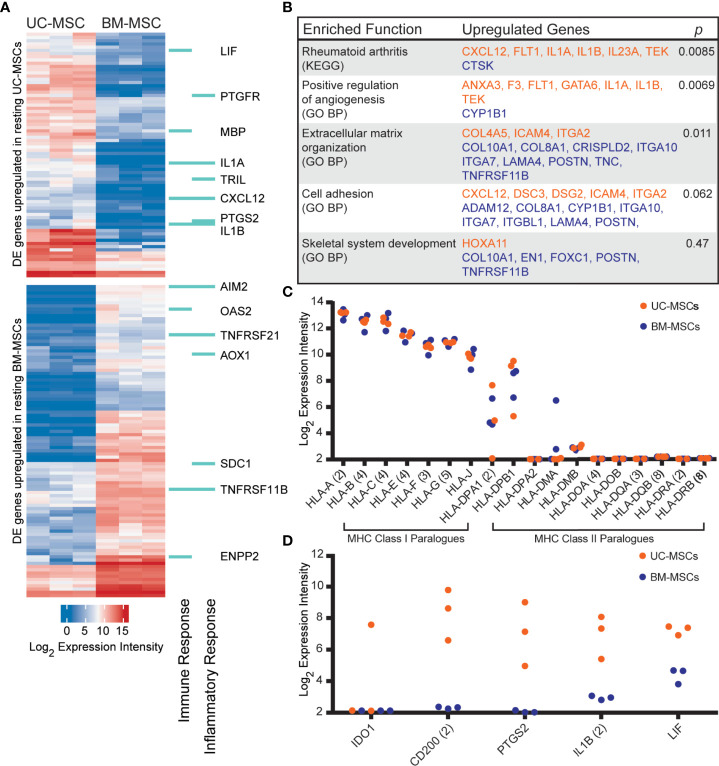
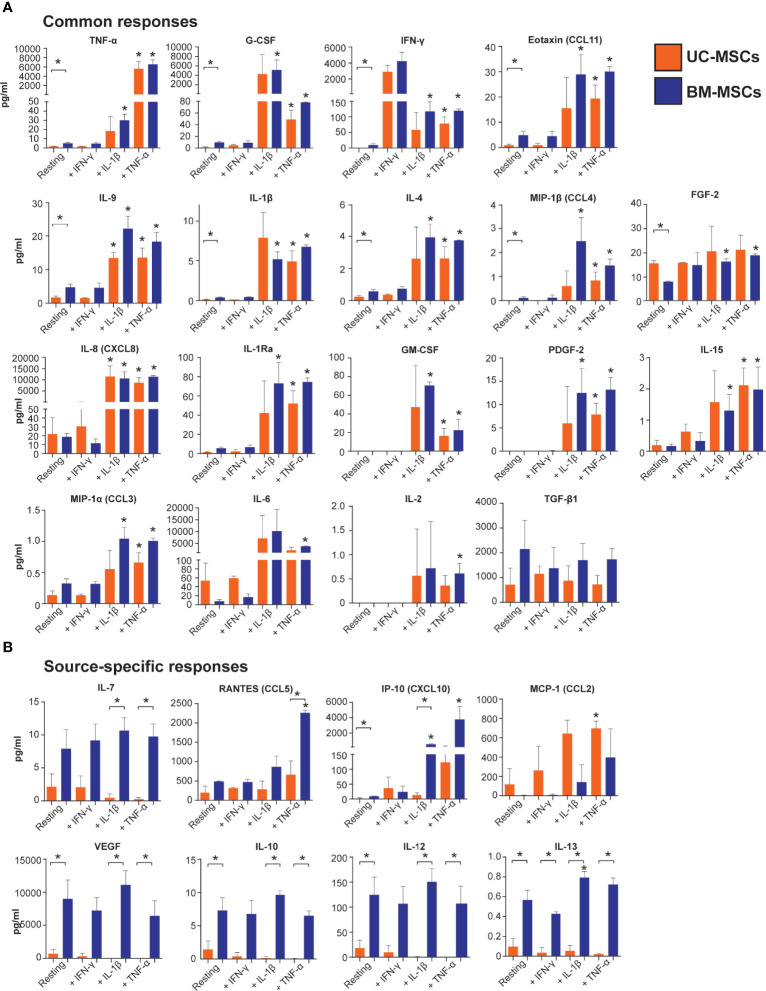
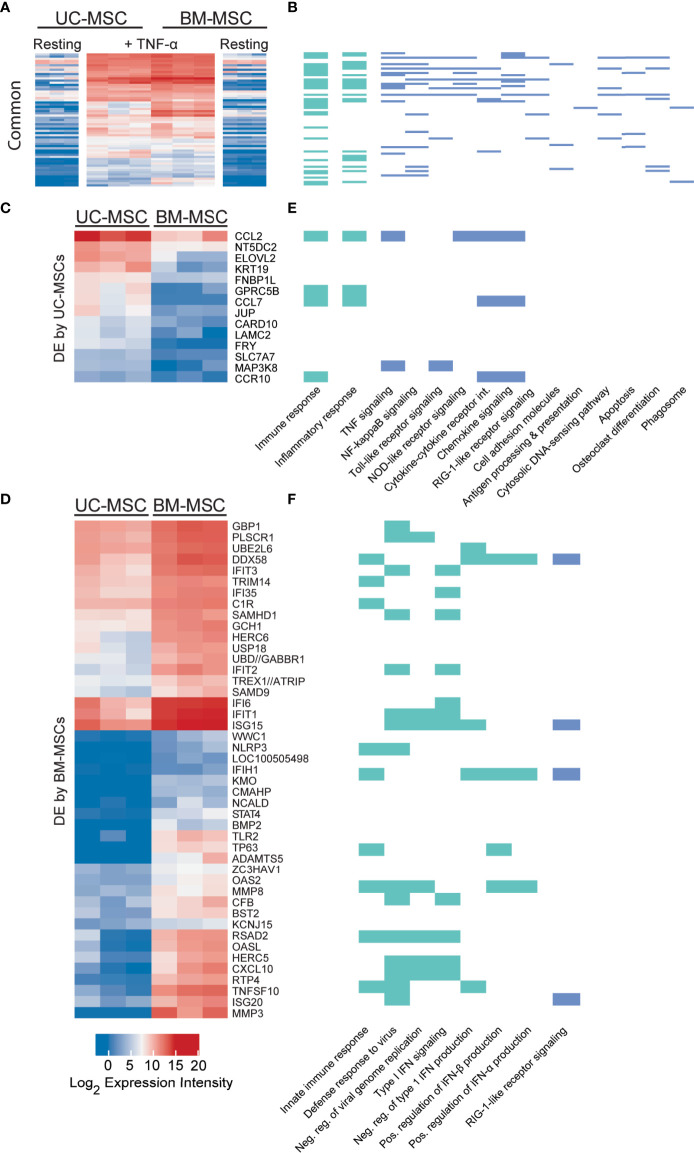
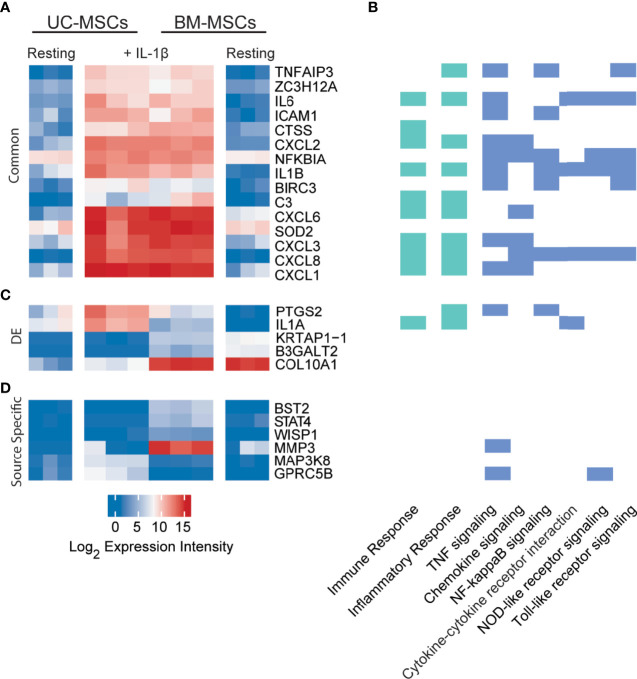
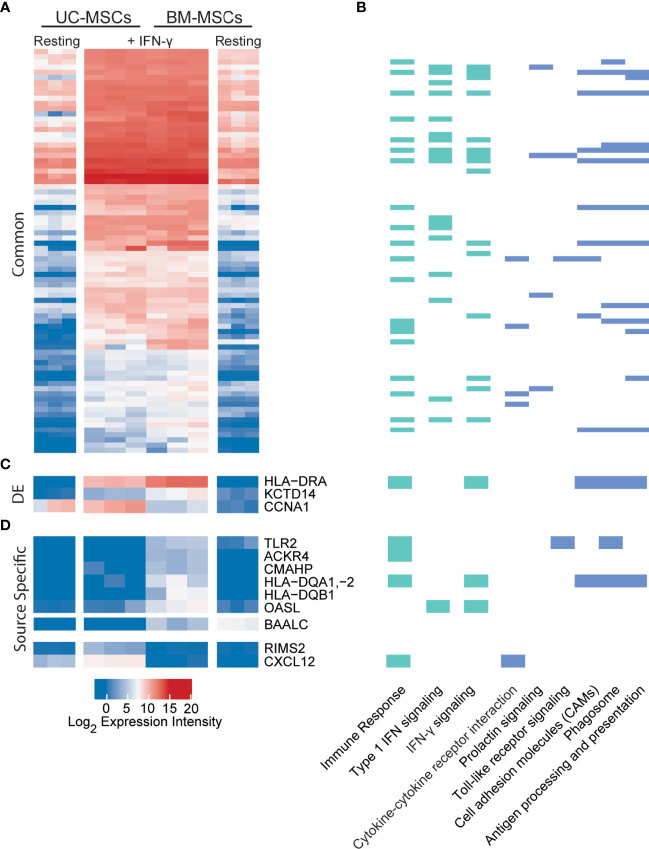
Development of standardized metrics to support manufacturing and regulatory approval of mesenchymal stromal cell (MSC) products is confounded by heterogeneity of MSC populations. Many reports describe fundamental differences between MSCs from various tissues and compare unstimulated and activated counterparts. However, molecular information comparing biological profiles of activated MSCs across different origins and donors is limited. To better understand common and source-specific mechanisms of action, we compared the responses of 3 donor populations each of human umbilical cord (UC) and bone marrow (BM) MSCs to TNF-α, IL-1β or IFN-γ. Transcriptome profiles were analysed by microarray and select secretome profiles were assessed by multiplex immunoassay. Unstimulated (resting) UC and BM-MSCs differentially expressed (DE) 174 genes. Signatures of TNF-α-stimulated BM and UC-MSCs included 45 and 14 new DE genes, respectively, while all but 7 of the initial 174 DE genes were expressed at comparable levels after licensing. After IL-1β activation, only 5 of the 174 DE genes remained significantly different, while 6 new DE genes were identified. IFN-γ elicited a robust transcriptome response from both cell types, yet nearly all differences (171/174) between resting populations were attenuated. Nine DE genes predominantly corresponding to immunogenic cell surface proteins emerged as a BM-MSC signature of IFN-γ activation. Changes in protein synthesis of select analytes correlated modestly with transcript levels. The dynamic responses of licensed MSCs documented herein, which attenuated heterogeneity between unstimulated populations, provide new insight into common and source-imprinted responses to cytokine activation and can inform strategic development of meaningful, standardized assays.
开发标准化指标以支持间充质基质细胞 (MSC) 产品的制造和监管批准,受到 MSC 群体异质性的困扰。许多报告描述了来自不同组织的 MSC 之间的基本差异,并比较了未刺激和激活的对应物。然而,比较不同来源和供体的激活 MSC 的生物学特征的分子信息有限。为了更好地了解常见的和来源特异性的作用机制,我们比较了 3 个供体群体的反应,每个群体均有人脐带 (UC) 和骨髓 (BM) MSC,分别对 TNF-α、IL-1β 或 IFN-γ 作出反应。通过微阵列分析转录组谱,并通过多重免疫测定评估选择的分泌组谱。未刺激(静止)UC 和 BM-MSC 差异表达 (DE) 了 174 个基因。BM 和 UC-MSC 中 TNF-α 刺激的特征包括分别有 45 和 14 个新的 DE 基因,而最初的 174 个 DE 基因中除了 7 个之外,其余在许可后均以可比水平表达。在 IL-1β 激活后,只有 174 个 DE 基因中有 5 个仍有显著差异,而新鉴定了 6 个 DE 基因。IFN-γ 引起了两种细胞类型的强大转录组反应,但几乎所有(174/174)静息群体之间的差异都减弱了。9 个 DE 基因主要对应免疫原性细胞表面蛋白,成为 BM-MSC 对 IFN-γ 激活的特征。选择分析物的蛋白质合成变化与转录水平适度相关。本文记录的许可 MSC 的动态反应,减弱了未刺激群体之间的异质性,为细胞因子激活的常见和来源印迹反应提供了新的见解,并为有意义的标准化测定的战略开发提供了信息。