Gutwerk Alexander, Müller Michael, Crönlein Moritz, Kirchhoff Chlodwig, Biberthaler Peter, Pförringer Dominik, Braun Karl
Klinik für Orthopädie, Unfall‑, Hand- und Plastische Chirurgie, DIAKO Krankenhaus, Knuthstr. 1, 24939, Flensburg, Deutschland.
Klinik und Poliklinik für Unfallchirurgie, Klinikum rechts der Isar, Technische Universität München, München, Deutschland.
Unfallchirurgie (Heidelb). 2023 Jun;126(6):449-455. doi: 10.1007/s00113-022-01187-8. Epub 2022 May 23.
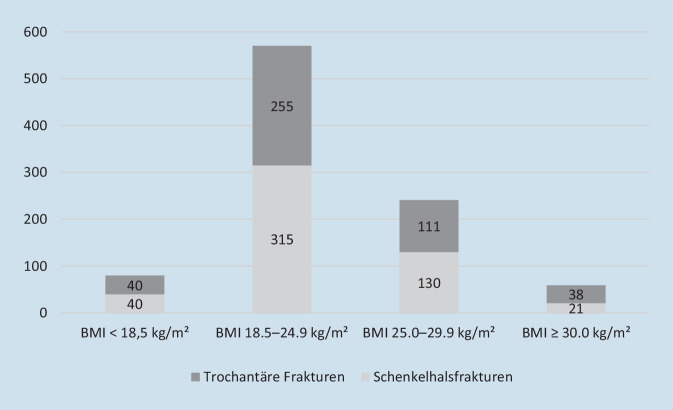
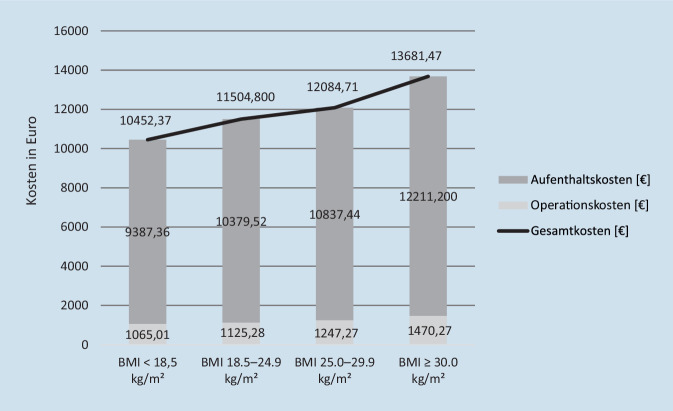
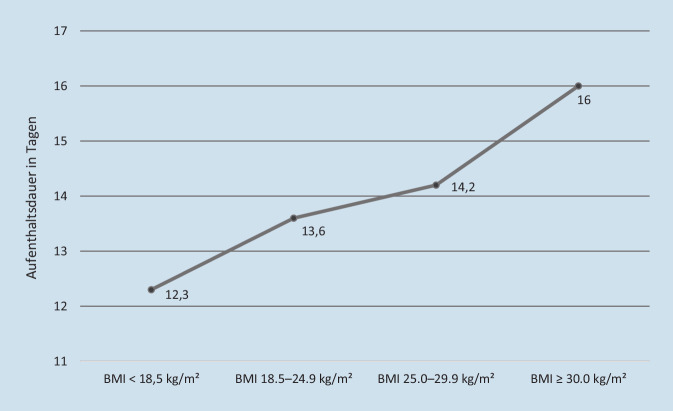
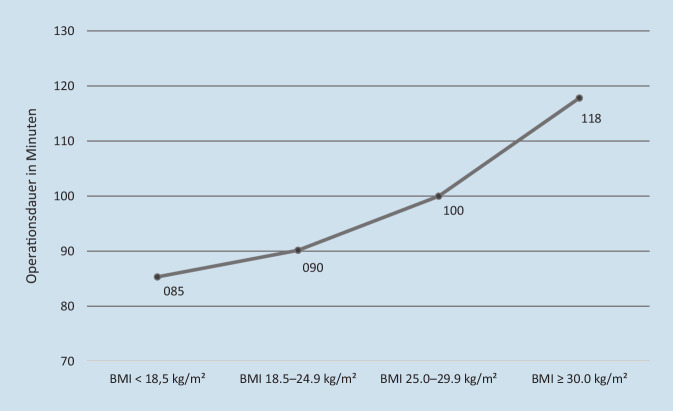
Driven by the aging population, the proximal femoral fracture is a rising fracture entity, challenging trauma surgeons as well as the German healthcare system as a whole. The rising average age of the population is accompanied by a rising BMI in the German population, resulting in longer operation times, longer average length of stay (ALOS) as well as more postoperative complications.The aim of this study was to demonstrate the economic correlation between body mass index and hospital costs. The retrospective analysis of 950 patient cases suffering from a proximal femoral fracture resulted in the finding of rising treatment costs being positively associated with rising BMI due to longer operation times and longer length of hospitalization (10,452 €, 11,505 €, 12,085 € and 13,681 € for patients with BMI < 18.5 kg/m, BMI = 18.5-24.9 kg/m, BMI = 25.0-29.9 kg/m and BMI ≥ 30.0 kg/m, respectively).
受人口老龄化的驱动,股骨近端骨折是一种日益增多的骨折类型,对创伤外科医生以及整个德国医疗体系都构成了挑战。德国人口平均年龄的增长伴随着体重指数(BMI)的上升,导致手术时间延长、平均住院时间(ALOS)延长以及术后并发症增多。本研究的目的是证明体重指数与医院成本之间的经济关联。对950例股骨近端骨折患者病例进行回顾性分析后发现,由于手术时间延长和住院时间延长,治疗成本的增加与BMI的上升呈正相关(BMI<18.5kg/m²、BMI=18.5-24.9kg/m²、BMI=25.0-29.9kg/m²和BMI≥30.0kg/m²的患者,治疗成本分别为10452欧元、11505欧元、12085欧元和13681欧元)。