The College of Contemporary Health, Technopark, 90 London Road, London, SE1 6LN, UK.
Rotherham Institute for Obesity, Rotherham, UK.
Adv Ther. 2022 Oct;39(10):4397-4412. doi: 10.1007/s12325-022-02265-4. Epub 2022 Aug 4.
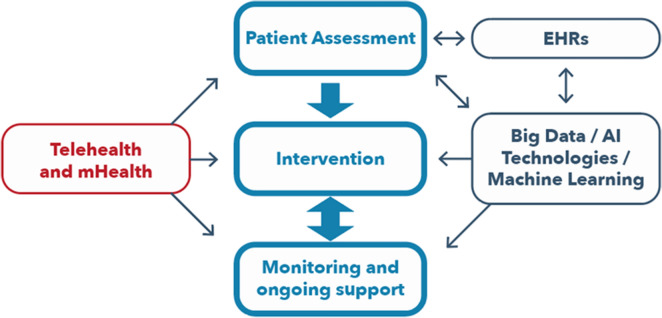
Obesity is a complex, multi-factorial, chronic condition which increases the risk of a wide range of diseases including type 2 diabetes mellitus, cardiovascular disease and certain cancers. The prevalence of obesity continues to rise and this places a huge economic burden on the healthcare system. Existing approaches to obesity treatment tend to focus on individual responsibility and diet and exercise, failing to recognise the complexity of the condition and the need for a whole-system approach. A new approach is needed that recognises the complexity of obesity and provides patient-centred, multidisciplinary care which more closely meets the needs of each individual with obesity. This review will discuss the role that digital health could play in this new approach and the challenges of ensuring equitable access to digital health for obesity care. Existing technologies, such as telehealth and mobile health apps and wearable devices, offer emerging opportunities to improve access to obesity care and enhance the quality, efficiency and cost-effectiveness of weight management interventions and long-term patient support. Future application of machine learning and artificial intelligence to obesity care could see interventions become increasingly automated and personalised.
肥胖是一种复杂的、多因素的、慢性的疾病,会增加包括 2 型糖尿病、心血管疾病和某些癌症等多种疾病的风险。肥胖的流行率持续上升,这给医疗保健系统带来了巨大的经济负担。现有的肥胖治疗方法往往侧重于个人责任和饮食及运动,没有认识到肥胖的复杂性和需要采取全系统的方法。需要一种新的方法,认识到肥胖的复杂性,并提供以患者为中心的、多学科的护理,更贴近满足每个肥胖患者的需求。这篇综述将讨论数字健康在这种新方法中可以发挥的作用,以及确保肥胖护理中公平获得数字健康的挑战。现有的技术,如远程医疗和移动健康应用程序和可穿戴设备,为改善肥胖护理的可及性提供了新的机会,并提高了体重管理干预措施和长期患者支持的质量、效率和成本效益。未来将机器学习和人工智能应用于肥胖护理,干预措施可能会变得越来越自动化和个性化。