Departamento de Inmunología, Facultad de Medicina, Universidad Complutense de Madrid, Pabellón 5, planta 4. Avda. Complutense s/n, 28040, Madrid, Spain.
Instituto de Investigaciones Sanitarias Gregorio Marañón, Hospital Gregorio Marañón, Madrid, Spain.
Cell Mol Life Sci. 2022 Aug 4;79(8):464. doi: 10.1007/s00018-022-04491-z.
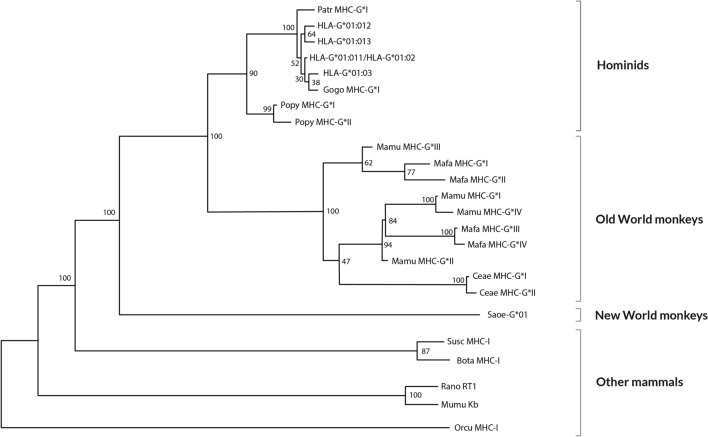
Classical HLA (Human Leukocyte Antigen) is the Major Histocompatibility Complex (MHC) in man. HLA genes and disease association has been studied at least since 1967 and no firm pathogenic mechanisms have been established yet. HLA-G immune modulation gene (and also -E and -F) are starting the same arduous way: statistics and allele association are the trending subjects with the same few results obtained by HLA classical genes, i.e., no pathogenesis may be discovered after many years of a great amount of researchers' effort. Thus, we believe that it is necessary to follow different research methodologies: (1) to approach this problem, based on how evolution has worked maintaining together a cluster of immune-related genes (the MHC) in a relatively short chromosome area since amniotes to human at least, i.e., immune regulatory genes (MHC-G, -E and -F), adaptive immune classical class I and II genes, non-adaptive immune genes like (C2, C4 and Bf) (2); in addition to using new in vitro models which explain pathogenetics of HLA and disease associations. In fact, this evolution may be quite reliably studied during about 40 million years by analyzing the evolution of MHC-G, -E, -F, and their receptors (KIR-killer-cell immunoglobulin-like receptor, NKG2-natural killer group 2-, or TCR-T-cell receptor-among others) in the primate evolutionary lineage, where orthology of these molecules is apparently established, although cladistic studies show that MHC-G and MHC-B genes are the ancestral class I genes, and that New World apes MHC-G is paralogous and not orthologous to all other apes and man MHC-G genes. In the present review, we outline past and possible future research topics: co-evolution of adaptive MHC classical (class I and II), non-adaptive (i.e., complement) and modulation (i.e., non-classical class I) immune genes may imply that the study of full or part of MHC haplotypes involving several loci/alleles instead of single alleles is important for uncovering HLA and disease pathogenesis. It would mainly apply to starting research on HLA-G extended haplotypes and disease association and not only using single HLA-G genetic markers.
经典 HLA(人类白细胞抗原)是人类主要组织相容性复合体(MHC)。自 1967 年以来,人们一直在研究 HLA 基因与疾病的关联,但尚未确定明确的发病机制。HLA-G 免疫调节基因(以及 -E 和 -F)也正在经历同样艰难的过程:统计学和等位基因关联是当前的热门主题,但与经典 HLA 基因的结果一样,多年来,大量研究人员的努力并未发现发病机制。因此,我们认为有必要采用不同的研究方法:(1)基于进化的方式来解决这个问题,进化过程中,免疫相关基因(MHC)簇在相对较短的染色体区域中共同进化,这至少可以追溯到羊膜动物到人类时期,即免疫调节基因(MHC-G、-E 和 -F)、适应性免疫经典 I 类和 II 类基因、非适应性免疫基因(如 C2、C4 和 Bf);(2)此外,还需要使用新的体外模型来解释 HLA 与疾病关联的发病机制。事实上,通过分析灵长类动物进化谱系中 MHC-G、-E、-F 及其受体(杀伤细胞免疫球蛋白样受体 KIR、自然杀伤组 2 受体 NKG2、T 细胞受体 TCR 等)的进化,大约可以在 4000 万年的时间里对这种进化进行可靠的研究,尽管系统发育研究表明 MHC-G 和 MHC-B 基因是古老的 I 类基因,而新大陆猿的 MHC-G 是平行基因,与所有其他猿类和人类的 MHC-G 基因没有同源性。在本综述中,我们概述了过去和未来可能的研究课题:适应性 MHC 经典(I 类和 II 类)、非适应性(即补体)和调节(即非经典 I 类)免疫基因的共同进化意味着,研究完整或部分 MHC 单倍型(涉及多个基因座/等位基因)而不是单个等位基因,对于揭示 HLA 和疾病发病机制非常重要。这主要适用于 HLA-G 扩展单倍型与疾病关联的研究,而不仅仅是使用单个 HLA-G 遗传标记。