State Key Laboratory of Pathogen and Biosecurity, Beijing Institute of Microbiology and Epidemiology, 100071, Beijing, China.
National Institute of Biological Sciences, Beijing, 102206, China.
Nat Commun. 2022 Aug 4;13(1):4526. doi: 10.1038/s41467-022-32218-y.
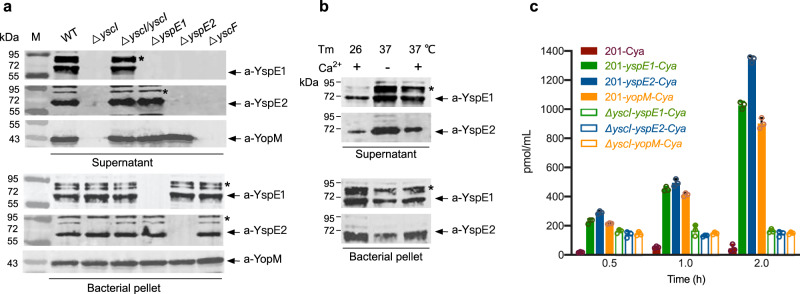
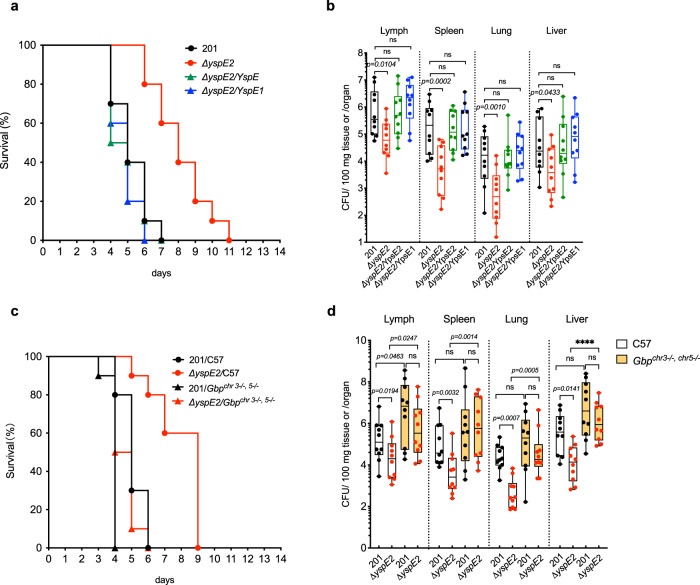
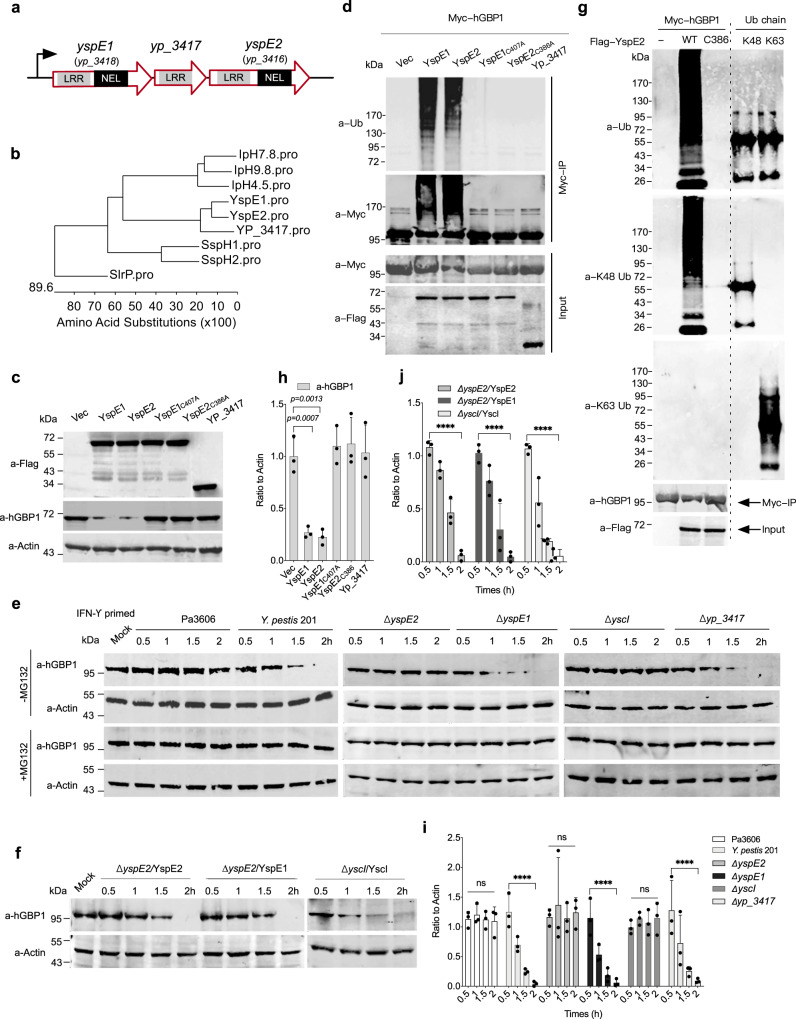
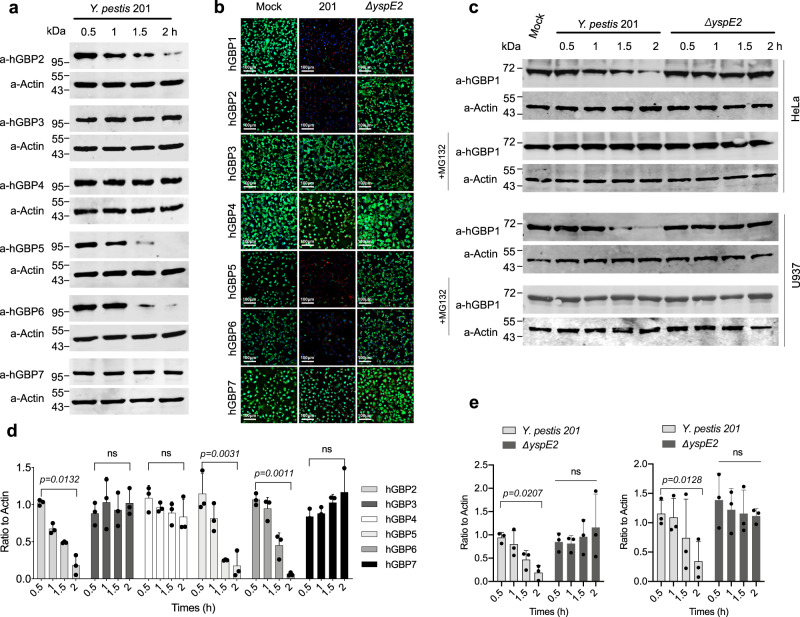
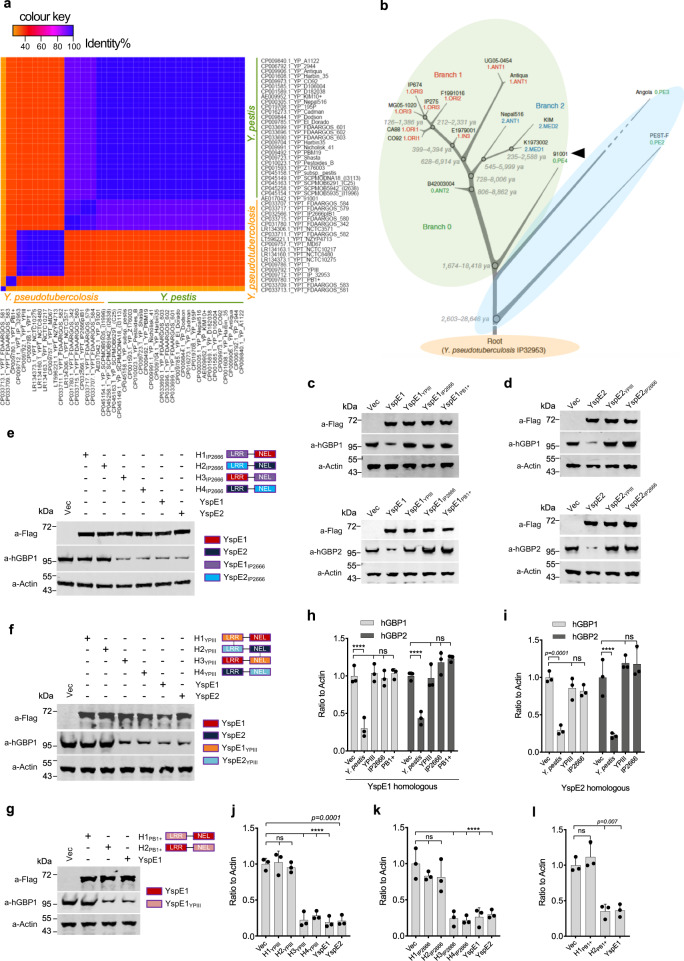
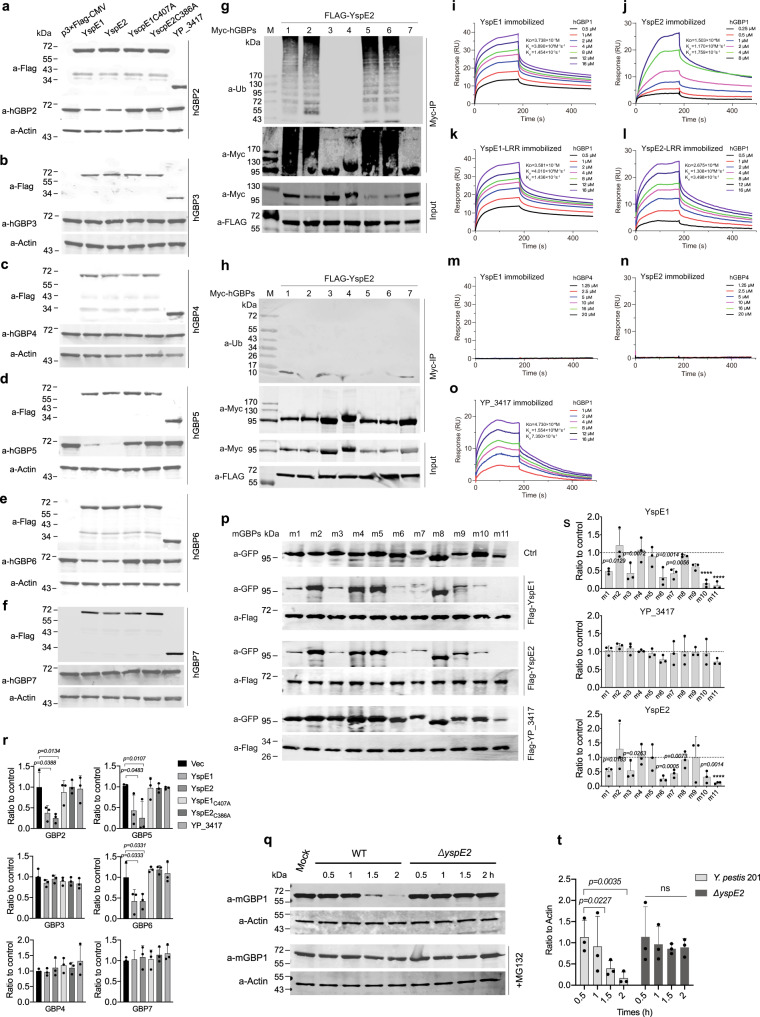
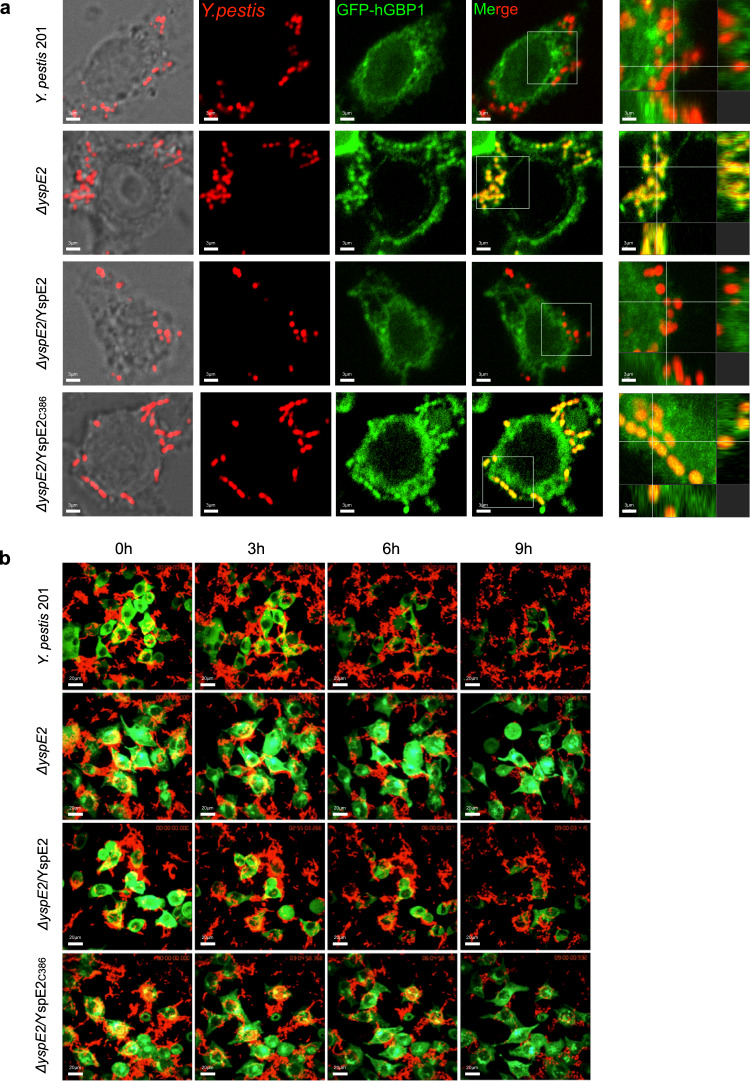
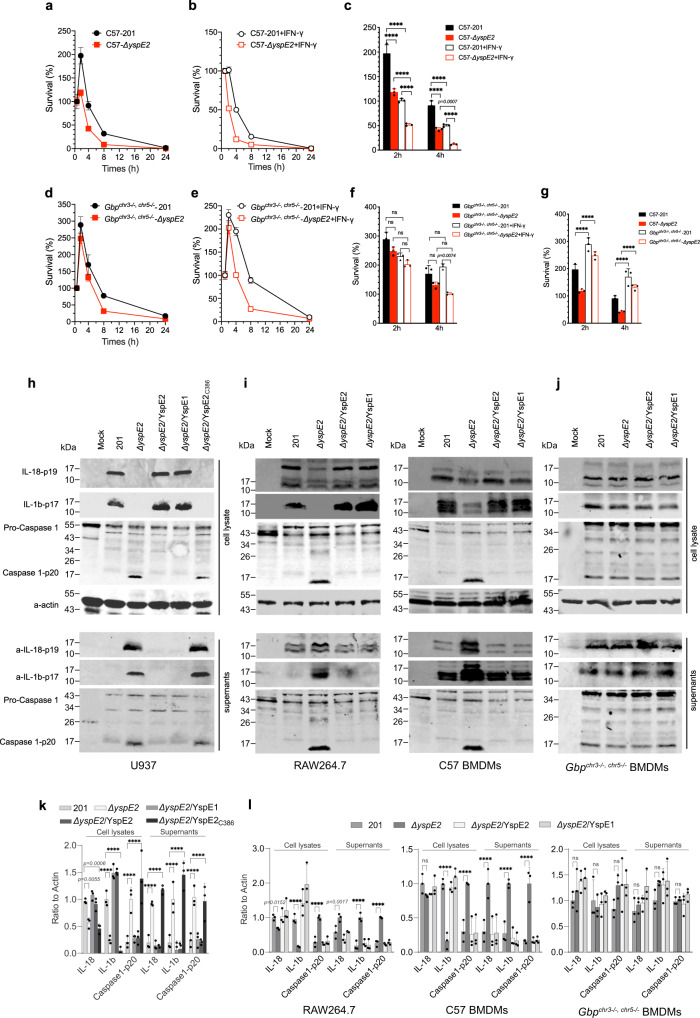
Plague has caused three worldwide pandemics in history, including the Black Death in medieval ages. Yersinia pestis, the etiological agent of plague, has evolved a powerful arsenal to disrupt host immune defenses during evolution from enteropathogenic Y. pseudotuberculosis. Here, we find that two functionally redundant E3 ligase of Y. pestis, YspE1 and YspE2, can be delivered via type III secretion injectisome into host cytosol where they ubiquitinate multiple guanylate-binding proteins (GBPs) for proteasomal degradation. However, Y. pseudotuberculosis has no such capability due to lacking functional YspE1/2 homologs. YspE1/2-mediated GBP degradations significantly promote the survival of Y. pestis in macrophages and strongly inhibit inflammasome activation. By contrast, Gbp macrophages exhibit much lowered inflammasome activation independent of YspE1/2, accompanied with an enhanced replication of Y. pestis. Accordingly, Gbp mice are more susceptible to Y. pestis. We demonstrate that Y. pestis utilizes E3 ligases to subvert GBP-mediated host defense, which appears to be newly acquired by Y. pestis during evolution.
鼠疫在历史上曾引发过三次世界性大流行,包括中世纪的黑死病。鼠疫耶尔森菌是鼠疫的病原体,它从肠道致病性假结核耶尔森菌进化而来,在进化过程中形成了强大的武器来破坏宿主的免疫防御。在这里,我们发现鼠疫耶尔森菌的两种功能冗余的 E3 连接酶 YspE1 和 YspE2 可以通过 III 型分泌系统注入宿主细胞质,在那里它们泛素化多种鸟苷酸结合蛋白(GBP)以进行蛋白酶体降解。然而,由于缺乏功能上的 YspE1/2 同源物,假结核耶尔森菌没有这种能力。YspE1/2 介导的 GBP 降解显著促进了鼠疫耶尔森菌在巨噬细胞中的存活,并强烈抑制了炎症小体的激活。相比之下,Gbp 巨噬细胞表现出较低的炎症小体激活,而不依赖于 YspE1/2,伴随着鼠疫耶尔森菌的复制增强。因此,Gbp 小鼠对鼠疫耶尔森菌更易感。我们证明,鼠疫耶尔森菌利用 E3 连接酶来颠覆 GBP 介导的宿主防御,这似乎是鼠疫耶尔森菌在进化过程中获得的新能力。