Xu Shiwei, Carpenter Margaret C, Spreng Rachel L, Neidich Scott D, Sarkar Sharanya, Tenney DeAnna, Goodman Derrick, Sawant Sheetal, Jha Shalini, Dunn Brooke, Juliana McElrath M, Bekker Valerie, Mudrak Sarah V, Flinko Robin, Lewis George K, Ferrari Guido, Tomaras Georgia D, Shen Xiaoying, Ackerman Margaret E
Quantitative Biomedical Science Program, Dartmouth College, Hanover, NH, USA.
Thayer School of Engineering, Dartmouth College, Hanover, NH, USA.
NPJ Vaccines. 2022 Aug 4;7(1):90. doi: 10.1038/s41541-022-00514-9.
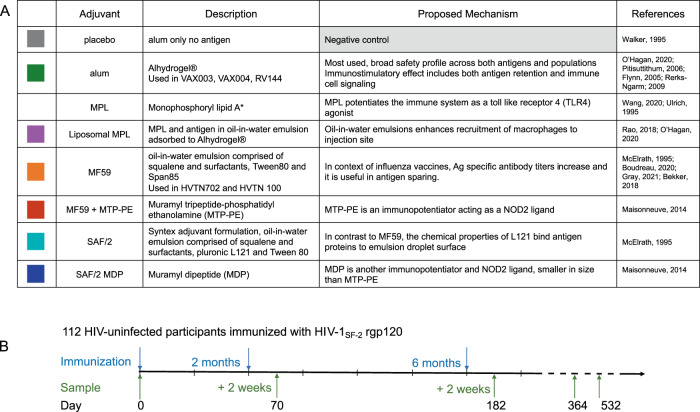
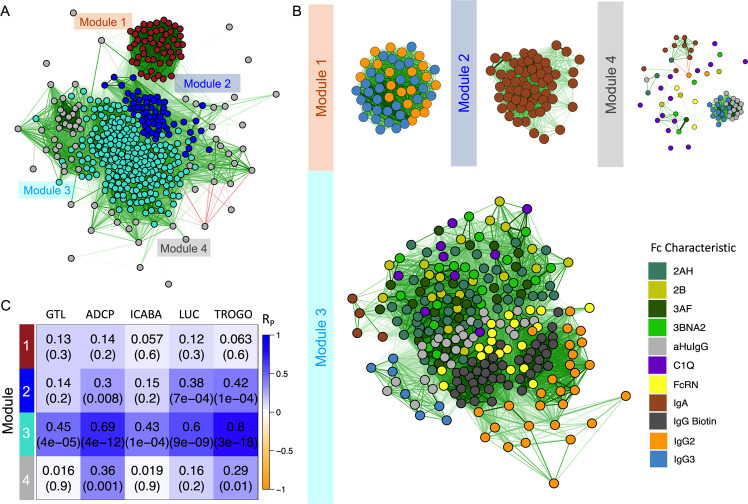
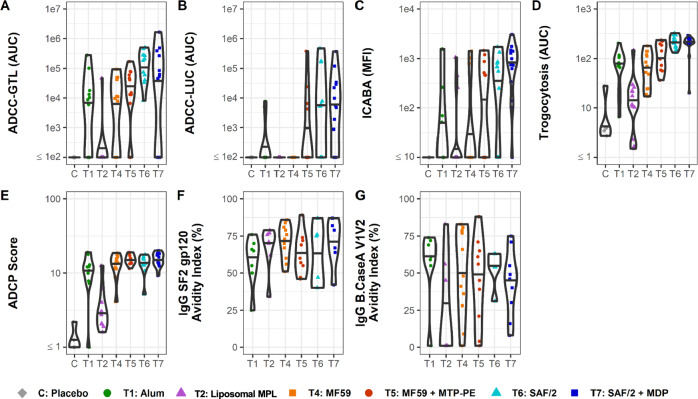
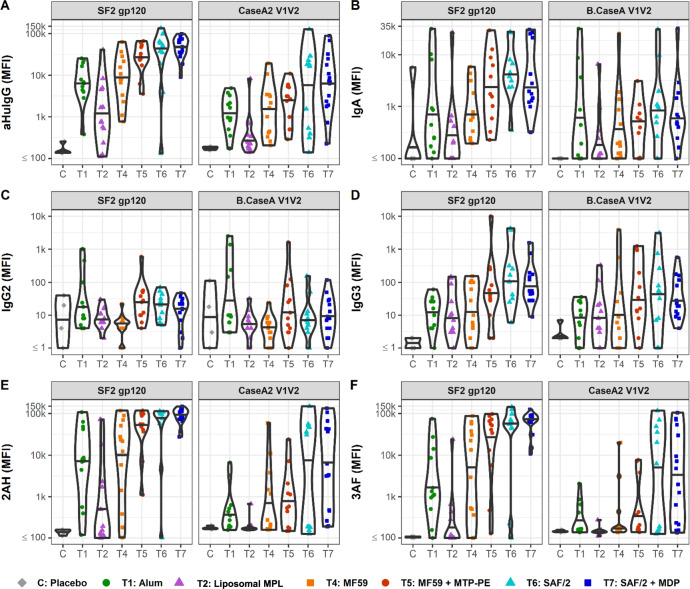
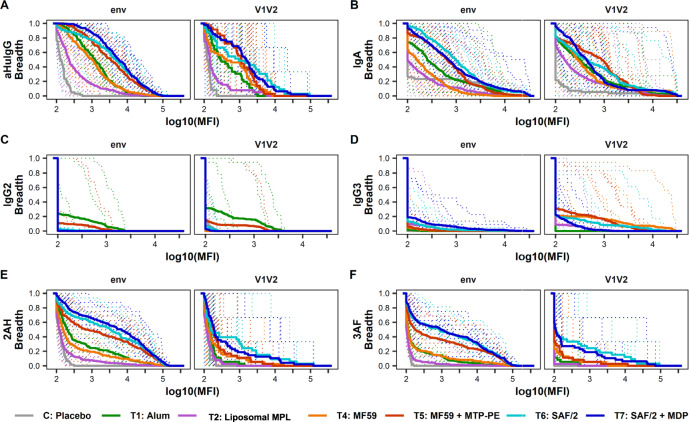
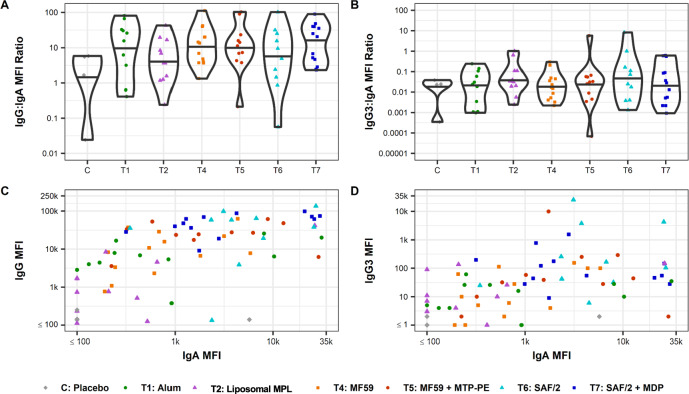
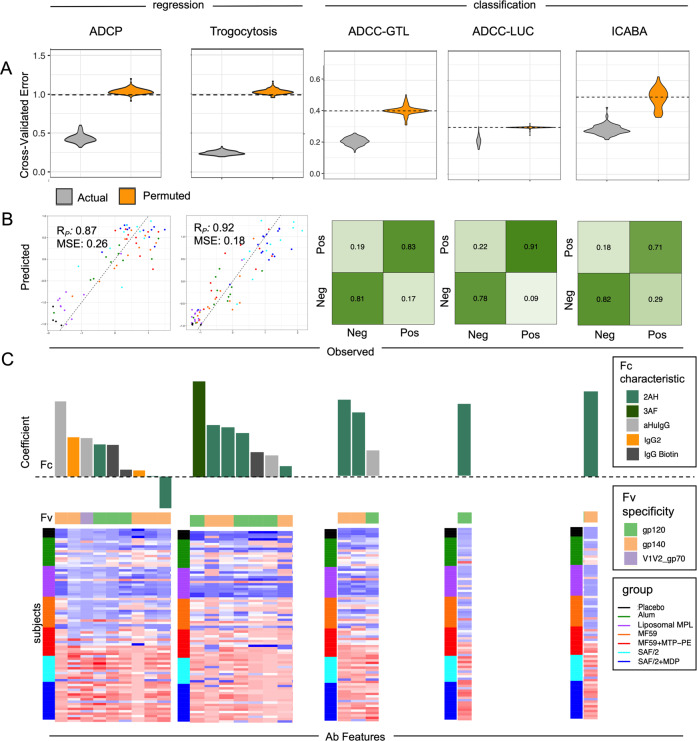
Adjuvants can alter the magnitude, characteristics, and persistence of the humoral response to protein vaccination. HIV vaccination might benefit from tailored adjuvant choice as raising a durable and protective response to vaccination has been exceptionally challenging. Analysis of trials of partially effective HIV vaccines have identified features of the immune response that correlate with decreased risk, including high titers of V1V2-binding IgG and IgG3 responses with low titers of V1V2-binding IgA responses and enhanced Fc effector functions, notably antibody-dependent cellular cytotoxicity (ADCC) and antibody-dependent cellular phagocytosis (ADCP). However, there has been limited opportunity to compare the effect of different adjuvants on these activities in humans. Here, samples from the AVEG015 study, a phase 1 trial in which participants (n = 112) were immunized with gp120 and one of six different adjuvants or combinations thereof were assessed for antibody titer, biophysical features, and diverse effector functions. Three adjuvants, MF59 + MTP-PE, SAF/2, and SAF/2 + MDP, increased the peak magnitude and durability of antigen-specific IgG3, IgA, FcγR-binding responses and ADCP activity, as compared to alum. While multiple adjuvants increased the titer of IgG, IgG3, and IgA responses, none consistently altered the balance of IgG to IgA or IgG3 to IgA. Linear regression analysis identified biophysical features including gp120-specific IgG and FcγR-binding responses that could predict functional activity, and network analysis identified coordinated aspects of the humoral response. These analyses reveal the ability of adjuvants to drive the character and function of the humoral response despite limitations of small sample size and immune variability in this human clinical trial.
佐剂可改变对蛋白质疫苗的体液免疫反应的强度、特征和持久性。由于对疫苗接种产生持久且具有保护性的反应极具挑战性,HIV疫苗接种可能会从量身定制的佐剂选择中受益。对部分有效的HIV疫苗试验的分析已经确定了与降低风险相关的免疫反应特征,包括高滴度的V1V2结合IgG和IgG3反应、低滴度的V1V2结合IgA反应以及增强的Fc效应功能,特别是抗体依赖性细胞毒性(ADCC)和抗体依赖性细胞吞噬作用(ADCP)。然而,在人体中比较不同佐剂对这些活性的影响的机会有限。在此,对AVEG015研究的样本进行了评估,这是一项1期试验,参与者(n = 112)用gp120和六种不同佐剂或其组合之一进行免疫,评估了抗体滴度、生物物理特征和多种效应功能。与明矾相比,三种佐剂MF59 + MTP-PE、SAF/2和SAF/2 + MDP提高了抗原特异性IgG3、IgA、FcγR结合反应和ADCP活性的峰值强度和持久性。虽然多种佐剂提高了IgG、IgG3和IgA反应的滴度,但没有一种能持续改变IgG与IgA或IgG3与IgA的平衡。线性回归分析确定了包括gp120特异性IgG和FcγR结合反应在内的生物物理特征,这些特征可以预测功能活性,网络分析确定了体液免疫反应的协同方面。这些分析揭示了尽管在这项人体临床试验中样本量小且免疫存在变异性,但佐剂仍有能力驱动体液免疫反应的特征和功能。