Centre for Infectious Disease Control, National Institute for Public Health and the Environment, Antonie van Leeuwenhoeklaan 9, Bilthoven, 3720 MA, the Netherlands.
Laboratory of Entomology, Wageningen University & Research, Wageningen, The Netherlands.
Microbiome. 2022 Aug 4;10(1):120. doi: 10.1186/s40168-022-01276-1.
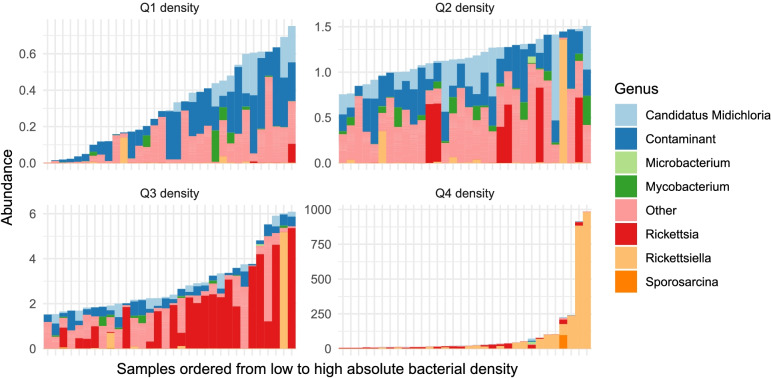
Ixodes ricinus ticks vector pathogens that cause serious health concerns. Like in other arthropods, the microbiome may affect the tick's biology, with consequences for pathogen transmission. Here, we explored the bacterial communities of I. ricinus across its developmental stages and six geographic locations by the 16S rRNA amplicon sequencing, combined with quantification of the bacterial load.
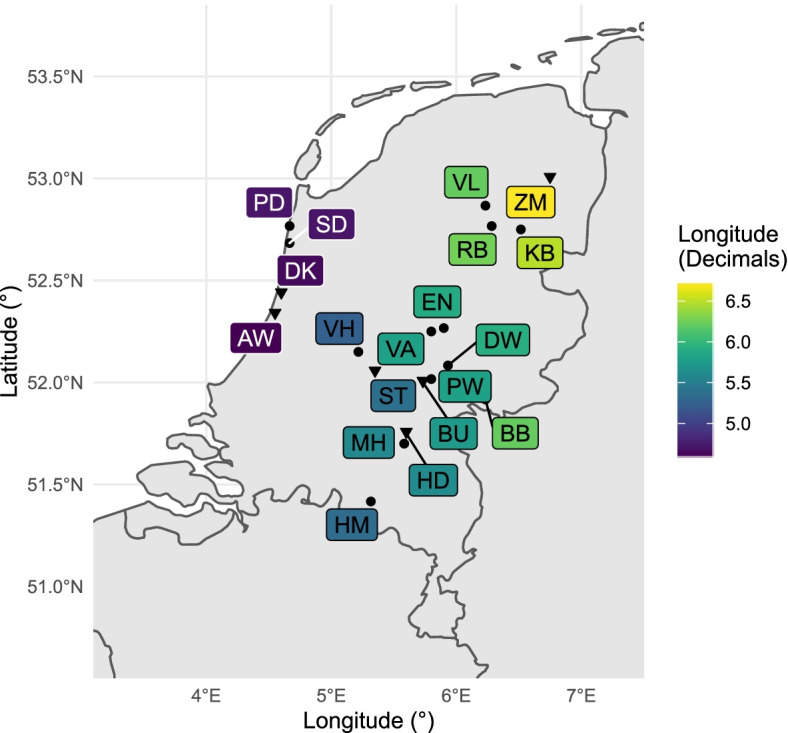
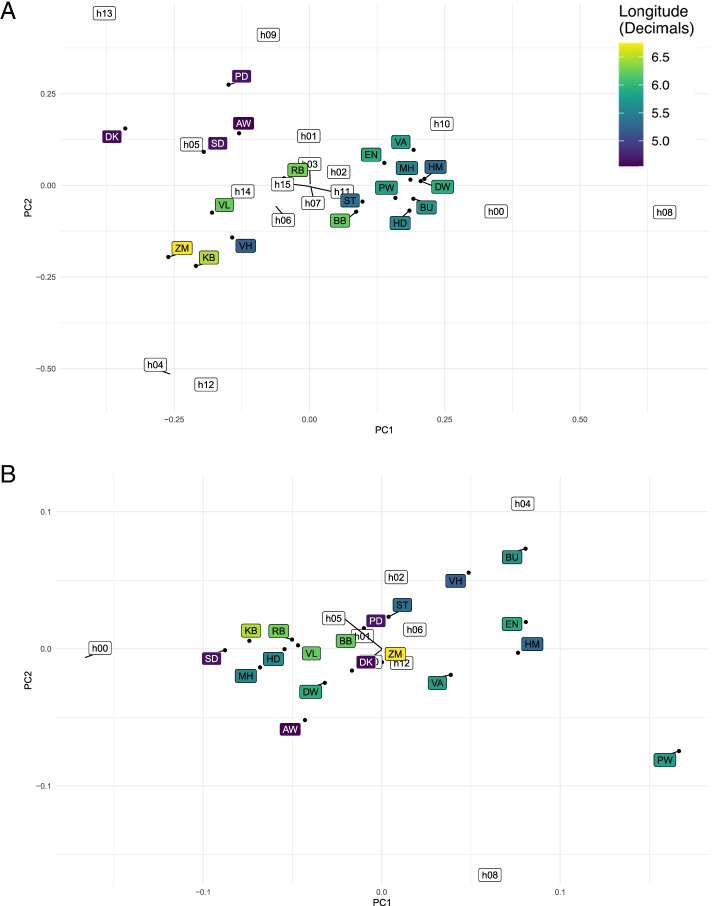
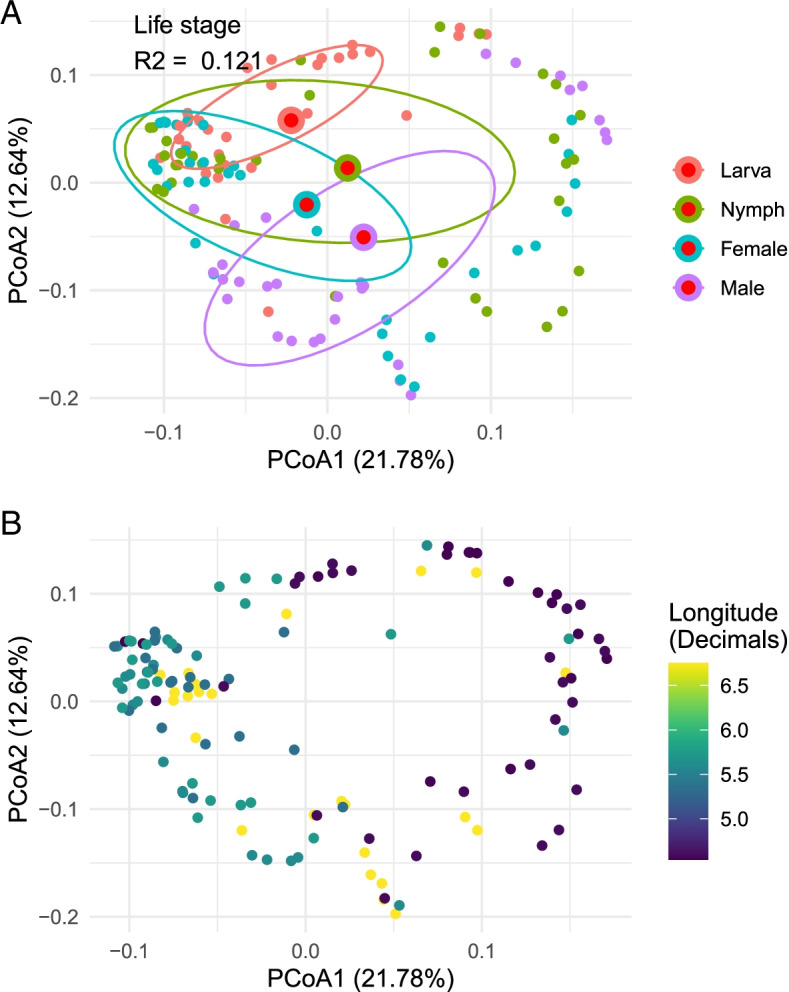
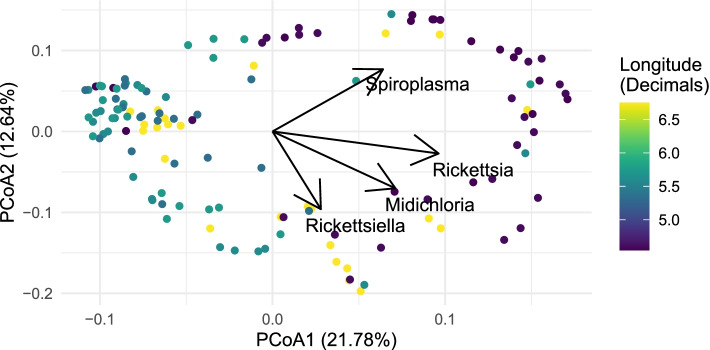
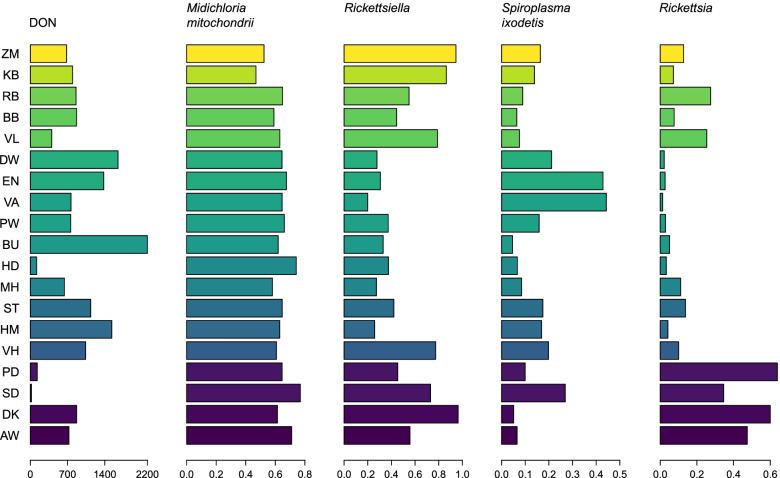
A wide range of bacterial loads was found. Accurate quantification of low microbial biomass samples permitted comparisons to high biomass samples, despite the presence of contaminating DNA. The bacterial communities of ticks were associated with geographical location rather than life stage, and differences in Rickettsia abundance determined this association. Subsequently, we explored the geographical distribution of four vertically transmitted symbionts identified in the microbiome analysis. For that, we screened 16,555 nymphs from 19 forest sites for R. helvetica, Rickettsiella spp., Midichloria mitochondrii, and Spiroplasma ixodetis. Also, the infection rates and distributions of these symbionts were compared to the horizontally transmitted pathogens Borrelia burgdorferi sensu lato, Anaplasma phagocytophilum, and Neoehrlichia mikurensis. The infection rates of all vertically transmitted symbionts differed between the study sites, and none of the symbionts was present in all tested ticks suggesting a facultative association with I. ricinus. The proportions in which symbionts occurred in populations of I. ricinus were highly variable, but geographically close study sites expressed similar proportions. These patterns were in contrast to what we observed for horizontally transmitted pathogens. Lastly, nearly 12% of tested nymphs were free of any targeted microorganisms, which is in line with the microbiome analyses.
Our results show that the microbiome of I. ricinus is highly variable, but changes gradually and ticks originating from geographically close forest sites express similar bacterial communities. This suggests that geography-related factors affect the infection rates of vertically transmitted symbionts in I. ricinus. Since some symbionts, such as R. helvetica can cause disease in humans, we propose that public health investigations consider geographical differences in its infection rates.
硬蜱传播的病原体引起严重的健康问题。与其他节肢动物一样,微生物组可能会影响蜱的生物学特性,从而影响病原体的传播。在这里,我们通过 16S rRNA 扩增子测序,结合细菌负荷定量,研究了六个地理位置的 Ixodes ricinus 发育阶段的细菌群落。
发现了广泛的细菌负荷。尽管存在污染 DNA,但对低微生物生物量样本进行准确定量可以与高生物质样本进行比较。蜱的细菌群落与地理位置有关,而与生活阶段无关,莱姆病数量的差异决定了这种关联。随后,我们探索了在微生物组分析中鉴定出的四个垂直传播共生体在地理上的分布。为此,我们从 19 个森林地点筛选了 16555 只若虫,用于检测 R. helvetica、Rickettsiella spp.、Midichloria mitochondrii 和 Spiroplasma ixodetis。此外,还比较了这些共生体与水平传播病原体 Borrelia burgdorferi sensu lato、Anaplasma phagocytophilum 和 Neoehrlichia mikurensis 的感染率和分布。所有垂直传播共生体的感染率在研究地点之间存在差异,并且没有一种共生体存在于所有测试的蜱中,这表明它们与 I. ricinus 具有兼性关联。共生体在 I. ricinus 种群中的出现比例高度可变,但地理位置相近的研究地点的比例相似。这些模式与我们观察到的水平传播病原体的模式形成对比。最后,近 12%的测试若虫没有任何靶向微生物,这与微生物组分析一致。
我们的结果表明,I. ricinus 的微生物组高度可变,但逐渐变化,并且来自地理位置相近的森林地点的蜱表达相似的细菌群落。这表明与地理相关的因素影响 I. ricinus 中垂直传播共生体的感染率。由于某些共生体,如 R. helvetica,会导致人类患病,因此我们建议公共卫生调查考虑其感染率的地理差异。