Steubing Rebecca D, Szepanowski Fabian, David Christina, Mohamud Yusuf Ayan, Mencl Stine, Mausberg Anne-Kathrin, Langer Harald F, Sauter Manuela, Deuschl Cornelius, Forsting Michael, Fender Anke C, Hermann Dirk M, Casas Ana I, Langhauser Friederike, Kleinschnitz Christoph
Department of Neurology and Center for Translational Neuro- and Behavioral Sciences (C-TNBS), University Medicine Essen, Essen, Germany.
University Hospital, Medical Clinic II, University Heart Center Lübeck, Lübeck, Germany.
Brain Behav Immun Health. 2022 Jul 21;24:100493. doi: 10.1016/j.bbih.2022.100493. eCollection 2022 Oct.
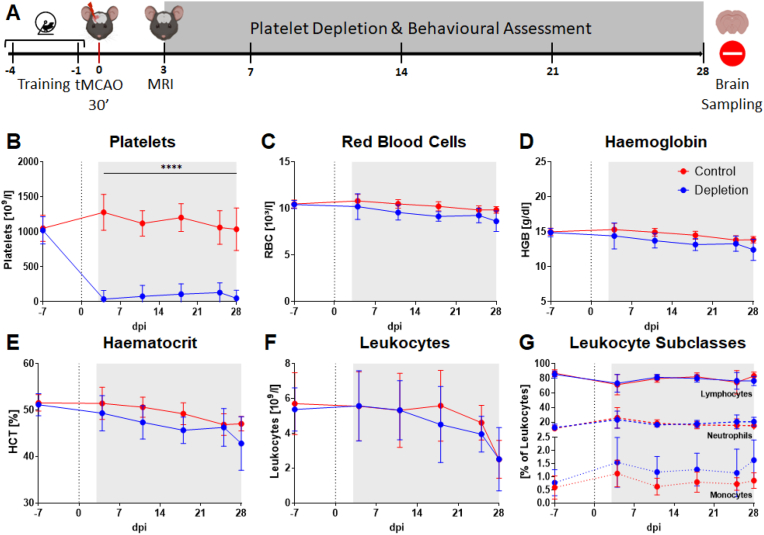
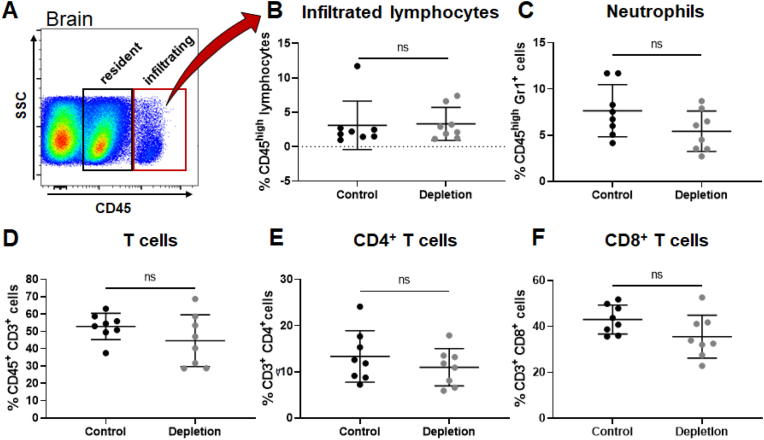
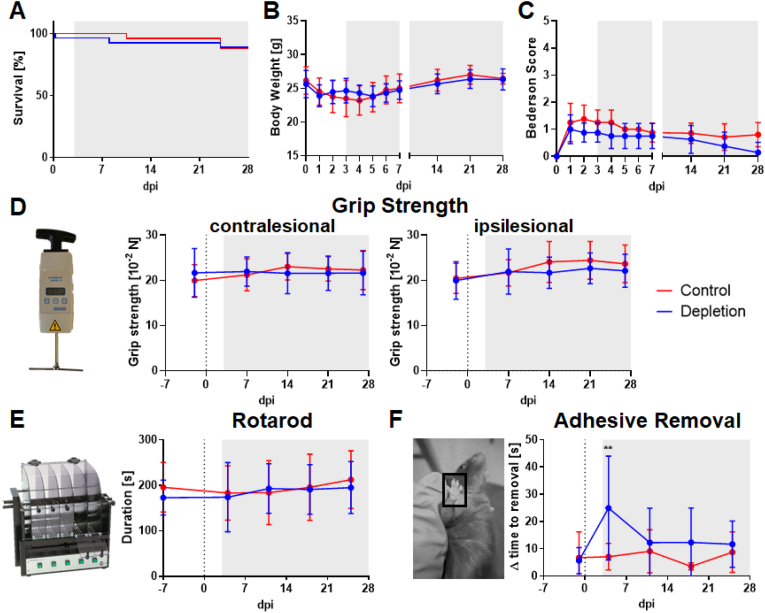
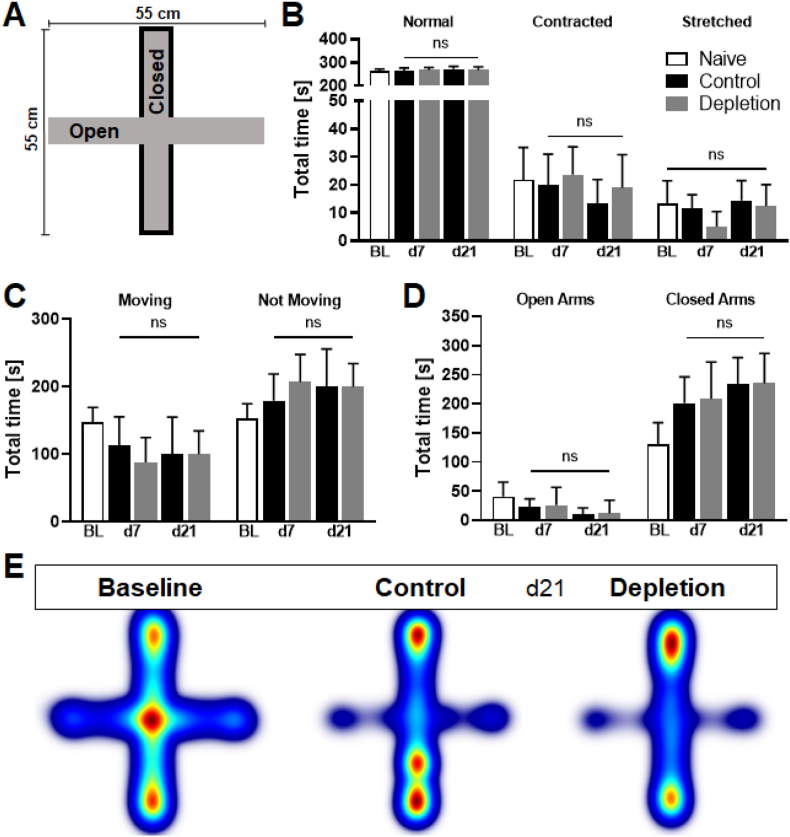
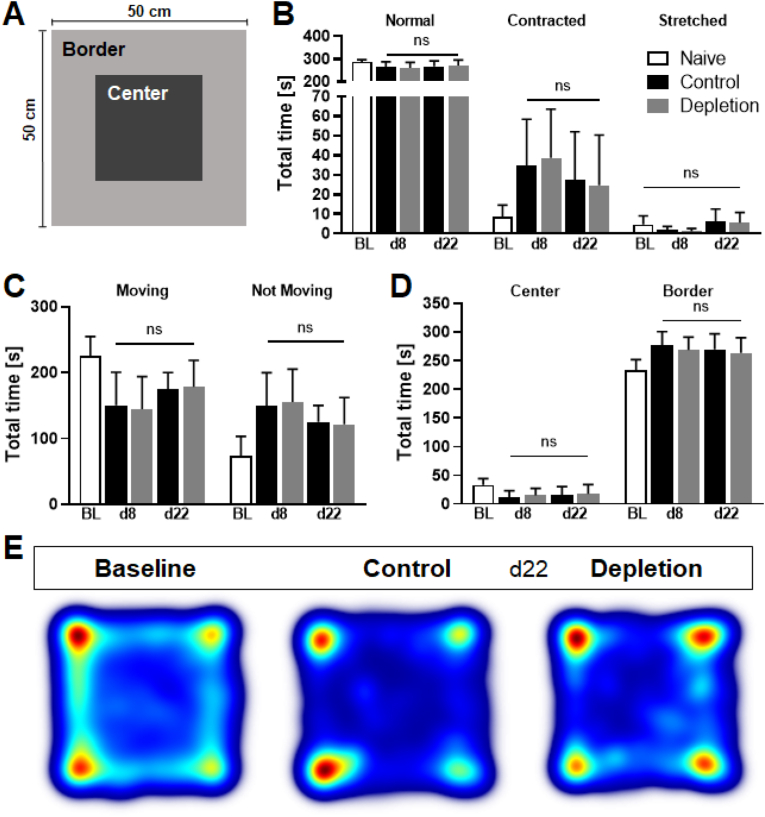
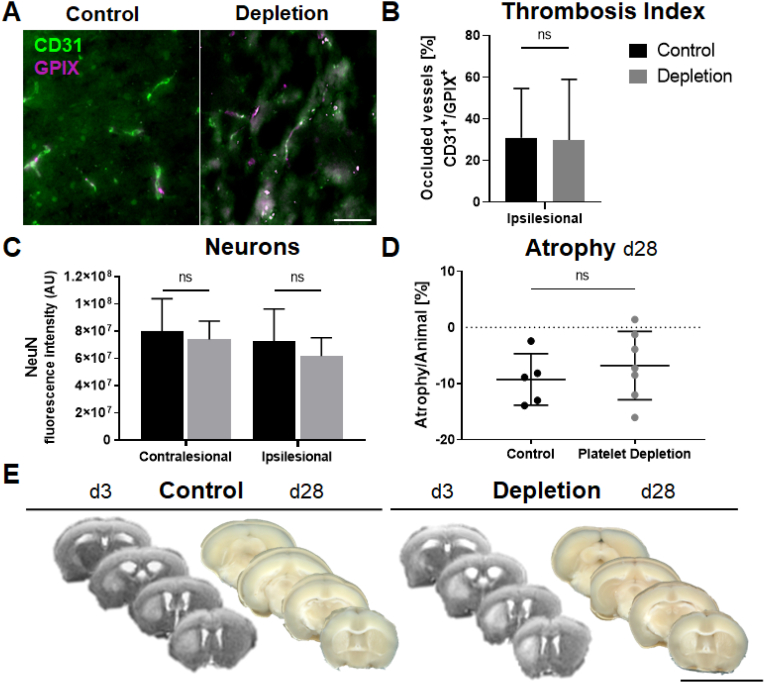
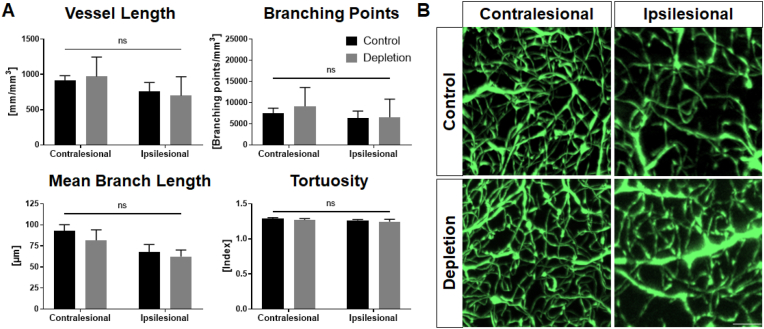
Platelets are key mediators of thrombus formation and inflammation during the acute phase of ischaemic stroke. Particularly, the platelet glycoprotein (GP) receptors GPIbα and GPVI have been shown to mediate platelet adhesion and activation in the ischaemic brain. GPIbα and GPVI blockade could reduce infarct volumes and improve functional outcome in mouse models of acute ischaemic stroke, without concomitantly increasing intracerebral haemorrhage. However, the functional role of platelets during long-term stroke recovery has not been elucidated so far. Thus, we here examined the impact of platelet depletion on post-stroke recovery after transient middle cerebral artery occlusion (tMCAO) in adult male mice. Platelet depleting antibodies or isotype control were applied from day 3-28 after tMCAO in mice matched for infarct size. Long-term functional recovery was assessed over the course of 28 days by behavioural testing encompassing motor and sensorimotorical functions, as well as anxiety-like or spontaneous behaviour. Whole brain flow cytometry and light sheet fluorescent microscopy were used to identify resident and infiltrated immune cell types, and to determine the effects of platelet depletion on the cerebral vascular architecture, respectively. We found that delayed platelet depletion does not improve long-term functional outcome in the tMCAO stroke model. Immune cell abundance, the extent of thrombosis and the organisation of the cerebral vasculature were also comparable between platelet-depleted and control mice. Our study demonstrates that, despite their critical role in the acute stroke setting, platelets appear to contribute only marginally to tissue reorganisation and functional recovery at later stroke stages.
血小板是缺血性中风急性期血栓形成和炎症的关键介质。特别是,血小板糖蛋白(GP)受体GPIbα和GPVI已被证明在缺血性脑中介导血小板粘附和激活。在急性缺血性中风小鼠模型中,阻断GPIbα和GPVI可减少梗死体积并改善功能结局,且不会同时增加脑内出血。然而,迄今为止,血小板在中风长期恢复过程中的功能作用尚未阐明。因此,我们在此研究了血小板耗竭对成年雄性小鼠短暂性大脑中动脉闭塞(tMCAO)后中风恢复的影响。在梗死面积匹配的小鼠中,于tMCAO后第3天至28天应用血小板耗竭抗体或同型对照。通过涵盖运动和感觉运动功能以及焦虑样或自发行为的行为测试,在28天的过程中评估长期功能恢复情况。分别使用全脑流式细胞术和光片荧光显微镜来识别驻留和浸润的免疫细胞类型,并确定血小板耗竭对脑血管结构的影响。我们发现,延迟血小板耗竭并不能改善tMCAO中风模型的长期功能结局。血小板耗竭小鼠和对照小鼠之间的免疫细胞丰度、血栓形成程度和脑血管组织也相当。我们的研究表明,尽管血小板在急性中风情况下起关键作用,但在中风后期阶段,它们对组织重组和功能恢复的贡献似乎微乎其微。