Liu Ya, Zhou Qinzheng, Wang Zheng, Wang Huiming, Zheng Guiheng, Zhao Jiaping, Lu Quan
Key Laboratory of Forest Protection of National Forestry and Grassland Administration, Ecology and Nature Conservation Institute, Chinese Academy of Forestry, Beijing, China.
State Key Laboratory of Tree Genetics and Breeding, Institute of Ecological Conservation and Restoration, Chinese Academy of Forestry, Beijing, China.
Front Plant Sci. 2022 Jul 19;13:944336. doi: 10.3389/fpls.2022.944336. eCollection 2022.
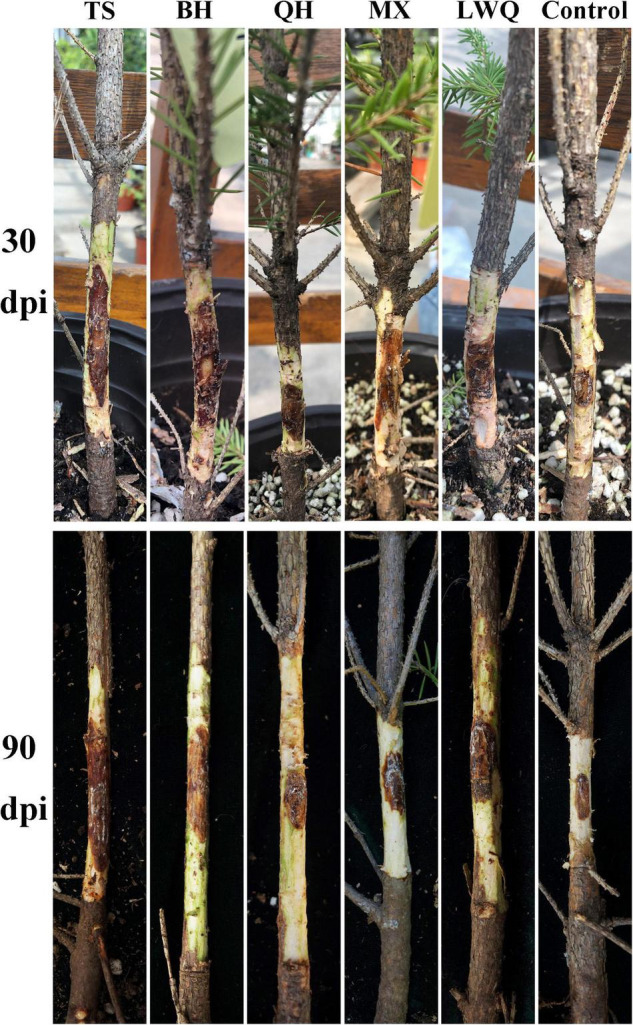
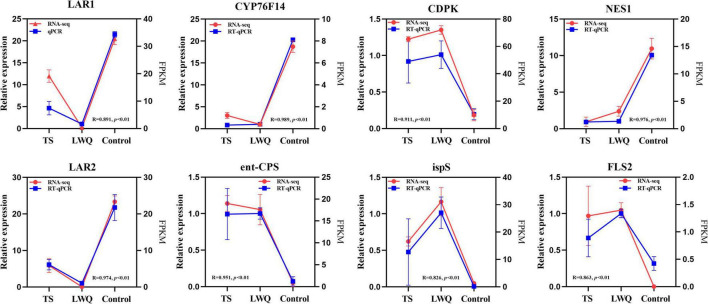
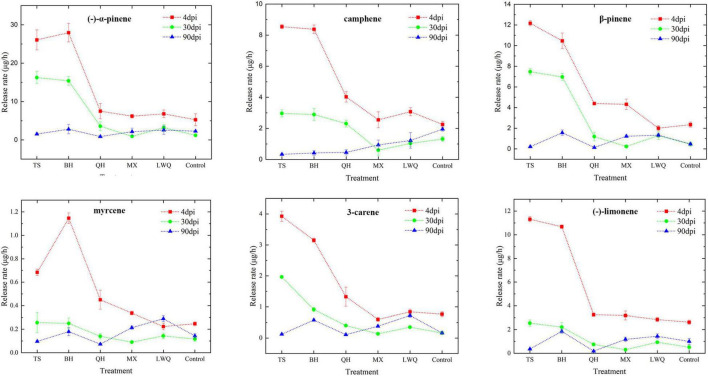
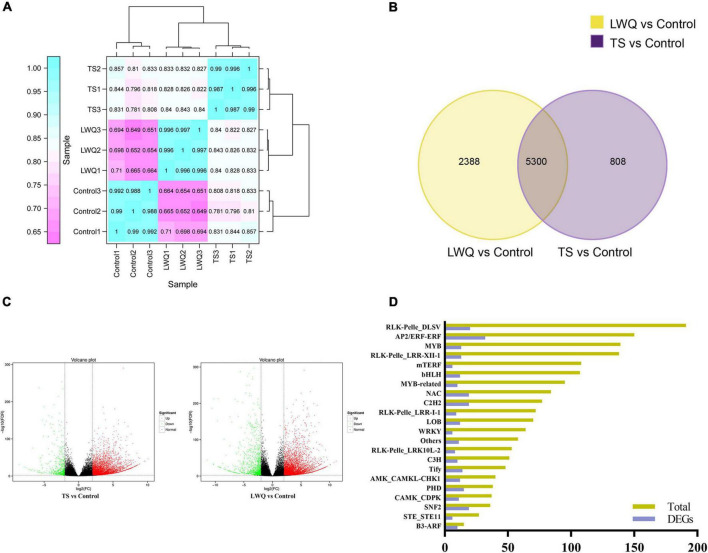
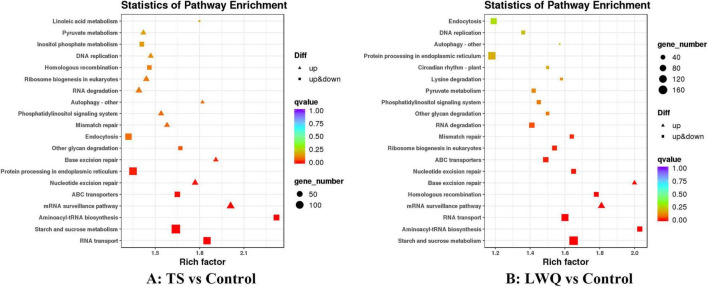
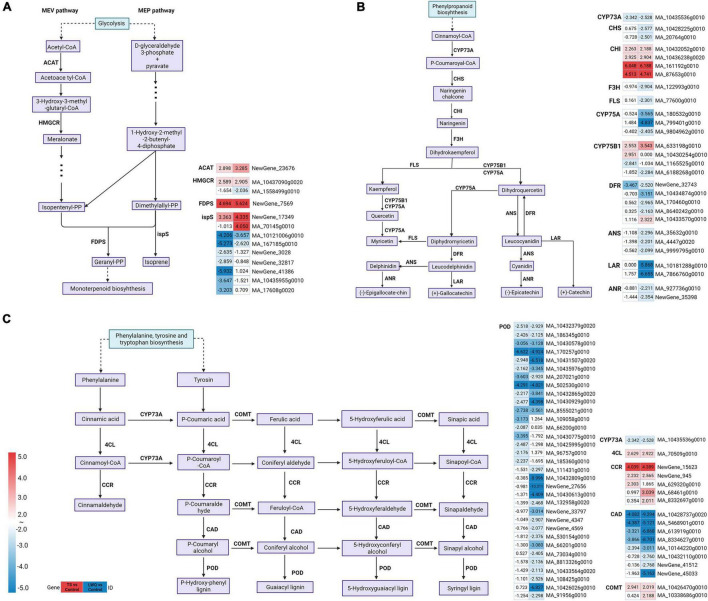
Ophiostomatoid fungi exhibit a complex relationship with bark beetles; exhausting of host tree defenses is traditionally regarded as one of the key benefits provided to beetle vectors. is one of the dominant species of the mycobiota associated with genus bark beetles which infect the spruce trees across the Eurasian continent. Host spruce trees resist fungal invasion through structural and inducible defenses, but the underlying mechanisms at the molecular level, particularly with respect to the interaction between bark beetle-associated fungi and host trees, remain unclear. The aim of this study was to observe the pathological physiology and molecular changes in seedlings after artificial inoculation with strains (TS, BH, QH, MX, and LWQ). This study showed that was a weakly virulent pathogen of spruce, and that the virulent of the five strains showed differentiation. All strains could induce monoterpenoid release. A positive correlation between fungal virulence and release of monoterpenoids was observed. Furthermore, the release rate of monoterpenoids peaked at 4 days post-inoculation (dpi) and then decreased from 4 to 90 dpi. Transcriptomic analysis at 4 dpi showed that many plant-pathogen interaction processes and mitogen-activated protein kinase (MAPK) metabolic processes were activated. The expression of monoterpenoid precursor synthesis genes and diterpenoid synthesis genes was upregulated, indicating that gene expression regulated the release rate of monoterpenoids at 4 dpi. The enriched pathways may reveal the immune response mechanism of spruce to ophiostomatoid fungi. The dominant possibly induces the host defense rather than defense depletion, which is likely the pattern conducted by the pioneers of beetle-associated mycobiota, such as spp.. Overall, these results facilitate a better understanding of the interaction mechanism between the dominant association of beetles and the host at the molecular level.
长喙壳类真菌与小蠹虫呈现出复杂的关系;宿主树防御机制的耗尽传统上被视为赋予小蠹虫传播媒介的关键益处之一。[具体真菌名称]是与[具体小蠹虫属]相关的真菌群落中的优势物种之一,该小蠹虫属感染欧亚大陆的云杉树。宿主云杉树通过结构防御和诱导防御来抵抗真菌入侵,但分子水平上的潜在机制,特别是与小蠹虫相关真菌和宿主树之间的相互作用,仍不清楚。本研究的目的是观察人工接种[具体真菌菌株名称](TS、BH、QH、MX和LWQ)菌株后云杉幼苗的病理生理学和分子变化。本研究表明,[具体真菌名称]是云杉的弱毒病原体,并且这五种[具体真菌名称]菌株的毒力表现出差异。所有[具体真菌名称]菌株均可诱导单萜释放。观察到真菌毒力与单萜释放之间存在正相关。此外,单萜释放率在接种后4天(dpi)达到峰值,然后从4 dpi到90 dpi下降。接种后4 dpi的转录组分析表明,许多植物 - 病原体相互作用过程和丝裂原活化蛋白激酶(MAPK)代谢过程被激活。单萜前体合成基因和二萜合成基因的表达上调,表明基因表达在4 dpi时调节单萜释放率。富集的途径可能揭示了云杉对长喙壳类真菌的免疫反应机制。优势[具体真菌名称]可能诱导宿主防御而非防御耗尽,这可能是与小蠹虫相关的真菌群落先锋物种(如[具体物种名称])所采用的模式。总体而言,这些结果有助于在分子水平上更好地理解小蠹虫优势组合与宿主之间的相互作用机制。