Wang Feifei, Das Priyanka, Pal Narinder, Bhawal Ruchika, Zhang Sheng, Bhattacharyya Madan K
Department of Agronomy, Iowa State University, Ames, IA, United States.
Proteomics and Metabolomics Facility, Institute of Biotechnology, Cornell University, Ithaca, NY, United States.
Front Plant Sci. 2022 Jul 19;13:882561. doi: 10.3389/fpls.2022.882561. eCollection 2022.
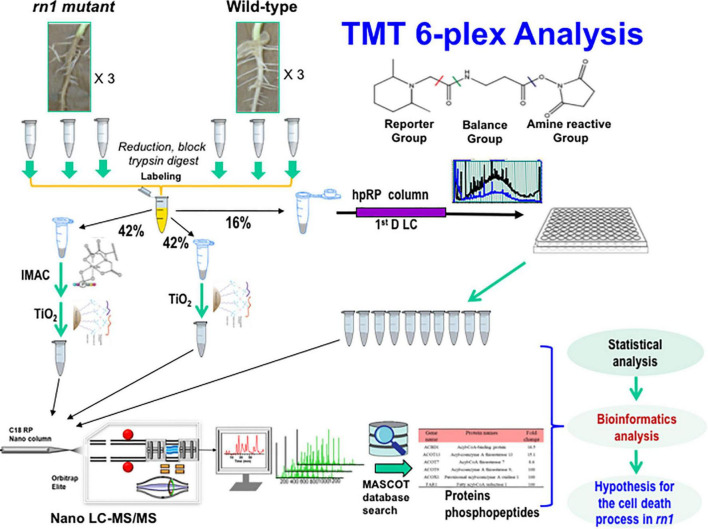
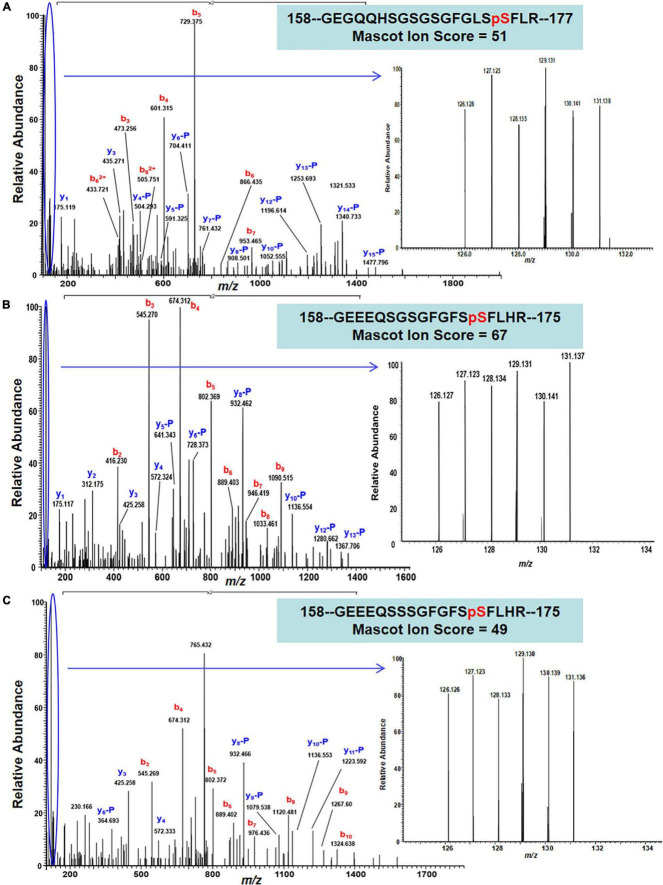
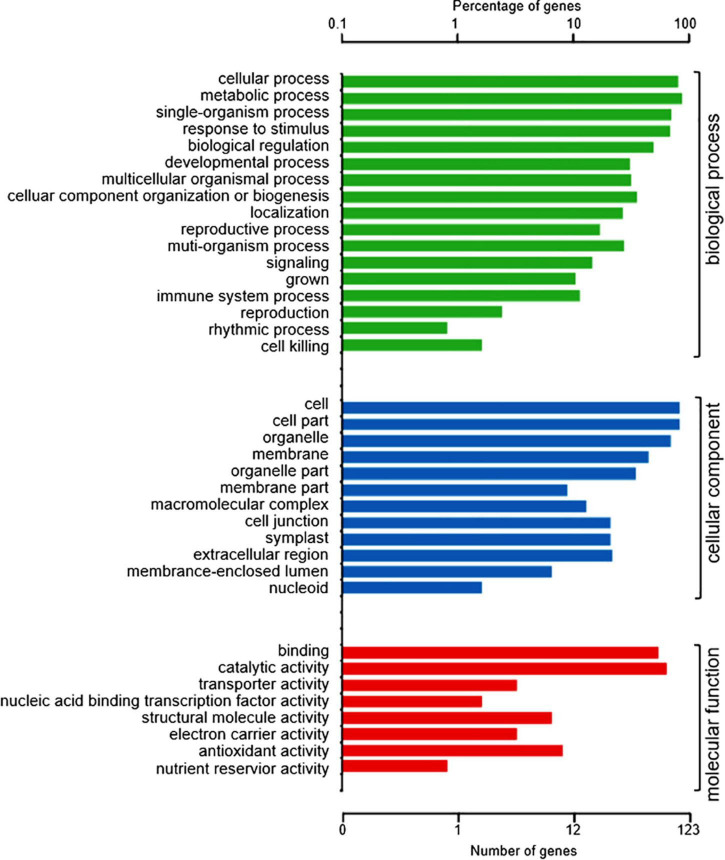
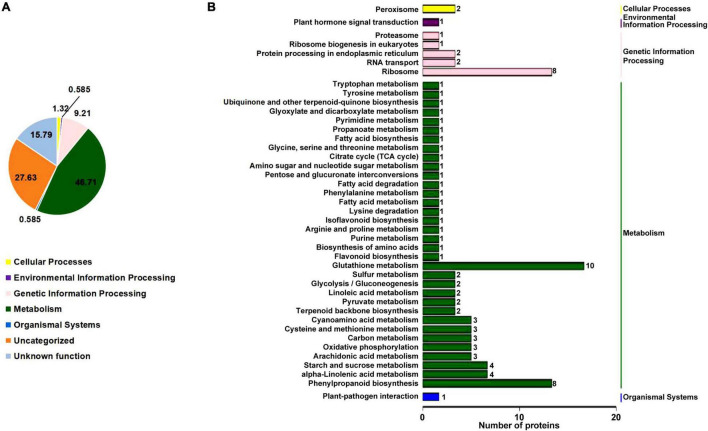
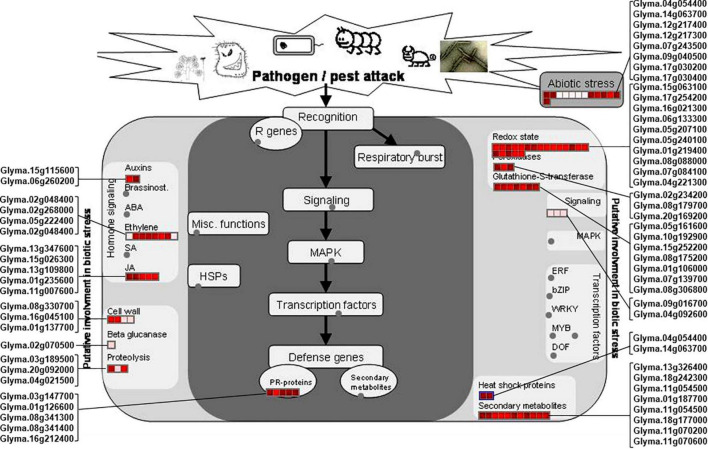
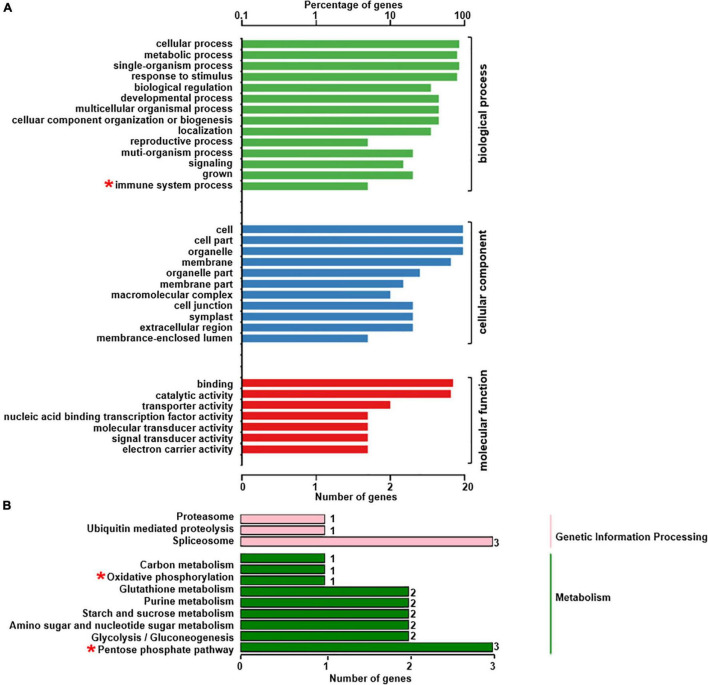
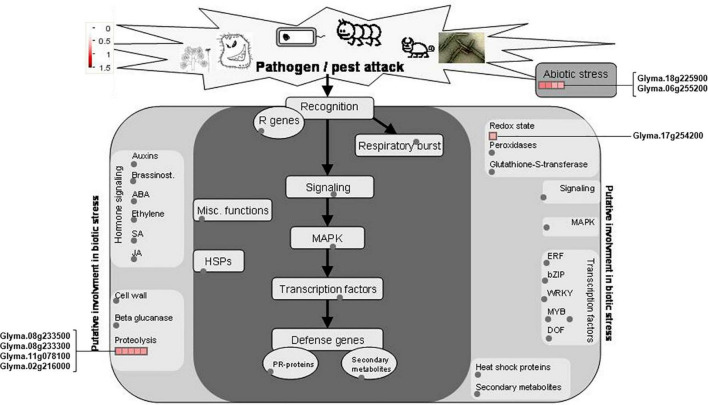
The soybean () mutation causes progressive browning of the roots soon after germination and provides increased tolerance to the soil-borne oomycete pathogen in soybean. Toward understanding the molecular basis of the mutant phenotypes, we conducted tandem mass tag (TMT)-labeling proteomics and phosphoproteomics analyses of the root tissues of the mutant and progenitor T322 line to identify potential proteins involved in manifestation of the mutant phenotype. We identified 3,160 proteins. When the -value was set at ≤0.05 and the fold change of protein accumulation between and T322 at ≥1.5 or ≤0.67, we detected 118 proteins that showed increased levels and 32 proteins decreased levels in as compared to that in T322. The differentially accumulated proteins (DAPs) are involved in several pathways including cellular processes for processing environmental and genetic information, metabolism and organismal systems. Five pathogenesis-related proteins were accumulated to higher levels in the mutant as compared to that in T322. Several of the DAPs are involved in hormone signaling, redox reaction, signal transduction, and cell wall modification processes activated in plant-pathogen interactions. The phosphoproteomics analysis identified 22 phosphopeptides, the levels of phosphorylation of which were significantly different between and T322 lines. The phosphorylation levels of two type II metacaspases were reduced in as compared to T322. Type II metacaspase has been shown to be a negative regulator of hypersensitive cell death. In absence of the functional Rn1 protein, two type II metacaspases exhibited reduced phosphorylation levels and failed to show negative regulatory cell death function in the soybean mutant. We hypothesize that Rn1 directly or indirectly phosphorylates type II metacaspases to negatively regulate the cell death process in soybean roots.
大豆()突变体在萌发后不久会导致根部逐渐褐变,并增强了大豆对土壤传播的卵菌病原体的耐受性。为了了解突变体表型的分子基础,我们对突变体和原始T322品系的根组织进行了串联质谱标签(TMT)标记蛋白质组学和磷酸化蛋白质组学分析,以鉴定参与突变体表型表现的潜在蛋白质。我们鉴定出3160种蛋白质。当将值设定为≤0.05且突变体与T322之间蛋白质积累的倍数变化≥1.5或≤0.67时,与T322相比,我们检测到118种蛋白质水平升高,32种蛋白质水平降低。差异积累的蛋白质(DAPs)参与多种途径,包括处理环境和遗传信息的细胞过程、代谢和机体系统。与T322相比,突变体中有5种病程相关蛋白积累到更高水平。一些DAPs参与植物-病原体相互作用中激活的激素信号传导、氧化还原反应、信号转导和细胞壁修饰过程。磷酸化蛋白质组学分析鉴定出22种磷酸肽,其磷酸化水平在突变体和T322品系之间存在显著差异。与T322相比,突变体中两种II型metacaspases的磷酸化水平降低。II型metacaspase已被证明是过敏细胞死亡的负调节因子。在缺乏功能性Rn1蛋白的情况下,两种II型metacaspases的磷酸化水平降低,并且在大豆突变体中未能显示出负调节细胞死亡的功能。我们假设Rn1直接或间接磷酸化II型metacaspases以负调节大豆根中的细胞死亡过程。