School of Animal Science and Technology, Shihezi University, Shihezi City, China.
State Key Laboratory of Agricultural Microbiology, College of Veterinary Medicine Huazhong Agricultural University, Wuhan, China.
Front Immunol. 2022 Jul 19;13:929040. doi: 10.3389/fimmu.2022.929040. eCollection 2022.
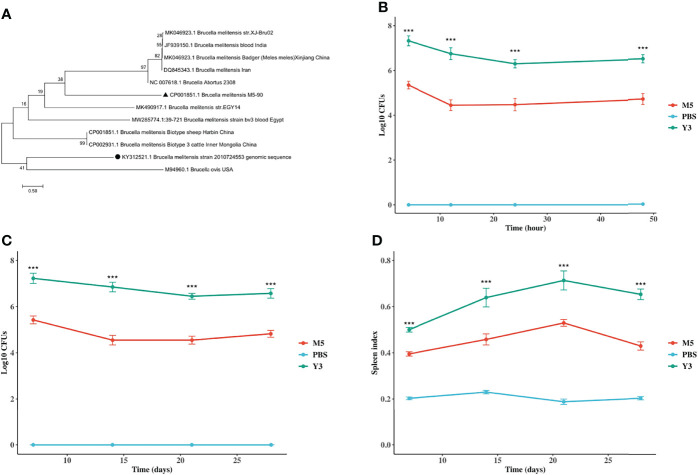
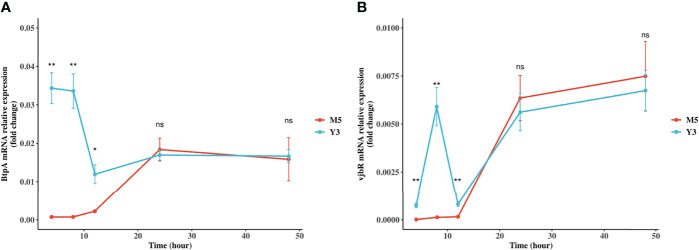
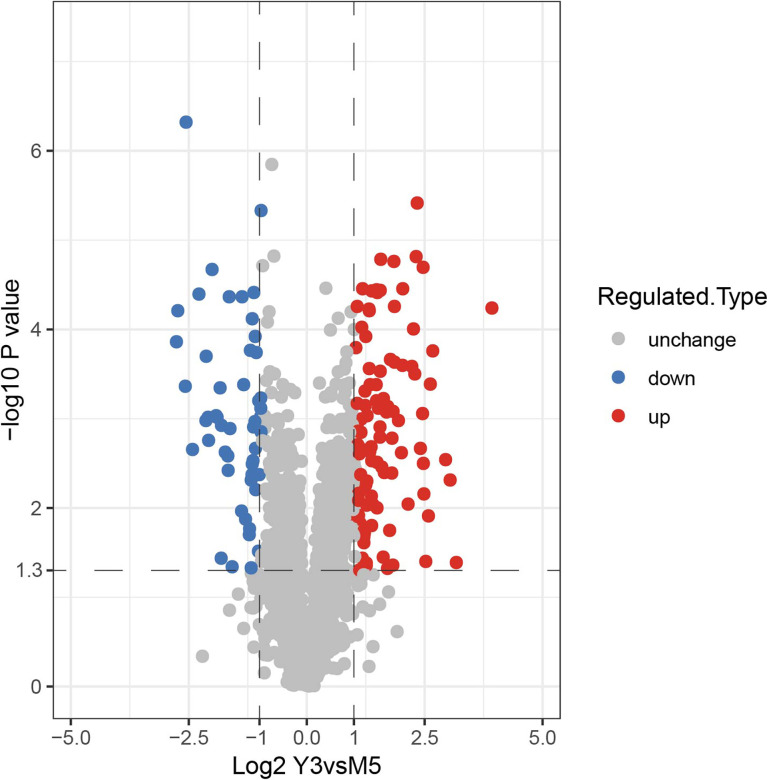
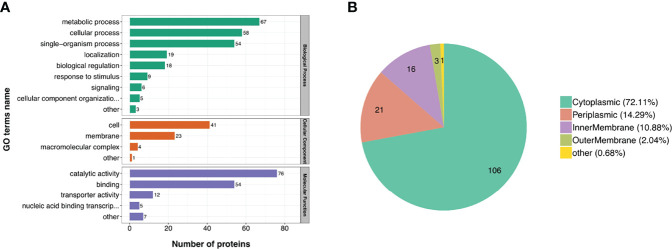
Brucellosis, caused by spp., is one of the most widespread bacterial zoonoses worldwide. Vaccination is still considered the best way to control brucellosis. An investigation into the differential proteome expression patterns of wild and vaccine strains may help researchers and clinicians differentiate between the strains to diagnose and better understand the mechanism(s) underlying differences in virulence. In the present study, a mass spectrometry-based, label-free relative quantitative proteomics approach was used to investigate the proteins expressed by the wild strain, biovar 3 and compare it with those expressed by M5-90. The higher level of virulence for biovar 3 compared to M5-90 was validated and . A total of 2133 proteins, encompassing 68% of the theoretical proteome, were identified and quantified by proteomic analysis, resulting in broad coverage of the proteome. A total of 147 proteins were identified as differentially expressed (DE) between these two strains. In addition, 9 proteins and 30 proteins were identified as unique to M5-90 and biovar 3, respectively. Pathway analysis revealed that the majority of the DE proteins were involved in iron uptake, quorum sensing, pyrimidine metabolism, glycine betaine biosynthetic and metabolic processes, thiamine-containing compound metabolism and ABC transporters. The expression of BtpA and VjbR proteins (two well-known virulence factors) in biovar 3 was 8-fold and 2-fold higher than in M5-90. In summary, our results identified many unique proteins that could be selected as candidate markers for differentiating vaccinated animals from animals with wild-type infections. BtpA and VjbR proteins might be responsible for the residual virulence of M5-90, while ABC transporters and thiamine metabolism associated proteins may be newly identified virulence factors. All of the identified DE proteins provide valuable information for the development of vaccines and the discovery of novel therapeutic targets.
布鲁氏菌病是由 spp.引起的,是全球最广泛流行的细菌性人畜共患病之一。疫苗接种仍然被认为是控制布鲁氏菌病的最佳方法。对野生株和疫苗株的差异蛋白质组表达模式进行研究,可能有助于研究人员和临床医生区分这些菌株,以进行诊断,并更好地了解毒力差异的机制。在本研究中,采用基于质谱的无标记相对定量蛋白质组学方法,研究了野生株、生物型 3 和与 M5-90 相比,野生株的毒力更高,验证了这一点。通过蛋白质组学分析共鉴定和定量了 2133 种蛋白质,涵盖了理论蛋白质组的 68%,实现了对蛋白质组的广泛覆盖。共鉴定出 147 种差异表达蛋白(DE)。此外,还分别鉴定出 M5-90 和生物型 3 特有的 9 种和 30 种蛋白质。通路分析表明,大多数 DE 蛋白参与铁摄取、群体感应、嘧啶代谢、甘氨酸甜菜碱生物合成和代谢过程、硫胺素化合物代谢和 ABC 转运体。生物型 3 中的 BtpA 和 VjbR 蛋白(两种已知的毒力因子)的表达水平分别比 M5-90 高 8 倍和 2 倍。综上所述,我们的研究结果确定了许多独特的蛋白质,可作为区分疫苗接种动物和野生型感染动物的候选标记物。BtpA 和 VjbR 蛋白可能是 M5-90 残留毒力的原因,而 ABC 转运体和硫胺素代谢相关蛋白可能是新发现的毒力因子。所有鉴定出的 DE 蛋白为疫苗开发和新治疗靶点的发现提供了有价值的信息。